
What is trenchless sewer line repair? It’s a modern, non-invasive method to fix or replace underground pipes without digging up your yard or driveway. This approach is quick, cost-effective, and minimizes property damage. Here’s a quick breakdown:
- Pipe Lining: A liner is coated with epoxy and inserted into the existing pipe.
- Pipe Bursting: A bursting head breaks the old pipe while a new one replaces it.
- Directional Drilling: A new tunnel is drilled for the pipe, avoiding the need to dig up the old one.
Trenchless sewer line repair can save homeowners from the headache of traditional digging methods. Traditional methods often involve extensive excavation, leading to higher costs and longer completion times. In contrast, trenchless technology offers a faster, cleaner solution.
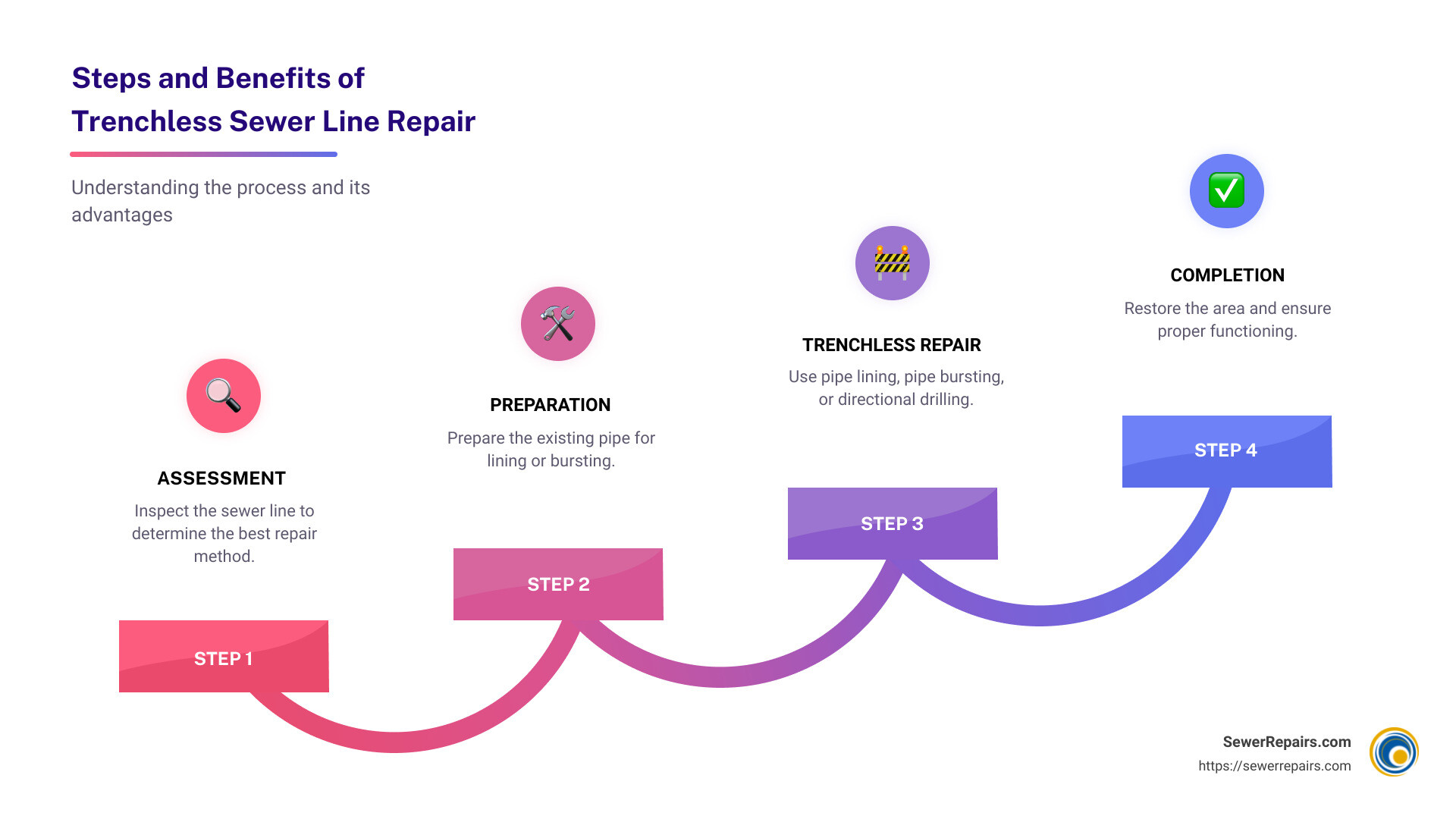
What is Trenchless Sewer Line Repair?
Trenchless sewer line repair is a modern method that fixes or replaces underground sewer pipes without the need for extensive digging. It’s a no-dig method that saves you from the hassle of tearing up your yard, driveway, or garden.
No-Dig Method
Traditional sewer repair involves digging large trenches to access and replace pipes. This can be messy, time-consuming, and costly. Trenchless technology, on the other hand, requires only a few small access points. This means less disruption to your property and a quicker repair process.
Pipe Lining
One popular trenchless method is pipe lining. Here’s how it works:
- Inspection: A sewer camera is used to locate the damaged area.
- Cleaning: The sewer line is cleaned to ensure a clear workspace.
- Lining: A flexible liner coated with epoxy resin is inserted into the damaged pipe.
- Inflation: The liner is inflated, adhering to the interior walls.
- Curing: The liner is cured using heat or UV light, creating a new, seamless pipe within the old one.
Pipe lining is ideal for reinforcing existing pipes and can last up to 100 years.
Pipe Bursting
Another method is pipe bursting. This technique is used when the existing pipe needs to be replaced entirely. Here’s a quick rundown:
- Access Points: Two small access points are dug at each end of the damaged pipe.
- Insertion: A steel cable is fed through the old pipe.
- Bursting Head: A bursting head, slightly larger than the old pipe, is attached to the cable.
- Pulling: The cable is pulled, breaking the old pipe and pulling a new high-density polyethylene (HDPE) pipe into place.
This method is effective and minimizes property damage.
Environmental Benefits
Trenchless sewer line repair is also eco-friendly. By avoiding large-scale excavation, it reduces soil disturbance and potential environmental contamination. Plus, the materials used, like epoxy resin and HDPE, are durable and long-lasting, reducing the need for future repairs.
In summary, trenchless sewer line repair offers a cleaner, faster, and more environmentally friendly alternative to traditional methods. Whether you choose pipe lining or pipe bursting, this technology can save you time, money, and a lot of headaches.
Advantages of Trenchless Repair
Cost Savings
One of the biggest advantages of trenchless sewer line repair is cost savings. Traditional methods often require extensive digging, which means more labor and higher costs. With trenchless repair, there’s minimal digging involved. This translates to lower labor costs and fewer expenses related to restoring your yard, driveway, or sidewalk after the repair. According to Forbes, trenchless methods can be significantly less expensive than traditional sewer line replacement.
Minimal Property Damage
Traditional sewer repairs can wreak havoc on your property. Imagine your beautiful garden or newly paved driveway being dug up. Trenchless repair minimizes this disruption. Since it requires only a few small access points, your landscaping, hardscaping, and even buildings remain mostly untouched. This means you won’t have to spend extra time and money fixing your yard after the repair is done.
Quick Completion
Time is money, and trenchless sewer repair saves both. Traditional methods can take weeks to complete, especially when you factor in the time needed to restore your property. In contrast, trenchless repairs are usually completed in just one to two days. This quick turnaround means less inconvenience for you and your family. According to SewerRepairs.com, residential projects can often be completed in just a day per liner.
Longevity of Repairs
When you invest in trenchless sewer line repair, you’re not just getting a quick fix—you’re getting a long-term solution. The materials used, such as epoxy resin and HDPE, are incredibly durable. These materials can last up to 100 years, ensuring that you won’t have to worry about your sewer lines for a long time. This durability makes trenchless repair a cost-effective solution in the long run.
In summary, trenchless sewer line repair offers numerous advantages over traditional methods. It saves you money, minimizes damage to your property, is completed quickly, and provides long-lasting results.
Common Methods of Trenchless Repair
Trenchless sewer line repair comes in a few different flavors. Each method has unique benefits and is suited for different situations. Let’s dive into the three most common methods: Pipe Lining, Pipe Bursting, and Directional Drilling.
Pipe Lining
Pipe lining, also known as Cured-In-Place Pipe (CIPP), is a method where a flexible liner soaked in epoxy resin is inserted into the existing sewer pipe.
Here’s how it works:
- Video Inspection: A high-definition camera is sent through the sewer line to pinpoint the damaged areas.
- Cleaning: The pipe is thoroughly cleaned using hydro jetting or mechanical cleaning to remove debris and buildup.
- Lining: The epoxy-saturated liner is then threaded through the existing pipe.
- Inflation and Curing: The liner is inflated, pressing the epoxy against the pipe walls. It cures (hardens) within 4 to 24 hours, forming a new, strong pipe inside the old one.
The result is a seamless, robust new pipe that restores the structural integrity of the sewer line. This method is excellent for pipes with cracks, holes, or minor root intrusion.
Pipe Bursting
Pipe Bursting is another popular trenchless repair method, particularly useful when the old pipe needs to be completely replaced.
Here’s the process:
- Access Points: Two small holes are dug at the beginning and end of the pipe run.
- Bursting Head: A bursting head is inserted into the old pipe. This tool breaks apart the old pipe as it moves through it.
- New Pipe Installation: As the bursting head advances, it drags a new high-density polyethylene (HDPE) pipe behind it. The old pipe fragments are pushed into the surrounding soil, and the new pipe takes its place.
This method requires minimal excavation and is ideal for pipes that are severely damaged or collapsed.
Directional Drilling
Directional Drilling is a bit different from the other two methods. Instead of working within the existing pipe, this method creates a new path for the sewer line.
Here’s how it works:
- Horizontal Drilling: A horizontal drilling machine bores a new tunnel several feet below the existing sewer line.
- Tunnel Creation: Dirt and debris are removed from the tunnel.
- New Pipe Installation: The new pipe is inserted into the tunnel and connected to the existing sewer network.
This method is particularly useful when the existing sewer line is difficult to access or runs under obstacles like buildings or large trees. It avoids existing line complications and is perfect for situations where traditional methods would be too disruptive.
These trenchless methods offer versatile solutions for various sewer line issues. Whether you need to repair, replace, or create a new path for your sewer line, trenchless technology provides efficient, cost-effective, and minimally invasive options.
Disadvantages and Considerations
While trenchless sewer line repair offers many benefits, it’s important to understand the potential drawbacks and limitations.
Initial Costs
Trenchless sewer repair can have a higher upfront cost compared to traditional methods. Depending on factors like the location, pipe length, and damage extent, the initial investment can range from $3,000 to $12,000. However, it’s worth noting that these costs often balance out with savings on landscaping and property restoration.
Pipe Condition Limitations
Not all pipes are suitable for trenchless repair. Severe corrosion, extensive damage, or old age can make pipes unsalvageable. In such cases, traditional digging methods may be the only viable option. Consulting with an expert can help determine if trenchless repair is feasible for your specific situation.
Diameter Restrictions
Trenchless methods like pipe bursting and lining have limitations regarding pipe diameter. For example, pipe bursting is typically used for pipes with diameters ranging from 3/4 to 2 inches. Larger diameter pipes may require different techniques or traditional methods to ensure proper repair.
Repair Scope
The scope of repair is another consideration. While trenchless methods are excellent for straightforward repairs, complex issues that involve multiple bends, severe misalignment, or extensive damage may necessitate traditional excavation. Assessing the full extent of the problem through a video inspection is crucial before deciding on the repair method.
These considerations should be weighed carefully to determine the best approach for your sewer line repair needs.
Frequently Asked Questions about Trenchless Sewer Line Repair
Is Trenchless Repair Worth It?
Absolutely. Trenchless sewer line repair offers several benefits that make it a worthwhile investment for many homeowners.
Cost-effectiveness is one of the biggest advantages. Traditional sewer repairs often involve extensive digging, which can damage landscaping, driveways, and even structures. This adds significant costs for restoration. Trenchless methods, on the other hand, require minimal excavation, saving you money on labor and post-repair landscaping.
Property impact is another crucial factor. With trenchless repair, there’s minimal disruption to your yard, garden, or driveway. This means you won’t have to deal with the headache of restoring your property after the repair is done.
How Long Does Trenchless Repair Last?
When it comes to repair durability, trenchless methods excel. The materials used, such as high-density polyethylene (HDPE) and epoxy resin, are incredibly durable.
Lifespan over 50 years is typical for these repairs. For example, Pipelining Technologies offers a five-year parts and labor warranty and notes that pipe lining carries a transferable minimum fifty-year life-use expectancy. This means you can expect the repair to last for decades, giving you long-term peace of mind.
Material durability is another factor. The epoxy resin used in pipe lining hardens to form a new pipe within the old one, providing a robust and long-lasting solution. HDPE pipes used in pipe bursting are also highly resistant to corrosion and root intrusion, ensuring a long lifespan.
Maintenance requirements are minimal. Once the trenchless repair is completed, there’s usually very little ongoing maintenance needed, unlike older pipes that may require frequent attention.
Can All Pipes Be Repaired Trenchlessly?
Not all pipes are suitable for trenchless repair. Pipe condition criteria play a significant role in determining if trenchless methods are viable.
Diameter considerations are also important. Trenchless methods generally work best on pipes of certain diameters. Larger diameter pipes may require different techniques or traditional methods to ensure proper repair.
Damage extent is another critical factor. If the pipe is severely collapsed or misaligned, trenchless methods may not be able to provide a complete solution. In such cases, a traditional excavation might be necessary.
In summary, while trenchless sewer line repair is a fantastic option for many scenarios, it’s essential to assess the specific condition and requirements of your sewer system to determine the best approach. Always consult with a licensed plumbing specialist to explore your options.
Conclusion
At SewerRepairs.com, we believe in providing innovative and effective solutions for your sewer repair needs. Trenchless sewer line repair is not just a trend; it’s the future of sewer maintenance and repair. This method offers numerous benefits, including minimal property disruption, cost savings, and environmental advantages.
The Future of Sewer Repair
Trenchless technology is revolutionizing the way we approach sewer repairs. Traditional methods often involved extensive digging, which could disrupt daily life and lead to additional costs for restoring landscapes and structures. With trenchless methods, we can avoid these issues, making the repair process smoother and quicker.
Eco-Friendly Solutions
One of the standout features of trenchless sewer line repair is its eco-friendliness. By avoiding large-scale excavation, we reduce the carbon footprint and preserve the natural landscape. The materials used, such as epoxy resins, are designed to last for decades, reducing the need for frequent repairs and conserving resources.
Investment Value
Choosing trenchless repair is not just a smart decision for today but also a wise investment for the future. The longevity of the repairs, often exceeding 50 years, ensures that property owners get the best return on their investment. Additionally, the improved flow capacity and structural integrity of the newly lined pipes can enhance the overall value of your property.
We are committed to providing top-notch service and ensuring that your sewer system remains in optimal condition. If you’re considering trenchless sewer line repair, we invite you to explore our services further. Contact us today to learn more about how we can help you with your sewer repair needs.
SewerRepairs.com – Your trusted partner in trenchless sewer solutions.