
Sewer pipelines are essential for modern living. These underground channels carry waste and wastewater from your home to treatment plants. This keeps your surroundings clean and safe. Knowing about sewer pipelines can help homeowners take better care of their plumbing systems and save money in the long run.
So, what do you need to know? Here’s a quick overview:
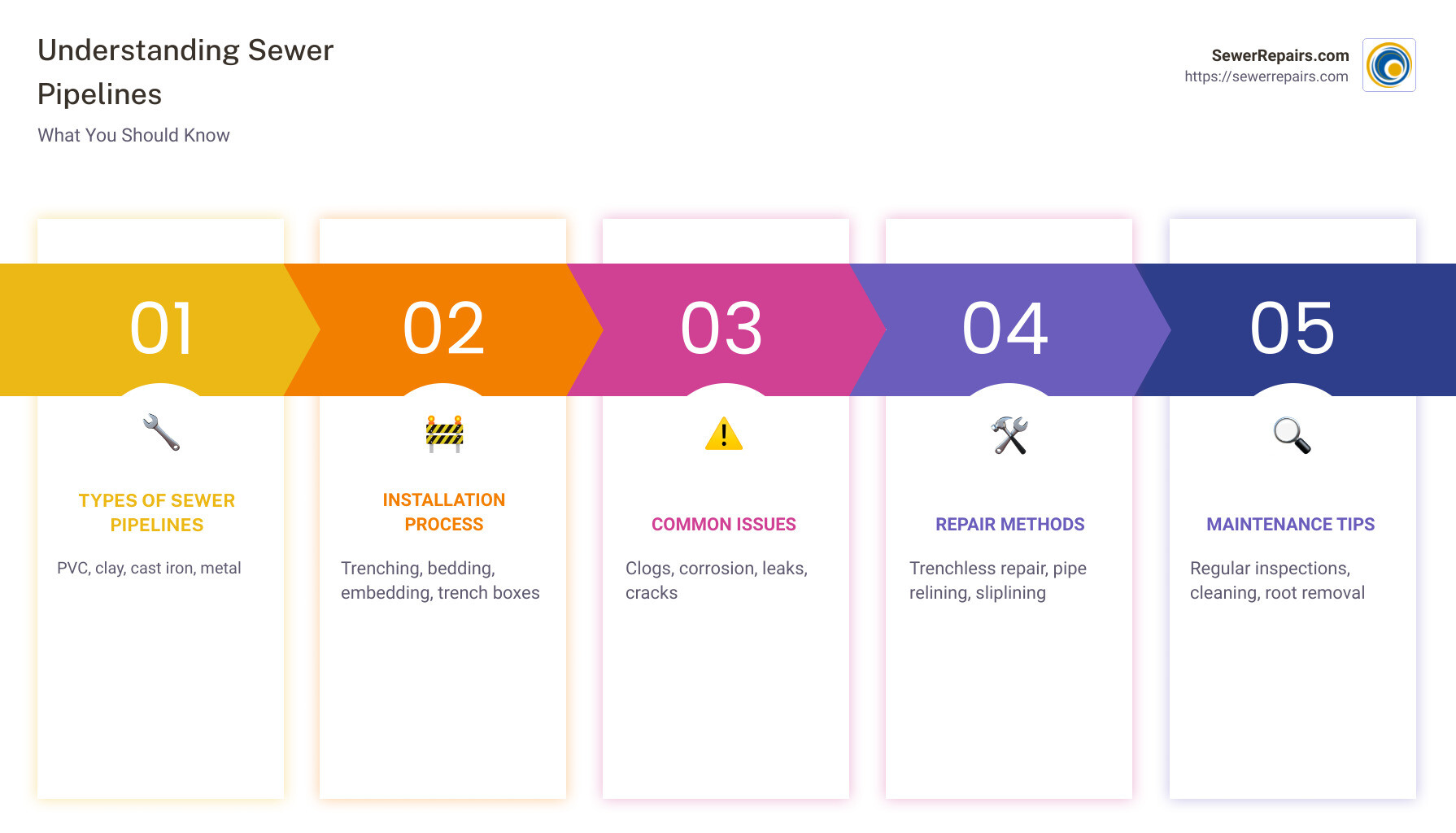
- Types of sewer pipelines: PVC, clay, cast iron, metal
- Installation process: trenching, bedding, embedding, using trench boxes
- Common issues: clogs, corrosion, leaks, cracks
- Repair methods: trenchless repair, pipe relining, sliplining
- Maintenance tips: regular inspections, cleaning, root removal
Sewer systems date back to ancient times but have evolved significantly. Modern materials and methods have improved their durability and effectiveness. For example, new technologies like CIPP (Cured-In-Place Pipe) allow for repairs without digging up your yard.
I’m Jason Best, master technician and founder of SewerRepairs.com. With over 20 years in the sewer repair business, I have extensive experience with sewer pipeline issues and solutions. Now, let’s dive deeper into what a sewer pipeline really is.
What is a Sewer Pipeline?
A sewer pipeline is an underground conduit designed to transport wastewater from homes and businesses to treatment facilities. These pipelines are essential for maintaining public health and sanitation.
A sewer pipeline is a crucial part of the sewerage system, which includes all the components that collect and treat wastewater. The primary purpose of these pipelines is to carry sewage—wastewater from toilets, sinks, showers, and industrial processes—away from buildings to sewage treatment plants.
Types of Sewer Pipelines
Understanding the various types of sewer pipelines can help you choose the best options for your needs. Different materials offer unique benefits and drawbacks. Below, we explore the most common types:
PVC (Polyvinyl Chloride)
PVC pipes are a popular choice for modern sewer systems. They are lightweight, durable, and resistant to corrosion. They are also relatively inexpensive and easy to install. PVC is commonly used in gravity sewer and storm drainage applications .
Pros:
– Cost-effective
– Easy to install
– Corrosion-resistant
Cons:
– Not suitable for high-temperature applications (max 140°F)
– Limited to non-pressurized systems
Cast Iron
Cast iron pipes have been used for decades and are known for their durability. They are strong and can last between 30 to 50 years. However, they are heavy and prone to rust and corrosion over time (source).
Pros:
– Durable and strong
– Long lifespan
Cons:
– Heavy and difficult to install
– Prone to rust and corrosion
Concrete
Concrete pipes are often used for large-scale sewer systems. They are strong and can handle high loads. However, they can be susceptible to cracking and are quite heavy, making installation challenging.
Pros:
– Strong and able to handle high loads
– Long-lasting
Cons:
– Heavy and difficult to install
– Can crack under stress
Clay
Clay pipes, specifically vitrified clay pipes, have been used for centuries. Modern manufacturing processes have made them more resistant to stress and corrosion. These pipes are limited to use in gravity sewer systems (source).
Pros:
– Highly resistant to corrosion
– Long-lasting
Cons:
– Brittle and prone to cracking
– Limited to gravity systems
Plastic
Plastic pipes, including HDPE (High-Density Polyethylene) and FRP (Fiberglass-Reinforced Pipe), are also used in sewer systems. They offer flexibility and resistance to corrosion but may not be as strong as other materials.
Pros:
– Flexible and lightweight
– Corrosion-resistant
Cons:
– Not as strong as metal or concrete
– Can be more expensive than PVC
Metal
Metal pipes, such as ductile iron, have replaced older cast iron pipes in many applications. They offer strength and durability but are prone to rust and are heavier and more expensive (source).
Pros:
– Strong and durable
– Long lifespan
Cons:
– Heavy and expensive
– Prone to rust
Choosing the right type of sewer pipeline depends on your specific needs, including the nature of the waste, the conditions of the environment, and budget constraints. Each material has its unique advantages and challenges, so consider these factors carefully.
Next, let’s delve into the sewer pipeline installation process to understand how these materials are put into place.
Sewer Pipeline Installation Process
Installing a sewer pipeline involves several critical steps to ensure the system works efficiently and lasts for years. Let’s break down the process:
Trenching
The first step in installing a sewer pipeline is trenching. This involves digging a trench where the pipeline will be laid. The trench must be deep and wide enough to accommodate the pipe and any bedding material. Proper trenching is crucial because it sets the foundation for the entire pipeline system.
Bedding
Once the trench is dug, the next step is to prepare the bedding. Bedding is the material placed at the bottom of the trench to provide a stable base for the pipeline. Common bedding materials include gravel or sand. This layer helps distribute the load evenly and prevents the pipe from settling or shifting over time.
Embedment
After the bedding is in place, the pipeline is laid into the trench. Embedment involves surrounding the pipe with additional bedding material to secure it in place. This step is vital for protecting the pipeline from external pressures and ensuring it remains stable. Proper embedment can prevent issues like leaks and cracks, which often occur due to shifting or settling.
Trench Boxes
Safety is a significant concern during the installation process, especially in deeper trenches. Trench boxes are used to protect workers from cave-ins. These are sturdy, protective barriers placed inside the trench to hold back the earth and create a safe working environment. Using trench boxes is not just a safety measure but also a legal requirement in many areas.

Each of these steps is essential for a successful sewer pipeline installation. Proper trenching, bedding, embedment, and the use of trench boxes ensure that the pipeline operates efficiently and safely for many years.
Next, we’ll explore the common issues that can affect sewer pipelines and how to address them.
Common Issues with Sewer Pipelines
Sewer pipelines are essential but can face several common problems. Let’s look at some of the most frequent issues: clogs, tree roots, corrosion, leaks, and cracks.
Clogs
Clogs are a major headache for homeowners. They occur when debris like grease, hair, or foreign objects build up and block the pipe.
Fun Fact: A common clog culprit is cooking grease. When poured down the drain, it solidifies and narrows the pipe, leading to blockages.
Clogs can cause slow drains, backups, and unpleasant odors. Regular maintenance, like hydrojetting, can prevent clogs by cleaning the interior surfaces of the pipes.
Tree Roots
Tree roots are another common problem. They grow towards moisture and can infiltrate even the smallest cracks in sewer pipelines. Once inside, roots expand and can cause severe blockages and pipe damage.
Case Study: A homeowner noticed wet spots in their yard and a foul smell around the property. Upon inspection, it was discovered that tree roots had infiltrated their clay sewer pipes, causing significant damage.
Using methods like rock salt or trenchless pipe lining can help manage and prevent root intrusion.
Corrosion
Corrosion affects metal pipes, particularly cast iron. Over time, water and waste cause the metal to rust, weakening the pipe structure.
Fact: Cast iron pipes typically last between 30-50 years but are prone to rust and corrosion, which can reduce their lifespan.
Regular inspections and maintenance, like pipe descaling, can help manage corrosion and extend the life of your pipes.
Leaks
Leaks can develop due to cracks, corrosion, or joint failures. They can lead to water damage, mold growth, and increased water bills.
Quote: “Even a small leak can waste a significant amount of water over time,” says a plumbing expert at SewerRepairs.com.
Leak detection and timely repairs are crucial to prevent further damage. Methods like sliplining or CIPP lining can effectively seal leaks.
Cracks
Cracks in sewer pipelines are often caused by ground movement, heavy loads, or aging pipes. They can lead to leaks and structural failure.
Statistic: Cracked pipes are a leading cause of water loss in sewer systems.
Addressing cracks promptly with trenchless repair methods like pipe bursting or relining can restore the pipe’s integrity without extensive excavation.
Understanding these common issues and knowing how to address them can help maintain a healthy and efficient sewer pipeline system.
Next, we’ll dive into the various repair methods available for addressing these issues.
Sewer Pipeline Repair Methods
Repairing a damaged sewer pipeline doesn’t always mean digging up your yard. Modern methods focus on minimizing disruption while effectively restoring the pipeline. Here are the main techniques:
Trenchless Repair
Trenchless repair is a “no dig” method that avoids major excavation. This process is less invasive, quicker, and often more cost-effective than traditional methods. It includes several techniques, such as pipe relining and pipe bursting.
Pipe Relining
Pipe relining involves creating a new pipe within the old one. The most common type is Cured-In-Place Pipe (CIPP) lining. Here’s how it works:
- Inspection and Cleaning: A sewer camera inspection identifies the damage. The existing pipe is then cleaned to remove debris.
- Epoxy Saturation: A textile liner, saturated with epoxy resin, is inserted into the pipe.
- Inversion and Curing: The liner is inverted so the epoxy is on the outside, then inflated and cured using hot air, steam, or Bluelight LED technology.
Pros:
– Extends pipe life up to 100 years.
– Minimally invasive.
Cons:
– Takes 12 to 24 hours to cure.
Pipe Bursting
Pipe bursting replaces severely damaged pipelines without digging up the entire length. This method uses a bursting head to break apart the old pipe while pulling a new pipe into place.
- Access Points: Two small pits are dug at each end of the pipe.
- Bursting Process: A hydraulic machine pulls the bursting head through the old pipe, breaking it apart and laying the new pipe behind it.
Pros:
– Ideal for extensive damage.
– New plastic pipes can last up to 100 years.
Cons:
– Existing pipe remains in the ground.
Sliplining
Sliplining is one of the oldest trenchless methods. It involves inserting a smaller, fully constructed pipe into the damaged one.
- Insertion: The new pipe is pulled through the old one, creating a new conduit.
- Re-routing: Water and sewer lines are re-routed to the new pipe.
Pros:
– Simple and effective for minor damages.
Cons:
– Reduces the diameter of the sewer pipeline.
These advanced methods offer efficient, long-lasting solutions to sewer pipeline issues. Next, we’ll explore the benefits of trenchless sewer pipeline repair.
Benefits of Trenchless Sewer Pipeline Repair
Trenchless sewer pipeline repair has become a popular choice for homeowners and businesses alike. Here are some key benefits:
Cost-Effective
Trenchless repair methods can save you a lot of money. Traditional methods require extensive digging, which means more labor and higher costs. With trenchless techniques like Cured-In-Place Pipe (CIPP) lining and pipe bursting, you can avoid the hefty expenses associated with excavation and restoration. According to Forbes, avoiding excavation alone can result in significant savings.
Minimally Invasive
One of the biggest advantages is that trenchless repair is minimally invasive. Traditional sewer repairs often mean tearing up your lawn, driveway, or even sidewalks. With trenchless methods, only a few small access points are needed. This means less disruption to your property and daily life.
“Instead of digging up our entire yard to repair the leaking pipe, let’s get the plumbing team to perform a trenchless sewer pipe lining with the new Bluelight LED technology,” suggests a satisfied homeowner.
Long-Lasting
Trenchless repairs are designed to last. When you choose methods like epoxy pipe lining or UV sewer lining, you’re opting for solutions that can extend the life of your pipes by up to 50 years. This long-lasting repair reduces the need for frequent maintenance, saving you time and money in the long run.
Efficient
Efficiency is another major benefit. Trenchless methods are generally quicker to complete than traditional excavation. For example, pipe bursting can replace your old pipe while simultaneously installing a new one, minimizing downtime. This is especially beneficial for businesses that can’t afford prolonged disruptions.
“We are doing the best we can for the future of the city,” says Lisa Rhea, the city’s Senior Water Resources Manager, highlighting the efficiency of trenchless methods in public projects.
These benefits make trenchless sewer pipeline repair an ideal choice for anyone looking to address sewer issues with minimal hassle and maximum efficiency.
Next, we’ll discuss some practical tips for maintaining your sewer pipeline.
Sewer Pipeline Maintenance Tips
Maintaining your sewer pipeline is crucial for avoiding costly repairs and ensuring the longevity of your system. Here are some straightforward tips to keep your sewer pipeline in top shape:
Regular Inspections
Regular inspections are key. SewerRepairs.com offers a full range of inspection services to catch any issues early. A professional can use a camera to inspect the inside of your pipes, identifying potential problems like cracks, corrosion, or blockages before they become major issues.
Fact: Most sewer lines can last between 50-100 years, but regular inspections help ensure they reach their full lifespan.
Cleaning
Cleaning your sewer pipeline is essential to prevent build-up and blockages. Periodically, you should clean your pipes using a mixture of baking soda and vinegar. For more stubborn build-ups, consider professional hydrojetting services. This method uses high-pressured water to remove debris and ensure smooth water flow.
Tip: Avoid using chemical drain cleaners as they can damage your pipes over time.
Root Removal
Tree roots can invade your sewer pipes, causing blockages and even breaking the pipes. If you notice slow drainage or gurgling sounds, roots might be the issue. Professional root removal services can clear the roots without damaging your pipes.
Case Study: In St. Petersburg, improper disposal of grease and “flushable” wipes caused blockages, leading to sewage spills. Regular maintenance could have prevented these issues.
Preventive Measures
Taking preventive measures can save you from future headaches. Here are some simple steps:
– Avoid flushing non-degradable items: Only flush toilet paper and human waste.
– Dispose of grease properly: Never pour grease down the drain.
– Install a backwater valve: This prevents sewage from backing up into your home during heavy rains.
Quote: “We’re constantly having to invest in the system, upgrade the system,” says Lisa Rhea, emphasizing the importance of ongoing maintenance.
Implementing these tips can help you maintain a healthy sewer pipeline, reduce the risk of emergency repairs, and extend the life of your system.
Next, we’ll answer some frequently asked questions about sewer pipelines.
Frequently Asked Questions about Sewer Pipelines
What pipe is used for sewer line?
The most common types of pipes used for sewer lines are PVC and cast iron.
- PVC (Polyvinyl Chloride): This is the go-to choice for many modern plumbing projects. It’s lightweight, easy to install, and resistant to corrosion. Plus, it’s cost-effective and has a long lifespan. PVC pipes are also smooth inside, which helps prevent clogs and buildup.
- Cast Iron: This is a traditional material that has been used for decades. It’s incredibly strong and durable, with a lifespan of 75 to 100 years. However, it is heavy, expensive, and can corrode over time. Despite these drawbacks, cast iron is still used because of its fire resistance and noise-dampening properties.
Why is sewer pipe so expensive?
Sewer pipes can be costly due to several factors:
- Labor-Intensive Installation: Installing a sewer pipeline is not a simple task. It requires skilled labor, specialized equipment, and meticulous planning. Workers often need to dig deep trenches, which is both time-consuming and physically demanding.
- Excavation: Digging up the ground to lay sewer pipes involves heavy machinery and can disrupt existing landscapes. This adds to the overall cost, especially if the area has underground utilities or other obstacles.
- Expertise: Proper installation and maintenance of sewer pipelines require a high level of expertise. Professionals must ensure that the pipes are laid correctly to avoid future issues like leaks or blockages. This specialized knowledge comes at a premium.
Is pipe relining worth it?
Absolutely, pipe relining is often worth the investment. Here’s why:
- Cost-Effective: Traditional methods of replacing sewer pipes involve digging up your yard, which can be expensive and disruptive. Pipe relining, on the other hand, is a trenchless method that can save you money on excavation and restoration costs.
- Minimally Invasive: Unlike traditional methods, pipe relining requires only small access points. This means less disruption to your property and quicker completion times. You won’t have to worry about tearing up your yard, driveway, or sidewalks.
- Long-Lasting: Pipe relining can extend the life of your existing pipes by up to 50 years. The process involves inserting a liner coated with epoxy into the old pipe, creating a new, durable pipe within the old one. This not only fixes leaks but also strengthens the existing pipe.
In summary, PVC and cast iron are the most common materials used for sewer lines, each with its own set of advantages. The cost of sewer pipes is high due to labor-intensive installation, excavation needs, and the expertise required. Pipe relining is a cost-effective, minimally invasive, and long-lasting solution for repairing sewer pipelines.
Next, we’ll dive into the benefits of trenchless sewer pipeline repair.
Conclusion
At SewerRepairs.com, we pride ourselves on providing expert services and innovative solutions for all your sewer pipeline needs. With over 20 years of experience, our family-owned business has seen it all—from minor repairs to major overhauls.
Expert Services
We offer a full range of services to keep your sewer system in top condition. Our offerings include:
- Sewer Inspection: Early detection of issues can save you time and money.
- Sewer Repairs: Comprehensive repair services to fix any problem, big or small.
- CIPP Lining: Cost-effective and minimally invasive pipe relining to extend the life of your pipes.
- Hydrojetting: High-pressure water scouring to remove debris and buildup.
Innovative Solutions
We stay ahead of the curve by using the latest technologies in sewer pipeline repair and maintenance. Our trenchless repair methods, such as CIPP lining and pipe bursting, ensure minimal disruption to your property while delivering long-lasting results.
For example, our use of the Pow-R Mole model PD-22 pipe bursting machine allows us to replace old pipes efficiently and effectively, saving you time and reducing costs.
Why Choose Us?
- Minimally Invasive: Our trenchless methods mean no digging up your yard.
- Cost-Effective: Save money by avoiding extensive excavation and repaving.
- Long-Lasting: Our repairs are designed to last up to 50 years.
- Professional Team: Our licensed plumbers and technicians are trained to handle any situation with professionalism and care.
Investing in your sewer system is crucial for the long-term health of your property. At SewerRepairs.com, we’re committed to providing top-notch services to ensure your sewer pipelines are in excellent condition.
For more information about our trenchless sewer pipeline repair services, visit our service page.
Let us help you keep your sewer system running smoothly and efficiently.