
Why Sewer Line Video Inspections are Crucial
Aging pipelines and frequent sewer issues are common . Getting a sewer line video inspection can pinpoint problems without invasive digging.
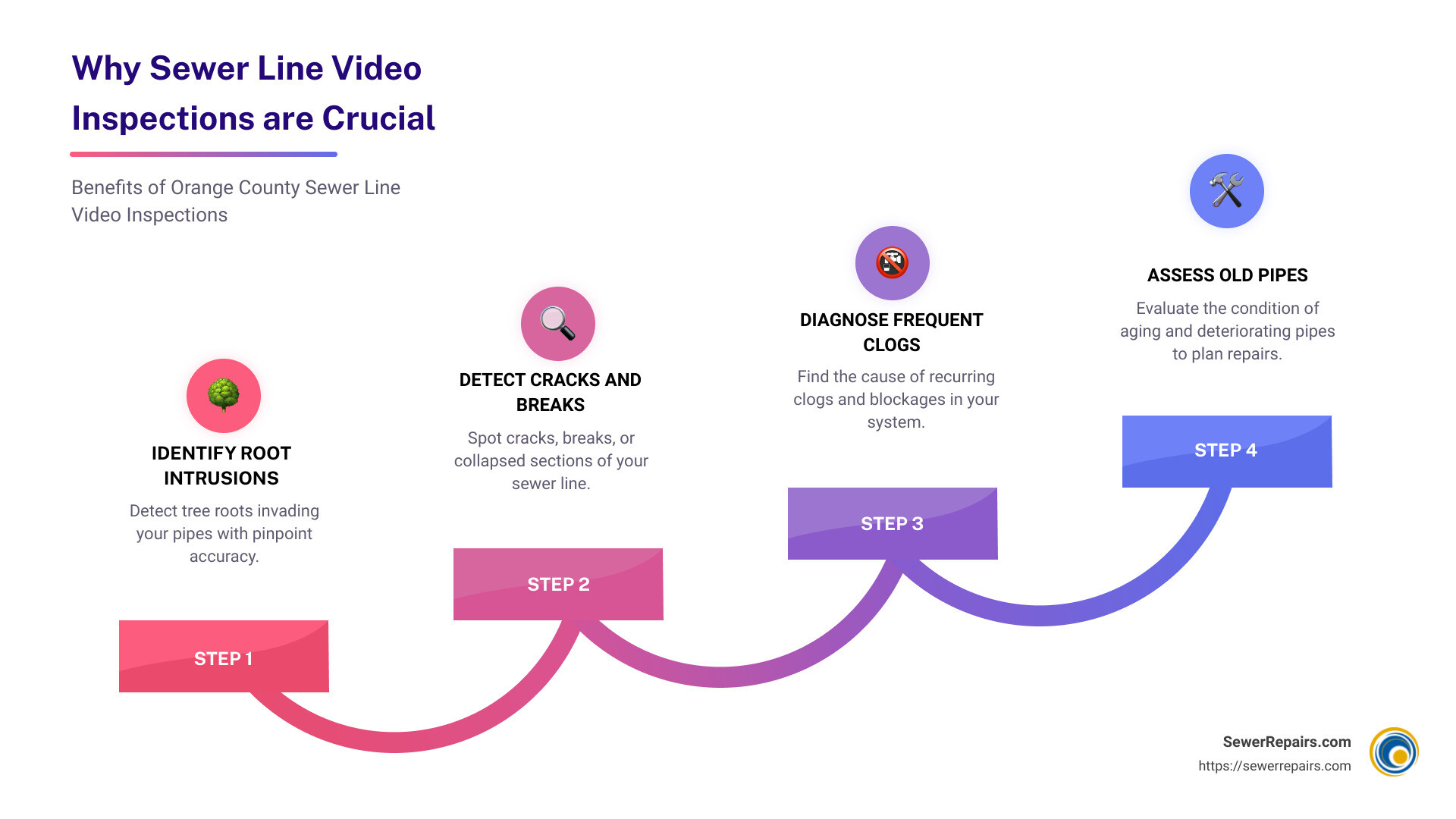
- Identify root intrusions without guesswork
- Detect cracks, breaks, or collapse in pipes
- Diagnose frequent clogs and blockages
- Assess old and deteriorating pipes
- Plan effective and prompt repairs
Sewer line problems can be complicated, especially in areas with older infrastructure. Ignoring them or opting for guesswork-based methods could lead to costly repairs and significant disruption to your property. A sewer line video inspection eliminates this uncertainty. Using state-of-the-art video technology, you can catch issues early and avoid extensive damage or expensive repairs.
I’m Jason Best. With over 20 years of experience in the sewer repair sector and leading SewerRepairs.com, I’ve seen how sewer line video inspections can save homeowners time, money, and stress.
What is a Sewer Line Video Inspection?
A sewer line video inspection is a cutting-edge method that uses advanced video technology to look inside your sewer and drain lines. This process involves a flexible fiber optic cable with a high-resolution camera on its tip. The camera is inserted into the pipes, transmitting clear images in real-time to a monitor.
How It Works
The flexible fiber optic cable can navigate through the twists and turns of your sewer system. This flexibility allows it to reach areas that would otherwise be inaccessible without digging up your yard or breaking through walls. The high-resolution camera provides a clear view of the pipe’s interior, helping technicians to see every detail.
Real-Time Visual Inspection
Real-time visual inspection is one of the most significant benefits of this technology. As the camera moves through the pipes, it sends live footage to a monitor. This live feed allows technicians to see the exact condition of the pipes and identify any issues immediately. Whether it’s a crack, break, or root intrusion, the problem can be pinpointed with high accuracy.
Benefits of Using Video Technology
- Accuracy: The high-resolution camera provides precise images, eliminating guesswork.
- Safety: No need for extensive digging, which reduces the risk of damaging other utilities.
- Speed: Quick diagnosis means faster repair times.
- Cost-Effective: Identifying the problem accurately saves money on unnecessary repairs.
- Minimally Invasive: No need to tear up your yard or home to find the issue.
Using this state-of-the-art technology, SewerRepairs.com can help you catch issues early, preventing extensive damage and costly repairs.
Next, we’ll discuss the various benefits of sewer line video inspections and how they can save you time, money, and stress.
Benefits of Sewer Line Video Inspections
Accuracy
A sewer line video inspection uses a high-resolution camera attached to a flexible rod. This allows technicians to see exactly what’s happening inside your pipes. No guesswork. Just precise, real-time visuals that help diagnose current or potential problems. Think of it as an X-ray for your plumbing system.
Safety
Traditional methods of diagnosing sewer issues often involve extensive digging and even breaking through walls. With video inspections, there’s no need for such invasive procedures. This keeps your property intact and minimizes any risk to other utilities.
Speed
Because the camera provides a clear view of your sewer line, technicians can quickly identify and diagnose the problem. This means repairs can start sooner, getting your plumbing back to normal faster. No more waiting around for trial-and-error solutions.
Peace of Mind
One of the biggest fears homeowners have is a sewer backup. Routine video inspections can help you catch issues before they become catastrophic, giving you peace of mind. Knowing the exact condition of your sewer line allows you to address problems proactively.
Cost-Effective
Identifying the exact problem means you only pay for the repairs you actually need. No more unnecessary digging or replacing entire sections of pipe when a simple fix will do. This can save you a significant amount of money in the long run.
Minimally Invasive
Video inspections require just a small access point to insert the camera. There’s no need to tear up your yard or rip apart your home. This minimally invasive method keeps your property looking great while still providing the detailed information needed to fix your sewer issues.
By using a sewer line video inspection, you get a clear, accurate, and cost-effective solution to maintaining your plumbing system. This method not only saves you time and money but also provides peace of mind knowing your home is protected from future sewer issues.
Next, we’ll explore when you should schedule a sewer line video inspection to ensure your plumbing stays in top shape.
When to Schedule a Sewer Line Video Inspection
Knowing when to schedule a sewer line video inspection can save you from costly and time-consuming repairs. Here are key times when you should consider this service:
Frequent Clogs
If you’re dealing with frequent clogs, it’s a sign that something is wrong deep within your pipes. A video inspection can identify the root cause, whether it’s a buildup of debris or a more serious issue like a broken pipe.
Drain Problems
Drain problems in multiple areas of your home can indicate a more widespread issue. Video inspections help pinpoint the exact location and cause of the problem, making it easier and faster to fix.
Tree Root Intrusion
Tree roots can invade your sewer lines, causing blockages and even breaking pipes. If you suspect tree roots are the issue, a video inspection can confirm this without the need for digging.
Old Pipes
Older pipes are more likely to deteriorate, crack, or collapse. If your home has old plumbing, regular video inspections can catch problems early before they turn into major repairs.
Routine Maintenance
Routine maintenance is crucial for preventing unexpected plumbing issues. Scheduling a yearly video inspection can catch small problems before they become big headaches, saving you time and money in the long run.
New Home Purchase
Before buying a new home, it’s wise to have a sewer line video inspection. This ensures you’re not inheriting any hidden plumbing issues that could lead to expensive repairs down the line.
By scheduling a sewer line video inspection at these critical times, you can keep your plumbing system in top shape and avoid costly surprises.
Next, let’s dive into how sewer line video inspections work to give you a clearer picture of the process.
How Sewer Line Video Inspections Work
Sewer line video inspections use advanced technology to diagnose plumbing issues with precision. Here’s how it all comes together:
Flexible Rod
The inspection starts with a flexible rod. This rod is long and bendable, allowing it to navigate through the twists and turns of your sewer and drain pipes. It’s designed to reach deep into your plumbing system without causing any damage.
High-Resolution Camera
At the tip of the flexible rod is a high-resolution camera. This camera captures clear, detailed images of the inside of your pipes. The camera’s high quality ensures that even the smallest cracks or blockages are visible.
Real-Time Visual Inspection
As the camera travels through your pipes, it sends live video footage to a monitor. This real-time visual inspection allows the technician to see exactly what’s going on inside your sewer lines. No more guesswork—just accurate, immediate visuals.
Radio Transmitters
Many sewer line video inspection systems come equipped with radio transmitters. These transmitters send signals to pinpoint the camera’s exact location within your plumbing system. This helps the technician identify precisely where the problem is.
Pinpoint Location
Thanks to the combination of the camera and radio transmitters, the technician can pinpoint the location of any issues. Whether it’s a blockage, crack, or root intrusion, the exact spot is identified without any need for digging.
Diagnose Issues
Once the problem area is located, the technician can diagnose the issue accurately. This might include identifying broken, cracked, or deteriorating pipes, root intrusion, or other obstructions. The clear visuals and precise location data make it easy to determine the best course of action for repairs.
By using these advanced tools, sewer line video inspection services provide a thorough and efficient way to keep your plumbing in top shape. This technology saves time, reduces costs, and minimizes disruption to your property.
Next, let’s explore the common problems detected by sewer line video inspections.
Common Problems Detected by Sewer Line Video Inspections
Cracks and Breaks
Cracks and breaks in sewer lines are common issues detected during a sewer line video inspection. These problems are often caused by ground movement, aging pipes, or external pressure from heavy machinery. Cracks can lead to leaks, which may escalate into more severe breaks if not addressed promptly.
Offsets and Separations
Offsets occur when sections of the sewer pipe shift out of alignment. This can happen due to natural ground movement, such as earthquakes or settling soil. When pipes are offset, they can create blockages and slow down the flow of wastewater. Separations, on the other hand, are when pipe connections come apart entirely, leading to significant leaks and potential collapses.
Root Intrusion
Tree roots are relentless when it comes to seeking out water sources. They can infiltrate sewer lines through small cracks or joints, eventually growing large enough to cause blockages or even break the pipes. Root intrusion is a common problem in many areas of Southern California due to its lush vegetation and can be easily spotted with a video inspection.
Gunk Buildup
Over time, grease, soap, and other debris can accumulate on the walls of your sewer pipes. This buildup can lead to clogs that restrict water flow and cause backups. Video inspections can identify the extent of gunk buildup, allowing for targeted cleaning methods like hydro jetting to clear the pipes.
Pipe Damage
The materials used in older sewer systems, such as Terracotta clay or galvanized steel, are prone to deterioration. Pipe damage can manifest as corrosion, rust, or even complete collapse. Video inspections provide a clear view of the pipe’s condition, helping to determine whether a repair or replacement is necessary.
Physical Obstructions
Sometimes, unexpected objects find their way into sewer lines. These can range from rocks and dirt to small animals. Physical obstructions can cause immediate blockages and require prompt removal to restore normal flow. A video inspection can quickly identify the type and location of the obstruction, making the removal process more efficient.
By identifying these common problems early, sewer line video inspection services can help you avoid costly repairs and keep your plumbing system running smoothly.
Next, let’s dive into frequently asked questions about sewer line video inspections.
Frequently Asked Questions about Sewer Line Video Inspections
How important is a sewer camera for inspection?
A sewer camera is essential for accurate inspections. It provides a real-time visual of your sewer lines, helping to detect issues like cracks, root intrusions, or clogs without guesswork. This means you can pinpoint problems and address them promptly, saving both time and money.
For example, one of our customers, Rick O., appreciated how our team used the camera to accurately diagnose and explain the issues in his pipes. He was able to make an informed decision thanks to the clear visual evidence.
How do you detect a sewer line?
Detecting a sewer line involves several steps:
- Home Documents: Check your home’s title documents or building plans for information about the sewer line layout.
- Cleanout Pipe: Locate the cleanout pipe, usually found outside your home. This pipe provides direct access to your sewer line.
- Pipe Locator: A professional can use a pipe locator device, which sends a signal through the pipe to map its route.
- City Records: Consult city records for detailed maps of sewer lines in your area.
Hiring a professional is the most reliable way to detect and inspect your sewer line. Our technicians use advanced tools and techniques to ensure accurate detection and diagnosis.
What are the signs you need a sewer line inspection?
Certain signs indicate you need a sewer line inspection:
- Frequent Clogs: If you’re constantly dealing with clogs, it’s a red flag.
- Slow Drains: Drains that are slow to clear can signal a blockage or buildup.
- Strange Noises: Bubbling or gurgling sounds from your toilets or drains suggest a problem.
- Unpleasant Odors: Foul smells from your drains or yard indicate a possible sewer issue.
If you experience any of these symptoms, scheduling a sewer line video inspection can help identify and resolve the problem before it escalates.
By understanding these FAQs, you can make informed decisions about maintaining your sewer system and preventing costly repairs.
Next, let’s explore the conclusion and how SewerRepairs.com can help you.
Conclusion
At SewerRepairs.com, we understand the importance of maintaining a healthy sewer system. Our sewer line video inspection service is designed to provide you with accurate, cost-effective, and minimally invasive solutions to your sewer problems.
With over 20 years of expert plumbing experience, our team is equipped with the latest technology to diagnose and address any issues in your sewer line. Our high-resolution cameras and skilled technicians ensure that we pinpoint problems quickly and accurately, saving you time, money, and the headache of unnecessary repairs.
Whether you’re dealing with frequent clogs, tree root intrusions, or simply want peace of mind with routine maintenance, our video inspections can help. We pride ourselves on delivering top-notch service and ensuring that your sewer system operates smoothly.
Don’t wait until a minor issue becomes a major problem. Contact SewerRepairs.com today to schedule your sewer line video inspection. Let us help you keep your plumbing in perfect condition with our expert, cost-effective, and minimally invasive services.