
Understanding Pipe Corrosion in Sewer Systems
Pipe corrosion sewer problems are a significant concern for homeowners across Southern California. Corroded pipes can lead to plumbing failures, hazardous wastewater leaks, and costly repairs. Here’s what you need to know:
- Causes: Bacteria, sulfuric acid, moisture, and fluctuating temperatures.
- Signs: Leaks, discolored water, low pressure, and strange tastes.
- Prevention: Regular inspections, maintenance, and corrosion-resistant materials.
I’m Jason Best. With over two decades of experience in sewer repair and plumbing, I understand the complexities of pipe corrosion sewer issues. Let’s explore how you can prevent and treat these problems effectively.

Identifying the Signs of Sewer Pipe Corrosion
Identifying the early signs of pipe corrosion issues can save you from costly repairs and potential damage to your home. Here are the most common indicators:
Leaks
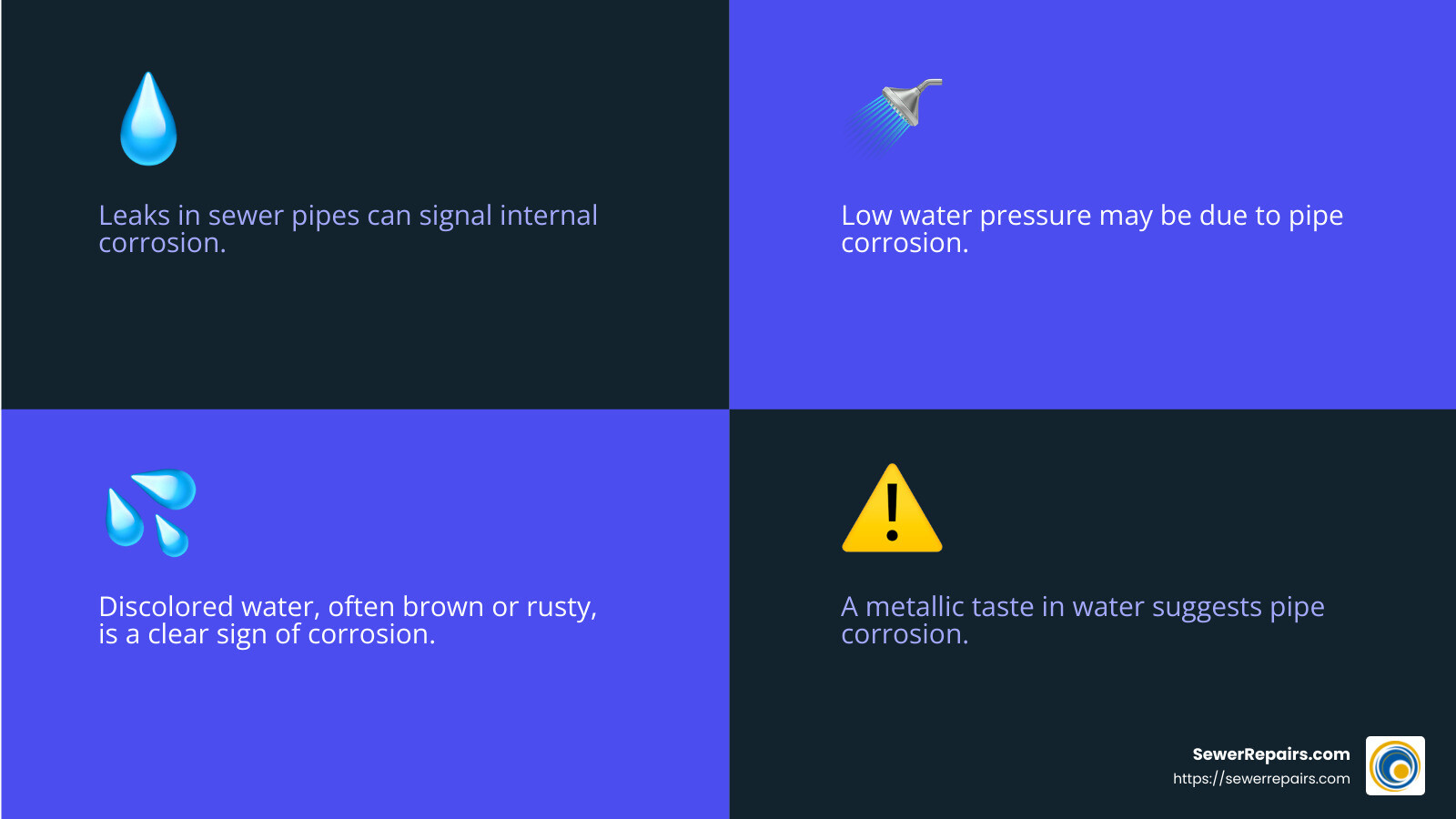
One of the first signs of sewer pipe corrosion is leaks. Corroded pipes weaken over time, creating small holes or cracks, which lead to water escaping. If you notice unexplained wet spots on your walls, floors, or ceilings, it could be a sign of a leaking corroded pipe.
Discolored Water
Another telltale sign is discolored water. When pipes corrode, rust and other materials can mix with your water supply, giving it a brownish or reddish tint. This is not only unappealing but can also signal that your pipes are deteriorating from the inside.
Low Water Pressure
Corroded pipes can also cause low water pressure. As corrosion builds up inside the pipes, it narrows the passage for water flow, reducing the overall pressure. If you find that your water pressure has decreased significantly, it might be due to internal pipe corrosion.
Strange Tasting Water
Lastly, strange tasting water can indicate pipe corrosion. Corroded pipes can leach metals and other materials into your water, changing its taste. If your water tastes metallic or otherwise unusual, it’s a good idea to have your pipes inspected for corrosion.

By recognizing these signs early, you can take action to prevent further damage and maintain the integrity of your sewer system. Regular inspections, routine maintenance, and timely repairs are essential to keep your pipes in good condition.
Causes of Sewer Pipe Corrosion
Understanding the causes of sewer pipe corrosion can help you take steps to prevent it. Let’s break down the main culprits:
Moisture and Bacteria
Moisture is unavoidable in sewer systems and provides the perfect environment for bacteria to thrive. The combination of moisture and bacteria leads to the formation of sulfuric acid. This acid is highly corrosive and can eat away at the pipe material over time.
Sulfuric Acid and Hydrogen Sulfide
Hydrogen sulfide is a gas produced by bacteria in low-oxygen environments, such as those found in sewer pipes. When hydrogen sulfide gas is released, it can be oxidized by bacteria like Thiobacillus, forming sulfuric acid. This acid then corrodes the pipe’s internal surfaces, particularly the crown (the highest internal section), a process known as crown corrosion.
Soil Conditions
The type of soil surrounding your sewer pipes can also influence the rate of corrosion. Some soils contain high levels of corrosive chemicals or retain moisture, which can accelerate the corrosion process. Soil conditions vary greatly, so consider this factor during pipe installation and maintenance.
Seasonal Temperature Change
Seasonal temperature fluctuations can cause pipes to expand and contract. This constant movement can weaken the pipe material over time, making it more susceptible to corrosion. Additionally, temperature changes can affect the chemical reactions within the pipes, further accelerating the corrosion process.
Seismic Action
Seismic activity, such as earthquakes or even minor ground shifts, can stress and damage sewer pipes. This physical stress can create cracks or breaks in the pipes, which then become entry points for corrosive agents like moisture and bacteria. In areas prone to seismic activity, it’s crucial to use materials and installation techniques that can withstand such forces.
How to Prevent Sewer Pipe Corrosion
Preventing sewer pipe corrosion is all about proactive measures and regular maintenance. Here’s how you can keep your pipes in top shape:
Regular Inspections and Maintenance
Regular inspections are crucial for early detection of corrosion. Using video pipe inspections, you can identify potential problems before they become severe. This technology allows you to see inside the pipes without digging them up, making it easier to spot issues like pitting corrosion or buildup.
Annual drain cleanings are another essential preventive measure. Over time, materials like soap, grease, and food particles can build up inside your pipes. Routine water-jetting can blast away these deposits, reducing the risk of corrosion. A high-pressure water jet scours the pipe walls clean, preventing harmful materials from settling and causing damage.
Pipe Relining and Coatings
When it comes to pipe relining, there are several options to consider. Resin injection is a popular method where a resin-soaked liner is inserted into the pipe and then inflated. The resin hardens, creating a new, corrosion-resistant layer inside the pipe.
Internal and external linings can also protect pipes from corrosion. Internal linings are applied to the inside of the pipe, forming a barrier against corrosive substances. External linings protect the pipe’s outer surface from soil and environmental factors that can cause corrosion. These coatings can extend the life of your pipes and reduce the need for frequent repairs.
Replacing Older Lines
Sometimes, the best way to deal with corrosion is to replace old, corroded pipes with new, corrosion-resistant materials. Modern materials like PVC, vitrified clay, MIC-resistant concrete, and copper pipes are designed to withstand corrosive environments better than traditional materials like steel, iron, and unlined concrete.
PVC is lightweight, easy to install, and resistant to a wide range of chemicals. Vitrified clay pipes are durable and resistant to chemical corrosion, making them an excellent choice for sewer lines. MIC-resistant concrete is specially formulated to resist microbial-induced corrosion, which is a common issue in wastewater systems. Copper pipes are known for their longevity and resistance to corrosion, especially when compared to older materials.
By using these modern materials, you can significantly reduce the risk of corrosion and extend the lifespan of your sewer system.
How to Treat Existing Sewer Pipe Corrosion
If your sewer pipes are already showing signs of corrosion, don’t worry. There are several effective methods to treat and repair them. Let’s explore some of the most reliable techniques.
Flushing and Hydro Jetting
Flushing pipes is a basic yet effective way to remove debris and buildup that contribute to corrosion. This method involves running water through the pipes at high pressure to clear out any blockages or sediment.
However, for more stubborn buildup, hydro jetting is the way to go. Hydro jetting uses a high-pressure water jet to scour the interior surfaces of the pipes. This method is especially effective for removing grease, scale, and other deposits that can accelerate corrosion. The high pressure ensures that even the toughest buildup is blasted away, leaving the pipes clean and less susceptible to further damage.
Mechanical and Chemical Cleaning
In addition to hydro jetting, mechanical cleaning is another powerful tool for treating corroded pipes. This involves using specialized equipment to physically scrape away corrosion and buildup from the pipe walls. Mechanical cleaning is particularly useful for older pipes that have significant rust and scale.
Chemical cleaning can also be employed to tackle corrosion. Chemicals like CLR (Calcium, Lime, and Rust remover) can dissolve mineral deposits and rust, helping to restore the pipe’s integrity. However, it’s crucial to use these chemicals sparingly and with caution, as they can sometimes cause further damage if not used correctly.
Reducing Harmful Microbes
Microbial Induced Corrosion (MIC) is a common issue in sewer systems. Harmful microbes can accelerate the corrosion process, weakening your pipes over time. To combat this, reduce the presence of these microbes in your system.
Mechanical and chemical cleaning methods can help reduce harmful microbes by removing the buildup and debris where they thrive. Regular cleaning and maintenance can keep these microbes at bay, prolonging the life of your pipes.
Frequently Asked Questions about Sewer Pipe Corrosion
What are the signs of corroded sewer pipes?
Identifying the early signs of pipe corrosion sewer issues can save you from costly repairs down the line. Here are some common indicators:
- Leaks: Small, persistent leaks can signal corrosion within the pipes.
- Discolored Water: Rusty or brown water is a clear sign of corrosion.
- Low Water Pressure: Corrosion can restrict water flow, leading to reduced pressure.
- Strange Tasting Water: A metallic taste in your water suggests pipe corrosion.
- Visible Corrosion: Rust or corrosion on external pipe surfaces is a red flag.
How often should I inspect my sewer pipes?
Regular inspections are crucial for maintaining a healthy sewer system. Industry experts recommend scheduling video pipe inspections and annual drain cleanings to catch potential issues early. Water-jetting can also help keep your pipes clean and corrosion-free.
What materials are best for preventing sewer pipe corrosion?
Choosing the right materials for your pipes can significantly reduce the risk of corrosion. Here are some options to consider:
- PVC (Polyvinyl Chloride): Highly resistant to corrosion and widely used in modern plumbing.
- Vitrified Clay: Durable and corrosion-resistant, ideal for sewer lines.
- MIC-Resistant Concrete: Specially formulated to resist Microbial Induced Corrosion.
- Copper Pipes: Long-lasting and reliable, but more expensive than other options.
Call SewerRepairs.com Today!
At SewerRepairs.com, we understand the importance of maintaining a healthy sewer system. Proactive measures are essential to prevent and treat pipe corrosion sewer issues, saving you from costly repairs and potential property damage.
Proactive Measures
Regular inspections and routine drain cleanings are your first line of defense against corrosion. By scheduling annual video pipe inspections and water-jetting services, you can catch potential problems early and keep your pipes clean and corrosion-free.
Pipe relining and corrosion-inhibiting coatings offer additional protection. These methods not only extend the life of your existing pipes but also prevent future corrosion.
Finally, replacing older lines with corrosion-resistant materials like PVC, vitrified clay, or MIC-resistant concrete can provide a long-term solution to corrosion problems.
Cost-Effective Solutions
SewerRepairs.com specializes in cost-effective, minimally invasive sewer repair techniques. Our services include:
- CIPP Lining: A trenchless method that repairs pipes from the inside, reducing the need for extensive digging.
- Hydro Jetting: High-pressure water cleaning that removes buildup without damaging pipe walls.
- Trenchless Repairs: Efficient solutions that minimize disruption to your property.
Contact Information
Don’t wait for a minor issue to become a major problem. Contact SewerRepairs.com today to schedule an inspection or service. Our experienced team is ready to help you maintain a healthy, corrosion-free sewer system.
Website: SewerRepairs.com
By taking these proactive steps, you can ensure the longevity and reliability of your sewer system. Trust SewerRepairs.com for all your sewer inspection, repair, and maintenance needs.