
Why Pipe Bursting is the Future of Water Line Replacement
Pipe bursting water line replacement is revolutionizing the way homeowners deal with aging or damaged water and sewer lines. This trenchless technology offers a fast, efficient, and minimally disruptive solution, unlike traditional open-trench methods that can turn your yard into a construction site for days or even weeks.
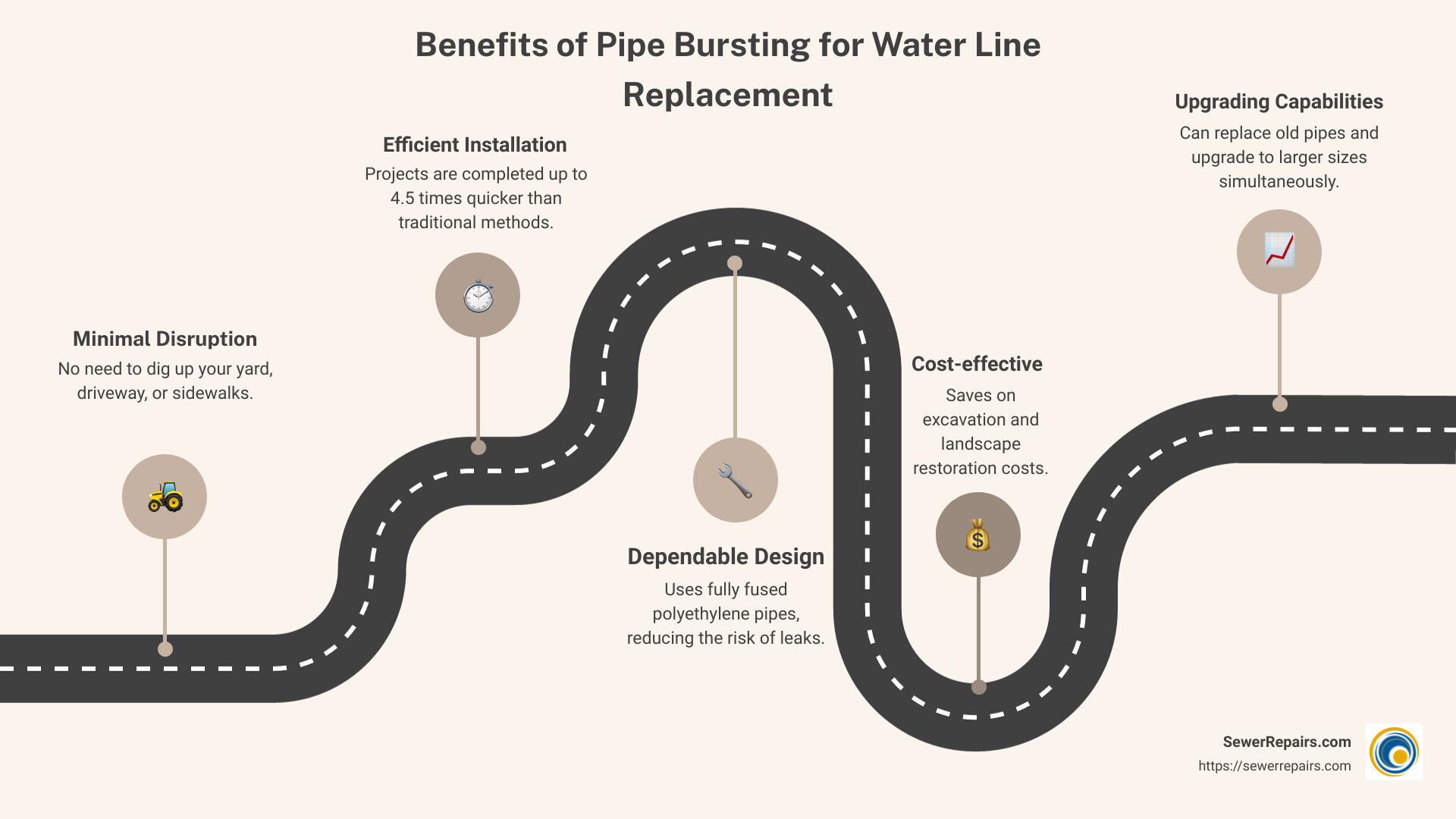
If you’re curious about why pipe bursting water line replacement is a game-changer, here are the highlights:
- Minimal disruption: No need to dig up your yard, driveway, or sidewalks.
- Efficient installation: Projects are completed up to 4.5 times quicker than traditional methods.
- Dependable design: Uses fully fused polyethylene pipes, reducing the risk of leaks.
- Cost-effective: Saves on excavation and landscape restoration costs.
Pipe bursting involves pulling a specialized bursting head through the old pipe, splitting it while simultaneously pulling in a new, high-density polyethylene (HDPE) pipe. This method not only replaces old, worn-out pipes but can also upgrade them to a larger size, improving flow and capacity.
I’m Jason Best, the founder of SewerRepairs.com and a master technician specializing in pipe bursting water line replacement for over two decades. My team and I use the latest trenchless technology to ensure efficient, non-invasive repairs, keeping your property disturbance to a minimum.
Pipe bursting is a trenchless technology method used for replacing old, damaged pipelines without extensive digging. Instead of creating a large trench, this method uses launching and receiving pits to access the existing pipe. Here’s a simple breakdown of how it works:
- Expander Head: The process starts with an expander head, also known as a bursting head. This tool has a smaller leading end and a larger trailing end. The leading end guides the head through the old pipe while the trailing end bursts it apart.
- Pulling Rods and Machine: The expander head is attached to heavy, interlocking pulling rods. These rods are connected to a powerful pulling machine located in the receiving pit. The machine pulls the expander head through the old pipe, breaking it apart.
- Hydraulic System: The pulling machine and other equipment are powered by a hydraulic power pack. This system ensures that the expander head moves smoothly through the old pipe, bursting it effectively.
- HDPE Pipes: As the old pipe is burst, a new high-density polyethylene (HDPE) pipe is pulled into place behind the expander head. HDPE pipes are durable, flexible, and have a long lifespan, making them ideal for this replacement method.
- Minimal Excavation: Only two small pits are dug at either end of the pipeline. This means significantly less disruption to your yard, driveway, or sidewalks compared to traditional methods.
- Transition Fins: Modern expander heads often include fins to make first contact with the existing pipe, ensuring it breaks along its entire circumference. This feature improves the efficiency and reliability of the pipe bursting process.
Key Equipment in Pipe Bursting:
- Expander Head: Breaks the old pipe.
- Pulling Rods: Connects the expander head to the pulling machine.
- Pulling Machine: Pulls the expander head through the old pipe.
- Hydraulic Power Pack: Powers the equipment.
- HDPE Pipe: Replaces the old pipe.
This method is not only efficient but also cost-effective. It usually takes less time and labor compared to traditional methods, reducing overall costs. Additionally, because it minimizes excavation, it also reduces the risk of damaging underground utilities and the surrounding environment.
Pipe bursting is a proven technology for water line replacement and has been successfully used to upgrade pipes to larger sizes, improving flow capacity. For instance, upsizing from 100mm to 225mm is now well-established, and pipes up to 36 inches in diameter have been replaced using this method.
Benefits of Pipe Bursting for Water Line Replacement
Efficient Installation
One of the standout advantages of pipe bursting for water line replacement is its efficient installation process. Unlike traditional methods that require extensive digging and site disruption, pipe bursting is a trenchless technology that significantly shortens project timelines. This means that water and sewer services can be restored much faster, often completing projects up to 4.5 times quicker than traditional open-cut methods.
This rapid installation translates directly into cost savings. With less time and labor required, the overall expenses are reduced. Plus, because there is minimal excavation, the costs associated with site restoration (such as landscaping and road repairs) are also minimized.
Dependable Pipe Design
Another significant benefit of pipe bursting is the dependable pipe design it employs. The new pipes used in this method are typically made from high-density polyethylene (HDPE), which is known for its durability and flexibility. Unlike traditional pipes that come in segments and are joined together, the replacement pipe in pipe bursting is a single, continuous piece.
This means there are no joints that could potentially leak over time. The fully fused polyethylene pipe is as strong at the joints as it is along its length, drastically reducing the risk of future leaks and ensuring a long-lasting, reliable water line.
Minimal Environmental Disruption
Pipe bursting is particularly beneficial in areas where environmental disruption must be kept to a minimum. This method requires only small pits at either end of the pipeline, which means far less excavation compared to traditional methods. This is especially advantageous in environmentally sensitive areas like wetlands, under roads, or in residential neighborhoods with established structures.
By reducing the amount of digging required, pipe bursting minimizes the impact on the surrounding environment and community. This not only preserves the landscape but also means fewer traffic disruptions and less inconvenience for residents and businesses.
Cost Savings and Reduced Construction Time
The combination of shorter project timelines, reduced labor, and minimal site restoration leads to significant cost savings. Traditional digging methods can be expensive and time-consuming, often taking weeks to complete. In contrast, pipe bursting can be completed in a matter of days, drastically reducing the overall project cost.
Additionally, the reduced need for heavy machinery and extensive labor further cuts down on expenses. The efficiency of this method means that utility services can be restored more quickly, reducing downtime and improving overall customer satisfaction.
Summary
In summary, pipe bursting water line replacement offers numerous benefits, including efficient installation, dependable pipe design, minimal environmental disruption, and significant cost savings. These advantages make it an attractive option for utility owners and contractors looking to replace or upgrade water lines with minimal impact on the surrounding area.
When to Use Pipe Bursting for Water Line Replacement
Upgrading Pipe Sizes
One of the key advantages of pipe bursting is its ability to upgrade pipe sizes. This is crucial for utility owners looking to increase the flow capacity of their water lines. For instance, if an old six-inch pipe is no longer sufficient, it can be replaced with an eight- or ten-inch pipe using the pipe bursting method.
This upsizing can improve water flow and meet growing demand without the need for extensive digging and disruption. Local regulations and clearances must be considered, but pipe bursting provides a flexible and efficient way to improve infrastructure capacity.
Minimal Environmental Disruption
Pipe bursting is particularly beneficial in environmentally sensitive areas. Traditional methods often require extensive excavation, which can be highly disruptive. In contrast, pipe bursting requires only small access pits, minimizing surface disruption.
Wetlands and Roads
In areas like wetlands or under roads, the minimal excavation required by pipe bursting is a significant advantage. It reduces the impact on natural habitats and avoids the need for costly road closures and repairs.
Residential Neighborhoods
For residential neighborhoods with established structures, pipe bursting offers a way to replace water lines without tearing up yards, driveways, or sidewalks. This means less inconvenience for residents and a quicker return to normalcy.
Reduced Excavation
The reduced need for excavation not only minimizes environmental impact but also leads to cost savings. With less digging, there is less need for heavy machinery and labor, and fewer resources are required for site restoration. This makes pipe bursting a cost-effective solution for water line replacement.
By avoiding large-scale digging, pipe bursting also reduces the risk of disturbing other underground utilities, making it a safer and more efficient method for upgrading water lines.
Considerations for Pipe Bursting Projects
Pipeline Depth
When planning a pipe bursting project, pipeline depth is a crucial factor. If the pipe is too shallow, ground heave can occur. This happens when the soil is displaced upwards, potentially damaging driveways, sidewalks, and yards.
To avoid this, contractors need to ensure there is adequate soil cover. The rule of thumb is to have at least 10 inches of soil cover for every inch of pipe upsizing, including the diameter of the bursting head. For instance, replacing a six-inch pipe with another six-inch pipe requires at least 20 inches of soil cover due to the bursting head’s larger size.
Soil Cover Requirements:
- Existing Pipe Size: 6 inches
- Bursting Head Size: 8 inches (assumed)
- Required Soil Cover: 20 inches
This ensures the surrounding landscape remains intact and minimizes the risk of ground heave.
Working Around Existing Utilities
Existing utilities can pose challenges during pipe bursting projects. When replacing a water line, it’s crucial to coordinate with other utility services to avoid disruptions.
Temporary Service Interruption
Residents and businesses may experience temporary service interruptions. To mitigate this, contractors set up temporary bypass lines. These lines maintain essential services like water and sewer while the main line is being replaced.
Bypass Line Setup:
- Identify Affected Services: Determine which utilities will be impacted.
- Install Bypass Lines: Set up temporary lines to maintain service.
- Coordinate with Utility Providers: Ensure all necessary permissions and notifications are handled.
Utility Coordination
Effective utility coordination is key to a successful pipe bursting project. This involves:
- Mapping Existing Utilities: Use accurate maps to locate other underground utilities.
- Communication: Regular updates with utility providers to avoid conflicts.
- Safety Measures: Implement safety protocols to prevent accidental damage.
By considering these factors, pipe bursting projects can proceed smoothly, minimizing disruptions and ensuring a seamless transition to the new water line.
Frequently Asked Questions about Pipe Bursting Water Line Replacement
What is the Pipe Bursting Repair Method?
Pipe bursting is a trenchless technology used to replace old or damaged water lines without extensive digging. Here’s how it works:
- Bursting Head: A bursting head is inserted into the existing pipe. This tool breaks the old pipe apart from the inside.
- Pipe Replacement: Attached to the bursting head is a new, flexible HDPE pipe. As the bursting head moves forward, it pulls the new pipe into place, replacing the old one.
This method is efficient and minimizes disruption to your property. It’s especially useful for pipe bursting water line replacement in residential neighborhoods where digging up yards and driveways is undesirable.
How Serious is a Burst Water Pipe?
A burst water pipe is a serious issue that requires immediate attention. During a winter cold spell, pipes can freeze and burst, leading to significant water damage.
Ice Blockage: When water freezes inside a pipe, it expands, creating pressure that can cause the pipe to burst.
$5,000 Damage: A burst pipe can cause extensive damage, potentially costing up to $5,000 in repairs and water damage restoration.
Quick Action: If you suspect a burst pipe, turn off the water supply and call a plumber right away. Quick action can minimize damage and reduce repair costs.
By understanding these key aspects of pipe bursting, homeowners can make informed decisions about water line replacement and ensure their plumbing systems remain in top condition.
Call SewerRepairs.com Today!
At SewerRepairs.com, we take pride in offering expert plumbing services to the residents of Riverside, California. Our team specializes in cost-effective and minimally invasive techniques for water line replacement, including the innovative pipe bursting method.
Expert Plumbing Services: With over 20 years of experience, we are leaders in pipe rehabilitation and underground plumbing repair. Our certified master plumbers are dedicated to delivering top-notch service and ensuring your plumbing systems are in optimal condition.
Cost-Effective Solutions: We understand that plumbing issues can be both stressful and expensive. That’s why we offer competitive pricing and easy financing options to make our services accessible to all homeowners. Our trenchless technologies like pipe bursting save you money by reducing labor costs and minimizing property damage.
Minimally Invasive Techniques: Traditional methods of water line replacement often involve extensive digging, which can disrupt your yard, landscaping, and even your daily life. Our trenchless pipe bursting technology requires only minimal excavation, preserving the beauty of your property while efficiently replacing old or damaged pipes.
For reliable and professional water line replacement services, contact SewerRepairs.com. We are committed to providing high-quality, environmentally friendly solutions that meet your needs and exceed your expectations.