
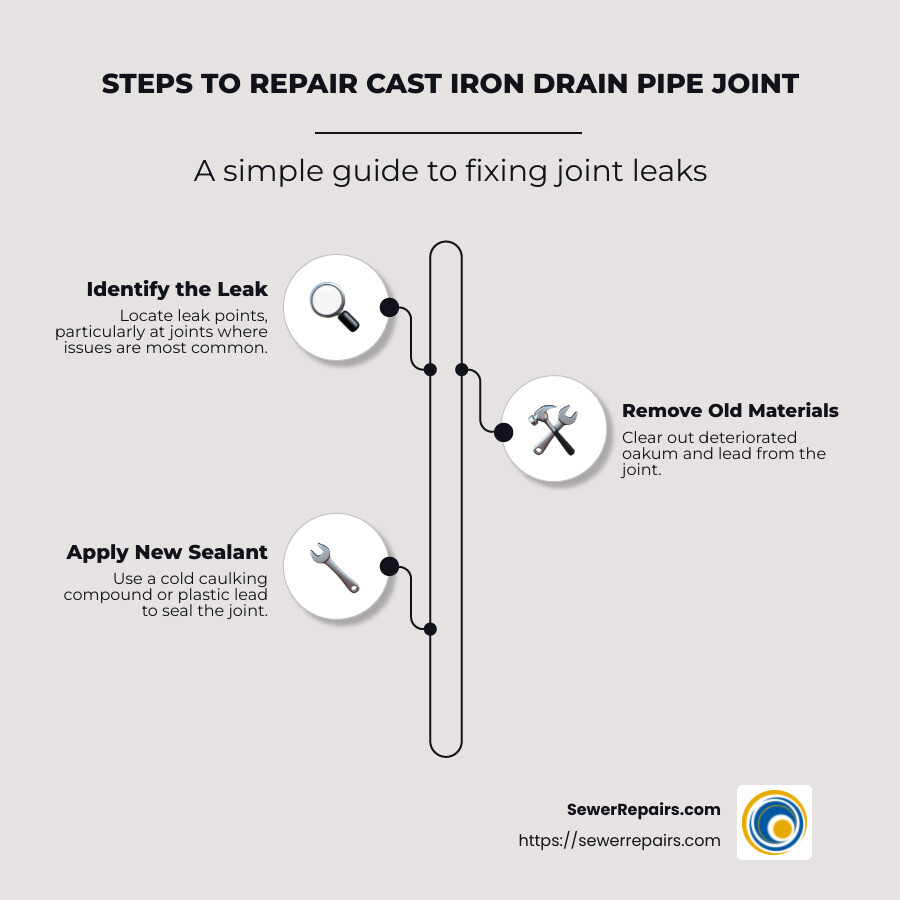
Repairing cast iron drain pipes might seem like a daunting task, but with the right approach, it can be tackled efficiently. For quick guidance, here’s a simplified process to follow:
- Identify the Leak: Most often, leaks occur at the joints.
- Remove Old Materials: Clean out the deteriorated oakum and lead from the joint.
- Apply New Sealant: Use a suitable cold caulking compound or plastic lead.
- Tamp the Caulking: Pack and tamp the new material into the joint securely.
The longevity and robustness of cast iron pipes are well-known, making them a staple in plumbing systems for decades. Yet, as they age, these pipes often present unique challenges. They may succumb to corrosion, lead to leaks, and even suffer from joint deterioration. Such issues require timely attention to prevent expensive damage. Understanding the common problems and solutions associated with cast iron pipes is crucial for any homeowner looking to extend the life of their plumbing system.
I’m Jason Best, with over 20 years of experience in plumbing and as the founder of SewerRepairs.com. My expertise lies in guiding homeowners through the how to repair cast iron drain pipe joint process efficiently and effectively. Let’s dig deeper into cast iron pipe repairs.
Understanding Cast Iron Drain Pipe Joints
When it comes to cast iron drain pipes, the joints are the usual suspects for leaks and corrosion. These joints, known as hub-and-spigot joints, are crucial in maintaining the integrity of your plumbing system. But what exactly makes them tick—and sometimes leak?
Hub-and-Spigot Joints
The hub-and-spigot joint is a traditional method used in cast iron piping systems. The “hub” is the bell-shaped end of the pipe, while the “spigot” is the straight end of another pipe that fits into the hub. This design allows for a snug fit, crucial for preventing leaks.
Historically, these joints were sealed using a combination of lead and oakum. Oakum is a rope-like material made from hemp or jute, soaked in pine tar or oil. It acts as a flexible sealant, while molten lead is poured over it to create a solid, watertight joint. This method has been effective for many years, but it’s also susceptible to wear and tear over time.
The Role of Lead and Oakum
Lead and oakum have been the go-to materials for sealing these joints due to their durability and water resistance. However, as the pipes age, the lead can crack, and the oakum can deteriorate, leading to leaks. This is often the first sign that your cast iron pipes need attention.
The process of repairing these joints involves removing the old lead and oakum and replacing them with modern materials like cold caulking compound or “plastic lead.” These newer materials are not only safer but also easier to apply, reducing the complexity of the repair process.
Corrosion: The Silent Enemy
Corrosion is a common issue with any metal exposed to moisture, and cast iron is no exception. Over time, the inner surfaces of the pipe can rust and corrode, which can weaken the joint and lead to leaks. This is why regular inspection and maintenance are vital.
Corrosion starts by constricting the pipe’s diameter and creating rough surfaces that slow down water flow. If left unchecked, it can lead to significant structural damage. Understanding the signs of corrosion early can save homeowners from costly repairs down the line.
By grasping the basics of hub-and-spigot joints, the role of lead and oakum, and the impact of corrosion, homeowners can better manage their plumbing systems and address issues proactively. This knowledge is essential for anyone looking to maintain their cast iron pipes effectively and ensure their home’s plumbing remains in top condition.
How to Repair Cast Iron Drain Pipe Joint
Repairing a cast iron drain pipe joint might sound daunting, but with the right steps and materials, it can be straightforward. Here’s a guide to help you tackle this plumbing challenge.
Step-by-Step Repair Process
1. Lead-Caulked Joints
Start by addressing any issues with the lead-caulked joints. Use a hammer and cold chisel to tamp down any loose lead inside the hub. This helps to secure the existing lead and prevent leaks.
If tamping doesn’t stop the leak, you’ll need to repack the joint with oakum. Measure a length of oakum twice the circumference of the pipe. Pack it evenly into the hub using a caulking iron or an old screwdriver. This ensures a tight seal, filling any gaps where water might escape.
2. Prepare the New Caulking
Modern alternatives like cold caulking compound or “plastic lead” are now used instead of molten lead. These materials are safer and easier to handle.
To apply, measure and cut the caulking compound to twice the pipe’s circumference. Place it on a clean, dry surface and lightly dampen it with water using a paintbrush or plant sprayer. Be careful not to soak it, as this can affect its sealing properties.
3. Tamp the Joint
Work the dampened compound into the joint a few inches at a time. Use a hammer and caulking iron to tamp it down firmly. Continue this process until the entire joint is packed.
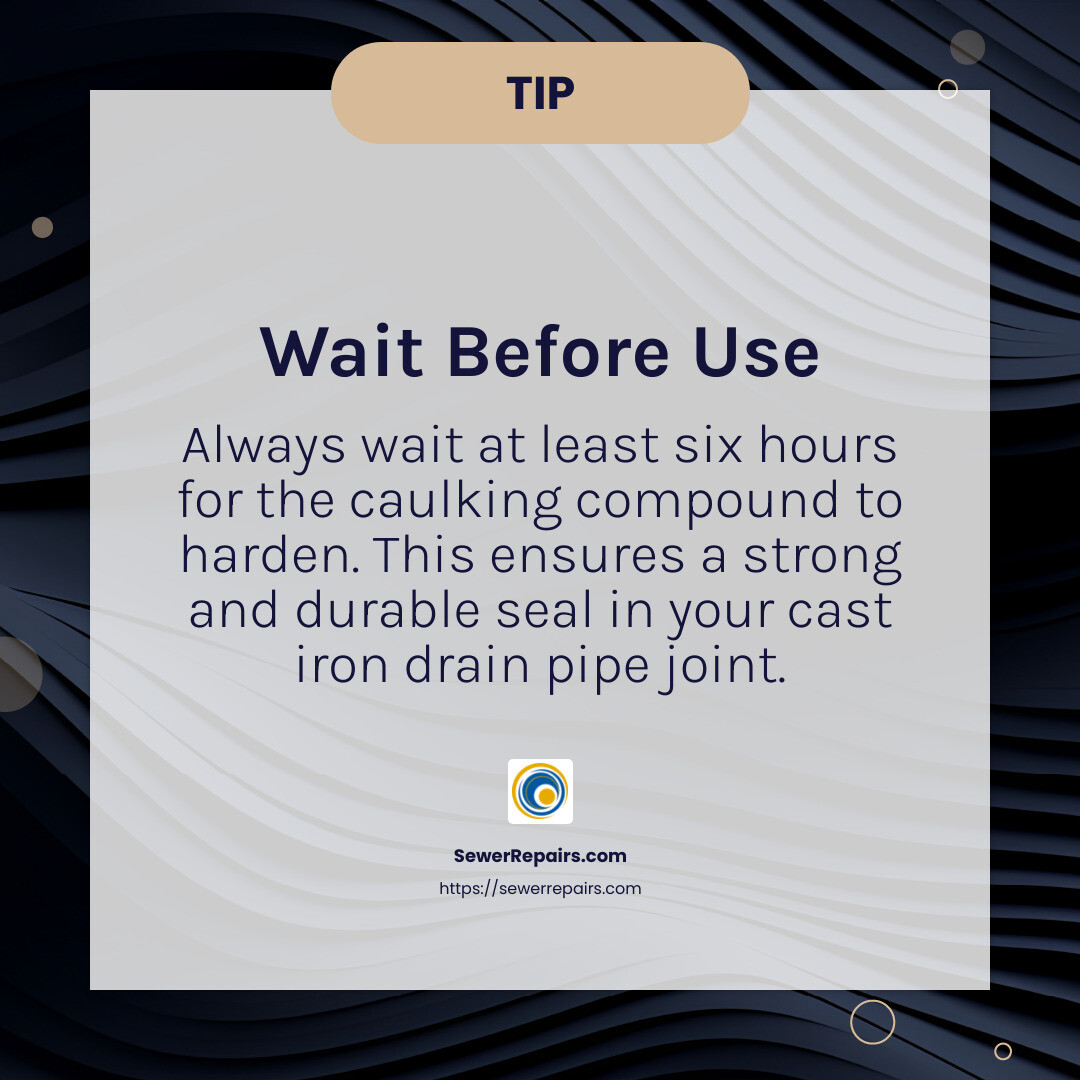
Allow at least six hours for the compound to harden before using the drainpipe. This waiting period ensures the seal is strong and durable.
Alternative Repair Methods
If the traditional method isn’t suitable, there are modern alternatives to consider:
Trenchless Pipe Relining
This technique involves inserting a liner coated with epoxy into the existing pipe. The epoxy hardens, creating a new pipe within the old one. It’s a minimally invasive method, ideal for pipes that are structurally sound but have minor leaks or corrosion.
Epoxy Lining
Similar to trenchless relining, epoxy lining involves applying an epoxy coating to the interior of the pipe. This seals cracks and prevents further corrosion, extending the life of the pipe without the need for excavation.
PVC Replacement
In cases where the cast iron pipe is too damaged, replacing it with PVC might be the best option. PVC is durable, resistant to corrosion, and easier to work with than cast iron. It also eliminates the need for lead and oakum, making the installation process simpler.
Each of these methods has its advantages, and the right choice depends on the condition of your pipes and your specific needs. Whether you opt for traditional repairs or modern techniques, understanding these options can help you make informed decisions about maintaining your plumbing system.
Frequently Asked Questions about Cast Iron Pipe Repair
Can you weld cast iron drain pipe?
Welding cast iron drain pipes is challenging due to the metal’s composition. Cast iron is brittle and can crack easily when subjected to high temperatures. Weldable cast iron types are limited, and even those require specialized techniques, such as preheating the pipe and using nickel-rich welding rods. For most homeowners, welding isn’t a practical solution for repairing cast iron pipes.
How to seal cast iron drain joints?
Sealing cast iron drain joints can be done using trenchless relining or sealing compounds. Trenchless relining involves inserting a liner coated with epoxy into the pipe, which hardens and forms a new, seamless pipe within the old one. This method is less invasive and ideal for pipes that are difficult to access.
For more straightforward repairs, sealing compounds like cold caulking compound or “plastic lead” can be used to fill and seal the joints. These materials are easier to apply than traditional molten lead and provide a long-lasting seal.
Can cast iron drain pipe be repaired?
Yes, cast iron drain pipes can be repaired using several methods. One common technique is the use of a compression gasket or a hubless coupling. These are mechanical seals that fit around the pipe joint, providing a tight seal without the need for caulking or lead. They are especially useful when the joint is too damaged for traditional sealing methods.
For more extensive damage, pipe sections can be replaced with PVC, or a trenchless repair method can be used to avoid digging up large sections of pipe. These options provide flexibility depending on the extent and location of the damage.
Call SewerRepairs.com Today!
At SewerRepairs.com, we understand that dealing with cast iron drain pipe issues can be daunting. However, with our expertise in plumbing services and our focus on minimally invasive techniques, we make the process as smooth and efficient as possible.
Our team specializes in innovative solutions like trenchless pipe relining and CIPP lining, which allow us to repair pipes without the need for extensive digging. This not only saves time and money but also minimizes disruption to your home or business. By using these advanced methods, we can address problems such as leaks and corrosion effectively.
Whether it’s about knowing how to repair cast iron drain pipe or choosing the right alternative repair method, our experienced plumbers are here to help. We are committed to providing high-quality service and ensuring your plumbing system operates smoothly for years to come.
For more information on our services or to schedule a consultation, visit our Cast Iron Sewer Pipe Repair Sleeve page. We’re here to ensure your plumbing issues are a thing of the past.