
How to locate house sewer line is a common concern for homeowners who wish to avoid costly repairs and ensure efficient maintenance. Finding the exact path of your sewer line is essential for preventing damage, performing timely maintenance, and ensuring you’re in compliance with local regulations. Whether you’re planning a garden project or preparing to sell your home, knowing your sewer line’s location can save you from digging up unnecessary trouble.
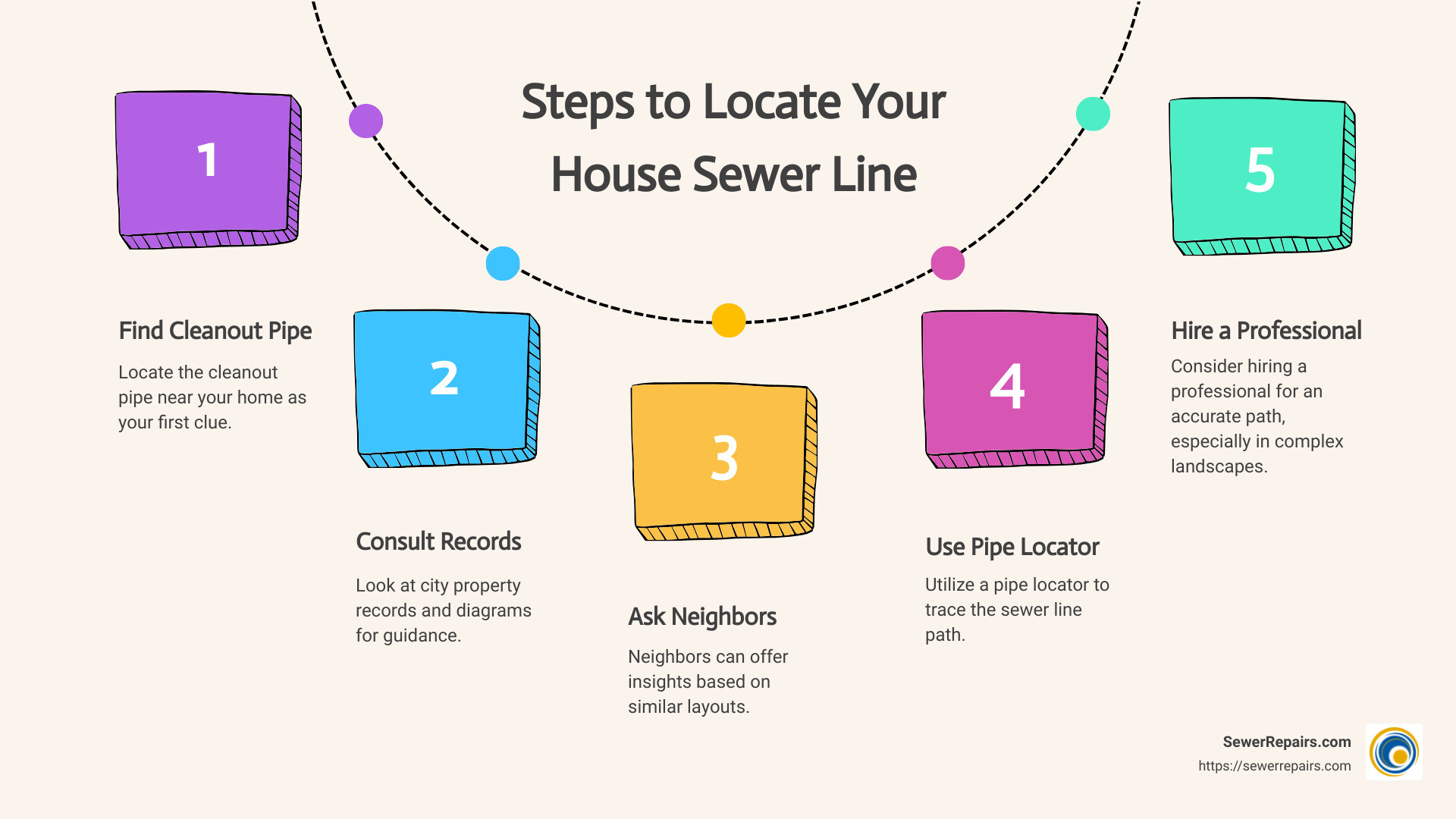
- Start at the cleanout pipe: Usually found near your home, this is your first clue.
- Consult property records: Diagrams from city records can guide you.
- Ask neighbors: Similar layouts can offer insights.
- Consider professional help: Use tools like a pipe locator or hire a service.
I’m Jason Best, and I’ve spent over two decades helping homeowners like you with sewer repair and maintenance. Understanding how to locate house sewer line has been at the forefront of my work. Let me guide you through the process, sharing insights that ensure your property remains intact while keeping your plumbing efficient and top-notch.
Why You Need to Locate Your Sewer Line
Knowing how to locate your house sewer line is more than just a handy skill—it’s a necessity for any homeowner.
Here’s why:
Preventative Maintenance
Regular maintenance can prevent major sewer line issues before they start. By knowing where your sewer line is, you can schedule routine checks and cleanings, reducing the risk of unexpected clogs or leaks. This proactive approach saves you time and money in the long run.
Access for Repairs
When a problem does arise, quick access to your sewer line is crucial. Whether it’s a stubborn clog or a break in the line, knowing the exact location allows for faster repairs. This minimizes disruption to your daily life and reduces repair costs.
Avoid Yard Damage
Digging around blindly in search of your sewer line can lead to unnecessary yard damage. By locating the line beforehand, you can avoid destroying your landscaping or damaging other underground utilities. This is especially important if you’re planning any major yard projects.
Tree Planting Considerations
Trees are beautiful, but their roots can wreak havoc on sewer lines. Knowing where your sewer line is helps you plant trees and shrubs in safe locations, preventing root intrusion and the costly repairs that follow.
Compliance with Local Codes
Many local regulations require homeowners to be aware of their sewer line locations. This knowledge ensures you’re in compliance with these codes, avoiding potential fines or legal issues.
Selling Your Home
Finally, if you plan to sell your home, having accurate information about your sewer line can be a selling point. Buyers appreciate knowing that the property has been well-maintained and that potential issues have been preemptively addressed.
How to Locate House Sewer Line
Locating your house sewer line doesn’t have to be a daunting task. With a few straightforward methods, you can pinpoint its exact location and ensure you’re prepared for any maintenance or repair needs.
Start with the Cleanout Pipe
The cleanout pipe is your best starting point. This pipe, often sticking out of the ground with a cap on top, provides direct access to your sewer line. It can usually be found in your yard, basement, or crawl space. Look for a cap with a square knob or notch—this is a telltale sign of a cleanout pipe. If it’s not immediately visible, it might be slightly buried in a plastic box.
Consult Property Records and Blueprints
Your local city or county records can be a goldmine of information. Building permits, diagrams, and utility maps often detail the layout of your sewer system. These records can provide precise diagrams showing where your sewer line runs. Accessing these documents can give you a clear picture without any guesswork.
Ask Your Neighbors
Sometimes, the simplest solutions are right next door. In many neighborhoods, sewer line placements follow similar patterns. By chatting with your neighbors, you might uncover valuable clues about your own setup. Their experiences can guide you, especially if they’ve already located their lines.
Use a Pipe Locator
For a more technical approach, consider using a pipe locator. These devices use electromagnetic signals to detect underground pipes. You can rent or purchase one from a local hardware store. It’s a relatively easy-to-use tool that can save you a lot of time and effort, especially if you’re dealing with complex landscaping.
Hire a Professional
When in doubt, hiring a professional is always a wise choice. A professional inspection provides an accurate path of your sewer line, which is crucial if your yard has intricate landscaping or if you suspect any issues. Companies like SewerRepairs.com offer expert services to ensure your sewer line is located accurately and efficiently.
By following these steps, you’ll have a clear understanding of where your sewer line is located, which is essential for maintaining your home’s plumbing system.
How to Find Your Home’s Sewer Cleanout
Finding your home’s sewer cleanout is crucial for quick access during maintenance or emergencies. Here’s how you can locate it:
Look for the Cleanout Pipe
Begin by searching for the cleanout pipe. This is typically a short, capped pipe that provides access to the main sewer line. In many homes, this pipe is located in the yard, often near the house. It might be sticking out of the ground or housed within a plastic box for protection.
In some cases, the cleanout pipe might be inside the home. Check the basement or crawl space for a pipe with a cap. The cap usually has a square knob or notch, making it easy to identify.
Professional Help
If you’re having trouble finding the cleanout or need further assistance, consider hiring a professional plumber. Plumbers have the expertise and tools to locate and access the cleanout efficiently. They can also inspect the line for any potential issues, ensuring your sewer system is functioning properly.
By locating the cleanout, you ensure easy access for maintenance and can prevent bigger issues down the line.
Preventing Sewer Line Damage
Protecting your sewer line from damage is crucial for maintaining a healthy home plumbing system. Here are some practical tips that can help you avoid costly repairs:
Avoid Driving Over the Line
Your sewer line is not designed to support heavy loads. Driving vehicles over the area where your sewer line runs can lead to cracks or breaks. Be mindful of the line’s location and keep cars, trucks, and heavy equipment off those areas.
Be Cautious with Tree Planting
Trees and shrubs can beautify your yard, but their roots can wreak havoc on sewer lines. Roots naturally seek out moisture, which makes sewer lines an attractive target. Avoid planting trees or large shrubs near the sewer line to prevent root intrusion. If trees are already in place, consider consulting with an arborist to manage root growth.
Practice Cautious Digging
Before you dig anywhere in your yard, ensure you know where your sewer and other utility lines are. Use a local service to mark these lines, or consult property records for their locations. This precaution can prevent accidental damage during gardening, landscaping, or construction projects.
Regular Maintenance
Routine maintenance is key to preventing sewer line issues. Schedule regular inspections and cleanings to catch problems early. This can help you avoid clogs, leaks, and other issues that can escalate into major repairs. By maintaining your sewer line, you ensure it operates efficiently for years to come.
Taking these steps can significantly reduce the risk of sewer line damage, saving you time and money.
Frequently Asked Questions about Locating Sewer Lines
How deep are residential sewer lines buried?
Residential sewer lines are typically buried between 18 to 30 inches deep. However, this can vary based on local building codes and climate conditions. In colder regions, pipes might be buried deeper to prevent freezing. City sewer lines tend to be deeper than residential ones, often several feet underground, to accommodate the larger infrastructure.
How to find drainage pipe in yard?
To locate a drainage pipe in your yard, start by looking for the cleanout pipe. This is usually a pipe with a cap sticking out of the ground, often near the house or at the property line. If your home is connected to a municipal system, the cleanout is a good starting point. For homes with septic systems, the cleanout may be closer to the septic tank. If the cleanout isn’t visible, check property records for diagrams or use a pipe locator tool to trace the lines.
How do you know if you have a broken sewer line under your house?
Signs of a broken sewer line can include mold, mildew, or water backup in your home. You might notice a foul smell or see sewage backing up in your drains. Other indicators include slow drainage or gurgling sounds from pipes. If you suspect a break, it’s crucial to act quickly to prevent further damage and potential health hazards. Consulting a professional can provide an accurate diagnosis and solution.
Call SewerRepairs.com Today!
Finding your house sewer line is crucial for maintaining a healthy plumbing system. While you might be tempted to go it alone, professional help can make all the difference. At SewerRepairs.com, we specialize in providing expert sewer inspection, repair, and maintenance services. Our team uses the latest techniques, like trenchless repairs, to ensure minimal disruption to your property.
Why trust the pros? Because knowing the exact location of your sewer line can prevent costly mistakes. Professionals use advanced tools to accurately map out your sewer system, which is especially useful in complex landscapes. This precision helps avoid unnecessary digging and saves you time and money.
Moreover, regular maintenance by experts ensures that any potential issues are caught early. This proactive approach not only keeps your plumbing system running smoothly but also gives you peace of mind. You won’t have to worry about surprise repairs or compliance issues when selling your home.
In short, while you can take steps to locate your sewer line, enlisting professional services like those from SewerRepairs.com guarantees accuracy and efficiency. Let us help you maintain your home’s plumbing with confidence.