
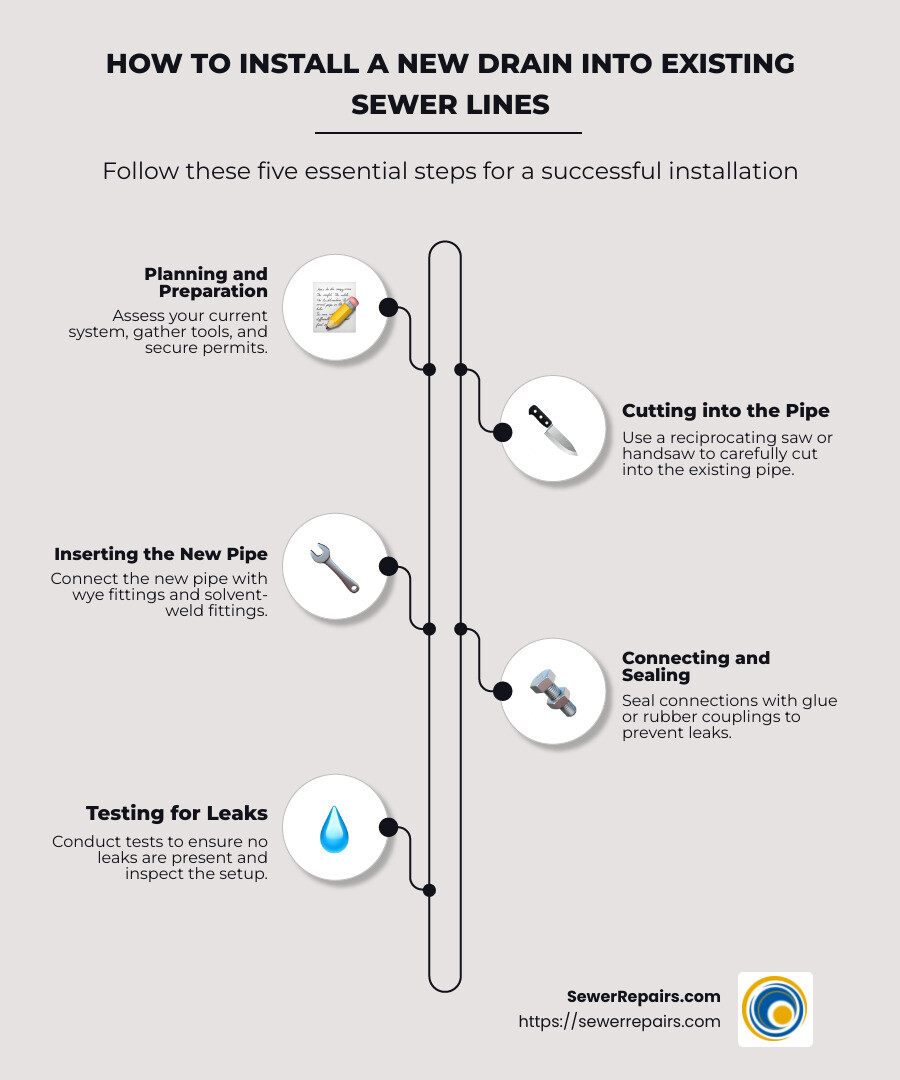
To install a new drain into existing sewer lines, begin by assessing your current sewer system, gather the necessary tools and materials, and ensure you have the correct permits. Next, carefully cut into the existing pipe with a reciprocating saw or handsaw, insert the new drain line using suitable couplings like wye fittings, and seal the connections with glue or rubber couplings. Finally, test your setup for leaks to ensure proper functioning.
Efficient sewer systems are crucial for maintaining a home’s plumbing health and functionality. As your home ages, integrating new drains can improve the capacity and longevity of your sewer lines, reducing issues like clogs and leaks. SewerRepairs.com specializes in seamless and minimally invasive repairs and installations, ensuring that homeowners face minimal disruptions. Understanding the complexities of this task can help you make informed decisions, safeguarding your plumbing system for years to come.
I’m Jason Best, a seasoned plumber with over two decades of experience. I’ve mastered various techniques on how to install a new drain into existing sewer lines, ensuring that homes maintain efficient and robust plumbing systems. At SewerRepairs.com, we are committed to excellence and customer satisfaction. Read on to explore more about integrating a new drain smoothly and efficiently.
Understanding Your Existing Sewer System
Before diving into how to install a new drain into existing sewer lines, it’s important to understand the basics of your sewer system. This knowledge is vital for making informed decisions and ensuring a successful installation.
Sewer System Basics
Your home’s sewer system is like a network of highways for wastewater. It collects waste from various fixtures like sinks, toilets, and showers, and transports it to a municipal sewer line or septic system. The main components include drain pipes, vent pipes, and the main sewer line. Each plays a unique role in maintaining the flow of waste and preventing harmful gases from entering your home.
Drain Pipes: These are the smaller pipes that connect fixtures to the main sewer line. They carry wastewater away from your home.
Vent Pipes: They allow air to enter the plumbing system, helping water flow smoothly through the pipes and preventing sewer gases from entering living spaces.
Main Sewer Line: This is the large pipe that carries all the wastewater from your home to the municipal sewer or septic tank.
Existing Drain Lines
When adding a new drain, it’s crucial to assess your existing drain lines. This involves understanding their size, capacity, and condition. The size of your current pipes can limit your options. For example, if your existing line is 1-1/4″, you can’t tie anything else into it. If it’s 1-1/2″, you might wish it was 2″ to accommodate more fixture units.
Fixture Units: These are measurements used to determine the load on your plumbing system. Each fixture, like a sink or toilet, has a specific number of fixture units.
Sewer Clean Out Pipe
A sewer clean out pipe is an important component of your sewer system. It’s a capped pipe that provides direct access to the main sewer line. This access point is crucial for maintenance and troubleshooting. It allows plumbers to clear clogs, inspect the line, and make repairs without extensive digging.
Why It’s Important: If you’re planning to add a new drain, knowing the location of your clean out pipe can simplify the process. It provides a convenient point to access the sewer line for cutting and connecting new pipes.
Tools and Materials Needed
When you’re ready to tackle how to install a new drain into existing sewer lines, having the right tools and materials is crucial. This section will guide you through the essentials needed for a smooth and safe installation process.
Essential Tools
- Reciprocating Saw or Handsaw: These are necessary for cutting into existing pipes. A reciprocating saw is faster, but a handsaw can be more precise for tight spaces.
- Pipe Cutter: Ideal for clean, straight cuts on smaller pipes, ensuring a snug fit for connections.
- Measuring Tape and Marker: To measure and mark the pipes accurately before cutting.
- Pipe Wrench: Useful for tightening and loosening fittings.
- Level: Ensures your new drain pipes have the correct slope for optimal drainage.
- Safety Gear: Safety goggles, gloves, and a dust mask protect you from debris and fumes.
Materials
- New Drain Pipe: Choose the appropriate size and type (PVC, ABS, etc.) based on your existing system.
- Couplings and Fittings: Rubber couplings and wye fittings are essential for connecting new pipes to existing ones. Rubber couplings offer flexibility and ease of alignment.
- Solvent-Weld Fittings: These are used to create a permanent bond between PVC pipes. You’ll need both primer and glue for these connections.
- Pipe Support Brackets: To secure pipes and prevent sagging, ensuring proper drainage slope.
Safety Equipment
Safety should always be a priority. Here are some recommended items:
- Safety Goggles: Protect your eyes from flying debris when cutting pipes.
- Gloves: Keep your hands safe from sharp edges and chemical exposure.
- Dust Mask: Useful when cutting or sanding materials to avoid inhaling dust.
Having the right tools and materials not only makes the job easier but also ensures that your installation is safe and up to code. Proper preparation will save you time and prevent potential issues down the line.
How to Install a New Drain into Existing Sewer Lines
Step 1: Planning and Preparation
Before you begin installing a new drain into existing sewer lines, planning is key. Start by checking local building codes and securing any necessary permits. This ensures your project complies with regulations and avoids future issues.
Location Assessment: Choose the best spot for the new drain, considering the layout of your current plumbing and sewer lines. This helps minimize the amount of work and materials needed.
Permits and Compliance: Contact your local building authority to understand the specific requirements for your area. This might include inspections during and after installation.
Step 2: Cutting into the Existing Pipe
Cutting into your sewer line requires precision. Use a reciprocating saw for speed or a handsaw for more control in tight spaces.
Mark the Pipe: Use a measuring tape and marker to mark where you’ll cut. Ensure the section is about 12 inches longer than the wye fitting you plan to insert.
Safety First: Always wear safety goggles and gloves to protect yourself from debris and sharp edges.
Step 3: Inserting the New Pipe
This step involves connecting the new pipe to the existing system.
Couplings and Fittings: Use rubber couplings for flexibility and ease of alignment. Insert a wye fitting to connect the new drain line.
Solvent-Weld Fittings: For a permanent bond, apply primer and glue to the pipe ends and the inside of the fittings. Push them together with a quarter-turn twist to ensure a secure fit.
Step 4: Connecting and Sealing
Proper sealing prevents leaks and maintains the integrity of your sewer system.
Glue and Primer: Apply these to all connections. Ensure that everything is aligned correctly before the glue sets.
Rubber Couplings: These are especially useful if the existing pipe has no wiggle room. They provide a durable and flexible connection.
Step 5: Testing for Leaks
After installation, testing is crucial to ensure everything works correctly.
Inspection: Check all connections for any signs of leaks. This includes visual inspection and running water through the system.
Troubleshooting: If you find leaks, reapply glue and ensure the fittings are secure. Tighten any loose connections with a pipe wrench.
These steps provide a clear path to successfully install a new drain into your existing sewer lines. Proper planning, careful execution, and thorough testing will ensure a functional and leak-free system.
Common Challenges and Solutions
When installing a new drain into existing sewer lines, you might encounter some common challenges. Here’s how to tackle them effectively:
Wiggle Room
Challenge: Limited space can make it hard to maneuver pipes and tools.
Solution: Use flexible rubber couplings to connect pipes. They allow some movement and adjustment, making it easier to fit everything together in tight spaces. Also, consider using a smaller reciprocating saw for cutting in cramped areas. This tool offers better control than larger equipment.
Water in Pipe
Challenge: Standing water in the pipe can complicate installation. It might cause leaks or make it difficult to achieve a proper seal.
Solution: Before cutting, ensure the pipe is dry. Turn off water supply and let the system drain. If water remains, use a wet/dry vacuum to remove it. This ensures a clean, dry surface for your fittings and glue.
Alignment Issues
Challenge: Misaligned pipes can lead to leaks and poor drainage. They make it difficult to achieve a proper seal with couplings and fittings.
Solution: Mark clearly where each cut and connection should be. Use a level to ensure pipes are straight. During assembly, dry-fit components first to check alignment. If adjustments are needed, flexible couplings can help bridge slight misalignments without compromising the system’s integrity.
By anticipating these challenges and preparing solutions in advance, you’ll streamline the process of installing a new drain into your sewer lines. This proactive approach helps ensure a smooth installation and a reliable drainage system.
Frequently Asked Questions about Installing a New Drain into Existing Sewer Lines
How do I add a new drain to an existing drain?
Adding a new drain to an existing system involves a few key steps. First, plan and prepare by checking local plumbing codes to ensure compliance. You’ll need to cut into the existing drain pipe using a reciprocating saw or handsaw. Once the pipe is cut, insert a wye fitting to create a branch for the new drain. Use rubber couplings to secure the connection, allowing for some flexibility and movement. These couplings help bridge any gaps and ensure a tight fit. Lastly, make sure all connections are sealed properly with glue or primer to prevent leaks.
Can you connect a drain to a sewer line?
Yes, you can connect a new drain to a sewer line, but it’s crucial to follow plumbing codes and consider the capacity of your existing system. Each drain adds to the total load on the sewer line, so ensure the pipe size can handle the additional flow. Typically, a 3-inch or 4-inch sewer line is used for these connections. If you’re unsure about the capacity, consult a professional to avoid overloading the system. Properly installed, your new drain will function efficiently without causing any problems to the existing sewer line.
How do you tie into an existing sewer drain?
Tying into an existing sewer drain involves several important steps:
- Cutting the Old Pipe: Start by identifying the section of the pipe where the new drain will connect. Carefully cut this section using a reciprocating saw. Ensure the pipe is dry and clear of any standing water before cutting.
- Inserting Couplings: Once the pipe is cut, insert rubber couplings to connect the new section. These couplings provide a secure and flexible connection, allowing for slight adjustments during installation.
- Laying New Pipe: After securing the couplings, lay the new pipe section and connect it to the existing system using a wye fitting. Ensure all connections are straight and aligned to prevent leaks.
By following these steps and using the right tools and materials, you can successfully add a new drain to your existing sewer lines. Proper planning and execution will help ensure a smooth installation process and a reliable plumbing system.
Call SewerRepairs.com Today!
Installing a new drain into existing sewer lines might seem like a daunting task, but with the right knowledge and preparation, it can be straightforward and rewarding. By following the steps we’ve outlined, you can ensure that your new drain is installed correctly and functions efficiently without causing issues to your existing system.
The benefits of a successfully installed drain are numerous. Not only does it improve the functionality of your plumbing system, but it also increases the value of your property. Proper drainage prevents water damage and helps maintain a healthy living environment by ensuring waste is efficiently carried away from your home.
At SewerRepairs.com, we pride ourselves on offering expert advice and services to help you with your plumbing needs. Our team specializes in cost-effective, minimally invasive sewer repair techniques, ensuring that your project is completed with minimal disruption to your home. Whether you’re planning a DIY project or need professional assistance, we’re here to support you every step of the way.
Ready to get started? Contact us today to discuss your project and find how our innovative solutions can make your plumbing system work better for you.