
If you’re wondering how long trenchless sewer repair lasts, the quick answer is: a well-done trenchless sewer repair, particularly Cured-In-Place Pipe (CIPP) lining, can last from 50 to 100 years. This durability comes from high-quality materials like epoxy, which is resistant to pressures, extreme temperatures, and chemicals.
Trenchless sewer repair represents a major leap forward in how we maintain our underground infrastructure. Unlike traditional methods that require digging up your yard, trenchless technology fixes pipes right where they are. This approach not only saves your landscape from destruction but also significantly cuts down on repair time and costs. The three pillars of trenchless repair—CIPP, pipe bursting, and pipe lining—each offer robust solutions to sewer line issues. They’re designed to tackle different problems, from minor leaks to complete pipe replacement, with a focus on longevity and minimal disruption.
- CIPP (Cured-In-Place Pipe) is a method where a resin-saturated liner is inserted into the damaged pipe and then cured to form a solid, seamless pipe within a pipe.
- Pipe bursting involves breaking the old pipe while simultaneously pulling a new pipe into place.
- Pipe lining is similar to CIPP but generally refers to the process of creating a new pipe lining within the existing one without the need for curing.
These trenchless sewer repair technologies are setting a new standard for durability, efficiency, and minimal environmental impact, heralding a future where sewer repair no longer means turning your property upside down.
Understanding Trenchless Sewer Repair
Trenchless sewer repair is like giving your old, tired pipes a new lease on life without the drama of a major excavation project. Imagine fixing a pipe buried deep under your beautiful garden without disturbing a single flower. That’s the magic of trenchless technology. Let’s dive into the key players in this field: CIPP, Pipe bursting, Pipe lining, along with their trusty sidekicks, Epoxy resin, and HDPE.
CIPP (Cured-In-Place Pipe)
Think of CIPP as a pipe’s new, snug jacket. It’s a method where a resin-saturated felt tube is pulled or inverted into the damaged pipe and then cured to form a tight-fitting, corrosion-resistant lining. This process essentially creates a “pipe within a pipe,” and it’s as cool as it sounds. The best part? This new inner pipe can last over 50 years. That’s half a century of not worrying about your sewer lines!
Pipe Bursting
This method is like the Hulk of sewer repair. When a pipe is beyond repair, pipe bursting comes in to literally burst the old pipe apart while simultaneously pulling a new pipe into place. It’s powerful, effective, and leaves you with a brand new pipe made of HDPE (High-Density Polyethylene), known for its durability and long lifespan.
Pipe Lining
Pipe lining is the less invasive cousin of CIPP, involving the insertion of a flexible tube coated with epoxy resin into the damaged pipe. Once in place, the tube is inflated, pressing the resin against the pipe walls. As it cures, it forms a new pipe inside the old one. This method is quick, efficient, and the epoxy resin used creates a seamless and durable lining that can also last for decades.
Epoxy Resin
Epoxy resin is the superhero ingredient in trenchless repairs. It’s incredibly strong, adheres well to old pipe materials, and forms a seamless, corrosion-resistant barrier. This resin is why trenchless repairs can promise such impressive lifespans, standing strong against everything from household chemicals to tree root invasions.
HDPE
HDPE (High-Density Polyethylene) is the material of choice for pipe bursting methods. It’s flexible, which makes it easy to maneuver underground, and it’s incredibly resistant to corrosion and wear. Plus, it has a lifespan of 50 to 100 years. HDPE pipes aren’t just a repair; they’re an upgrade.
In a nutshell, trenchless sewer repair offers a way to fix or replace sewer lines using methods that are fast, efficient, and kind to your property (and your wallet in the long run). Whether it’s the snug fit of a CIPP lining, the brute force of pipe bursting, or the seamless barrier created by epoxy in pipe lining, these methods ensure your sewer system can keep doing its job without a hitch for decades to come.
Next, we’ll explore the pros and cons of trenchless sewer repair, weighing the benefits against the limitations to help you make the best decision for your property.
Lifespan and Durability
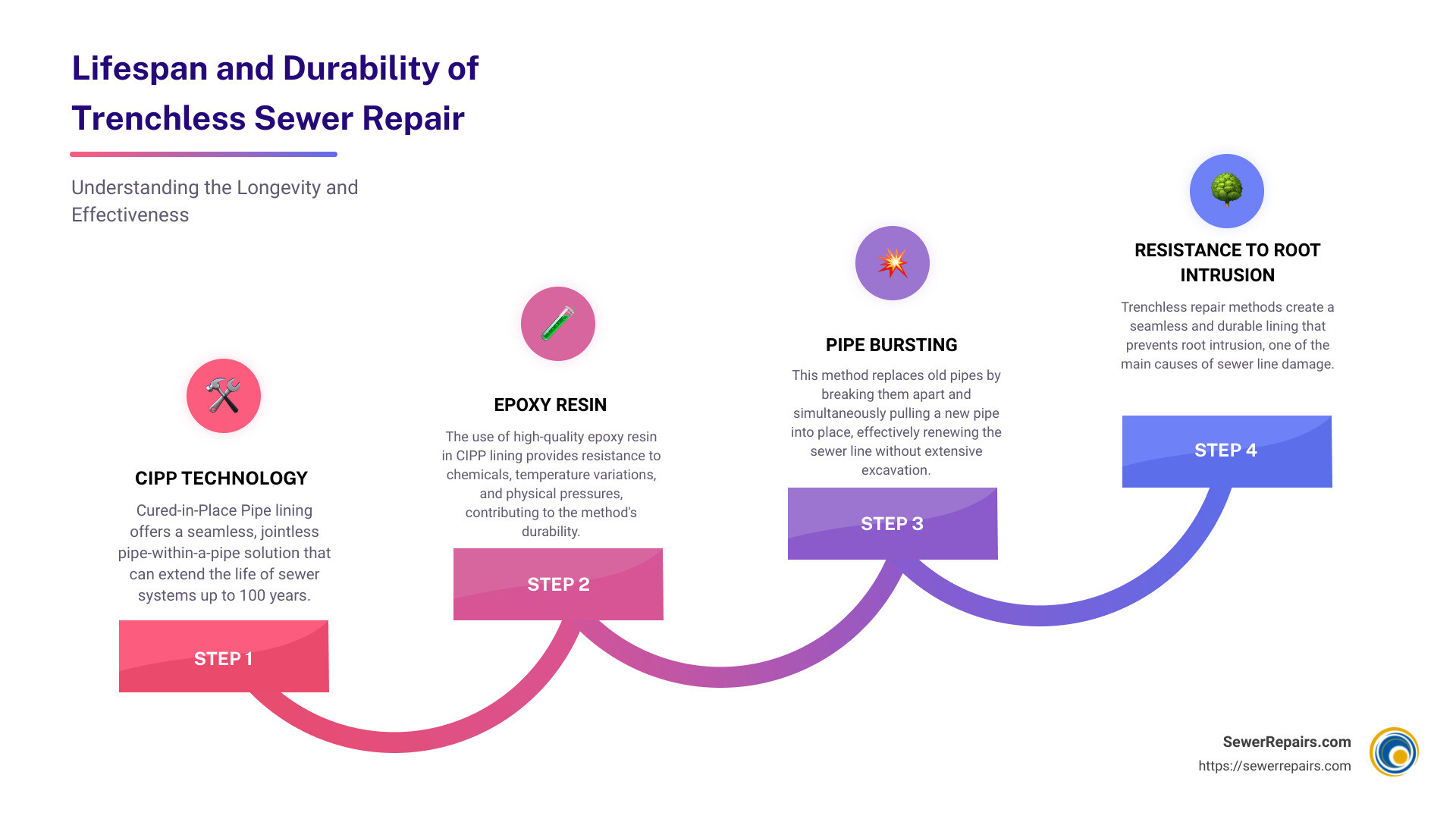
When considering trenchless sewer repair, one of the most pressing questions is: How long does trenchless sewer repair last? Let’s break down the key factors: 50 to 100 years lifespan, epoxy durability, resistance to root intrusion, and the overall quality of materials used.
50 to 100 Years Lifespan
Yes, you read that correctly. Trenchless sewer repair methods, including Cured-In-Place Pipe (CIPP) and pipe bursting, are designed to last anywhere from 50 to 100 years. This impressive lifespan is primarily due to the advanced materials and techniques used in the process. It’s a long-term solution, ensuring that property owners won’t have to worry about frequent repairs or replacements.
Epoxy Durability
Epoxy resin plays a star role in the trenchless repair process, particularly in CIPP lining. This resin is incredibly strong and forms a seamless, tight-fitting barrier inside the existing pipe. It’s resistant to a wide range of temperatures, pressures, and chemical exposures, making it significantly more durable than traditional pipe materials. The epoxy resin ensures that the repair not only lasts but also enhances the pipe’s resilience against future damage.
Resistance to Root Intrusion
One of the common culprits behind sewer line damage is root intrusion. However, the epoxy used in trenchless sewer repairs creates an impenetrable barrier against roots. This resistance to root intrusion is crucial for maintaining the integrity of sewer lines, especially in areas with heavy tree coverage. By preventing roots from breaching the sewer line, trenchless repairs eliminate a significant risk factor for pipe damage.
Material Quality
The quality of materials used in trenchless sewer repairs is unparalleled. High-Density Polyethylene (HDPE) is often employed for its flexibility, durability, and resistance to corrosion. HDPE and epoxy resin are materials that not only meet but exceed the original pipe’s performance. This focus on high-quality materials is what gives trenchless repairs their longevity and reliability.
In summary, the lifespan and durability of trenchless sewer repairs are influenced by the use of high-quality materials like epoxy resin and HDPE, combined with advanced techniques that resist common damage sources like root intrusion. With a potential lifespan of up to 100 years, property owners can rest assured that their investment in trenchless repair is both cost-effective and enduring. This method stands out as a superior choice for maintaining the health and function of sewer systems with minimal disruption.
Next, we’ll delve into the pros and cons of trenchless sewer repair, providing a balanced view to help you decide if it’s the right solution for your property.
Pros and Cons of Trenchless Sewer Repair
When it comes to fixing your sewer lines, trenchless sewer repair offers a modern alternative to traditional digging methods. But, like any repair method, it has its ups and downs. Let’s break it down:
Minimal Property Damage
Pro: One of the biggest advantages of trenchless sewer repair is the minimal impact on your property. Traditional methods require digging up large sections of your yard, which can ruin landscaping and leave a mess. Trenchless methods, on the other hand, only need one or two small holes to access the sewer line, preserving your lawn and garden.
Cost-effectiveness
Pro: Initially, trenchless repairs might seem more expensive than traditional digging. However, when you factor in the cost of restoring your landscape, driveway, or sidewalk after traditional sewer repair, trenchless methods often come out on top as the more affordable option in the long run.
Environmental Benefits
Pro: Trenchless sewer repair is generally more environmentally friendly than traditional methods. It causes less disruption to the soil, reduces the risk of contaminating local water sources with hazardous materials, and conserves the energy that would otherwise be used in extensive digging and landscaping repairs.
Limitations on Severely Damaged Pipes
Con: Despite its many benefits, trenchless sewer repair isn’t a one-size-fits-all solution. It’s most effective on pipes that are structurally sound enough to support the new lining. Severe damage, such as major collapses or pipes that have significant misalignment, may still require traditional excavation to repair or replace the sewer line fully.
In conclusion, trenchless sewer repair offers a compelling alternative to traditional methods, with benefits that include less environmental impact, lower overall costs, and minimal damage to your property. However, it’s important to consult with a professional to determine if your specific situation is suitable for trenchless repair, especially if your pipes are severely damaged.
In the next section, we’ll compare trenchless methods to traditional sewer repair techniques, further exploring the advantages and considerations of each approach.
Comparing Trenchless to Traditional Methods
When it comes to fixing sewer lines, homeowners and municipalities have two main choices: trenchless repair methods and traditional excavation. Let’s break down how these two stack up against each other in terms of speed, impact on your yard, long-term costs, and how well they work for severely damaged pipes.
Speed of Repair
Trenchless Methods: They’re fast. In many cases, trenchless repairs can be completed in just one day. This speed is a big deal because it means less disruption to your daily life.
Traditional Excavation: It’s slower, often taking several days to weeks. The process involves digging up large sections of your yard, which takes time.
Impact on Landscaping
Trenchless Methods: Minimal. Since trenchless techniques only require small access holes, your garden, driveway, and patio are mostly spared. This is one of the biggest perks of going trenchless.
Traditional Excavation: Significant. Traditional methods can tear up your landscaping and require costly repairs to your yard and hardscaping.
Long-term Costs
Trenchless Methods: While the upfront cost can be higher, trenchless repairs often end up being more cost-effective in the long run. This is due to the reduced need for landscape repairs and the durability of the repairs, which can last 50 to 100 years.
Traditional Excavation: Initially, it might seem cheaper, but when you factor in the cost of restoring your property, it can end up being more expensive. Also, the new pipes might not last as long as the ones used in trenchless repairs, leading to potential future costs.
Suitability for Severe Damage
Trenchless Methods: They work well for many issues but might not be suitable for pipes that are collapsed or have severe structural damage. In such cases, the integrity of the pipe might be too compromised for trenchless techniques to be effective.
Traditional Excavation: This method is often the go-to for severely damaged pipes. It allows for the complete removal and replacement of the damaged section, ensuring the system is restored to a fully functional state.
In the end, the choice between trenchless and traditional methods depends on the specific situation of your sewer line. If the damage is not too severe and you want to avoid turning your yard into a construction site, trenchless repair is a fantastic option. It’s quick, less intrusive, and can save you money down the line. However, for pipes that are collapsed or severely damaged, traditional excavation might be necessary to ensure a thorough fix.
As we’ve seen, trenchless sewer repair offers many advantages over traditional methods, especially when it comes to preserving your landscaping and saving on long-term costs. However, it’s not a one-size-fits-all solution, especially for severely damaged pipes. Consulting with a professional, like those at SewerRepairs.com, can help you make the best choice for your situation.
Frequently Asked Questions about Trenchless Sewer Repair
In the realm of sewer repair, trenchless methods have become a game-changer, offering less invasive techniques that keep your yard intact and often result in quicker, cost-effective solutions. Let’s tackle some of the common questions surrounding this technology.
What are the cons of trenchless sewer repair?
While trenchless sewer repair comes with a host of benefits, there are a few cons to consider:
– CIPP Limitations: Not all pipes are candidates for Cured-In-Place Pipe (CIPP) lining. Pipes that have collapsed or are back-pitched may not be suitable for this method.
– Initial Costs: The upfront cost of trenchless sewer repair can be higher than traditional methods. However, it’s important to consider the long-term savings in landscaping and repair to surrounding areas.
How long does trenchless sewer pipe last?
One of the most impressive aspects of trenchless sewer repair is its longevity. When done correctly:
– Over 50 Years: Trenchless sewer repairs can last over 50 years. The materials used, such as epoxy resins in CIPP, are designed to withstand harsh conditions and resist corrosion.
– Material Lifespan: The quality of materials plays a significant role in the durability of trenchless repairs. High-quality epoxy and HDPE (High-Density Polyethylene) used in pipe bursting are known for their long lifespan and resistance to environmental factors.
Is sewer pipe relining worth it?
Considering the benefits, sewer pipe relining is often worth the investment:
– Cost Savings: While the initial outlay may be higher, the savings in not having to restore landscapes, driveways, and other structures can be significant.
– Efficiency: Trenchless repairs are typically completed faster than traditional methods, minimizing disruption to your home and daily life.
– Minimal Damage: The non-invasive nature of trenchless repairs means your yard remains intact, saving you from the additional cost and hassle of landscape restoration.
In summary, trenchless sewer repair presents a compelling option for many homeowners and municipalities. Its efficiency, cost-effectiveness, and minimal environmental impact make it a preferred choice over traditional methods. However, it’s not without its limitations, and the initial costs can be a consideration. Consulting with experienced professionals like those at SewerRepairs.com can help determine if this innovative approach is right for your situation, ensuring that you benefit from the long-term durability and savings trenchless repair offers.
Conclusion
As we’ve navigated through the intricate world of trenchless sewer repair, it’s clear that this method stands out as a beacon of efficiency, durability, and environmental consciousness in the realm of sewer maintenance and repair. The journey from understanding the basics to grasping the nuanced benefits and limitations has underscored one undeniable truth: the right approach, coupled with expert execution, can drastically extend the lifespan of your sewer system while minimizing disruption to your daily life and the environment.
At SewerRepairs.com, our commitment goes beyond just repairing pipes. We’re dedicated to providing solutions that are not only long-lasting but also cost-effective and minimally invasive. The question of “how long does trenchless sewer repair last?” finds its answer in our promise of quality and durability, with solutions designed to serve your needs for 50 to 100 years. Our use of high-quality materials like epoxy resins and HDPE, combined with our expertise in CIPP lining and other trenchless techniques, ensures that your sewer repair is not just a temporary fix but a long-term investment in the health of your property’s infrastructure.
Why Choose Us? Our experience and customer satisfaction speak volumes. We’ve seen how trenchless repairs, when properly executed, withstand the tests of time and nature. From resisting root intrusion to enduring the challenges posed by soil movement and environmental conditions, our solutions are tailored to offer peace of mind and reliability.
But don’t just take our word for it. Our approach is backed by a wealth of success stories and testimonials from satisfied customers who have witnessed the transformation of their sewer systems from liabilities into assets. These stories, coupled with our transparent process and commitment to excellence, highlight why SewerRepairs.com is the preferred choice for trenchless sewer repair.
In conclusion, as we reflect on the efficiency, cost-effectiveness, and minimal environmental impact of trenchless sewer repair, it’s evident that this method is not just an alternative to traditional repairs but a superior choice in many scenarios. Whether you’re dealing with aging pipes, root intrusion, or unexpected damage, our team at SewerRepairs.com is here to guide you through the process, ensuring that your sewer system receives the professional service it needs to last for decades to come.
Ready to explore trenchless sewer repair for your property? Contact us today to learn more about how we can help you safeguard your property’s future with solutions that are built to last.