
How long does a sewer inspection take? If you have ever wondered, the time can vary. For a standard residential property, expect about 1-3 hours. For larger or more complex commercial systems, it can range from a few hours to a full day.
Buying a home is not an easy task, especially considering the importance of ensuring that every system is functioning correctly. A pivotal part of this process is the sewer inspection. A sewer inspection is critical for identifying potential issues before they become costly repairs. This service ensures that your plumbing infrastructure remains in top condition and helps home buyers, sellers, and property managers make informed decisions.
I’m Jason Best, founder of SewerRepairs.com, with over two decades of expertise in sewer repair and inspections. With extensive experience, you can trust the insights in this article to guide you through the timing and essentials of a sewer line inspection.
What is a Sewer Line Inspection?
A sewer line inspection is a crucial step in maintaining the health of your plumbing system. It involves a detailed examination of the sewer pipes to identify any existing or potential problems. This can help you avoid costly repairs down the line and ensure your sewer system functions smoothly.
Purpose of Inspection
The main goal of a sewer line inspection is to check the condition of your sewer pipes. This is important whether you’re buying a new home, maintaining a property, or managing a commercial building. For home buyers, a sewer inspection can reveal hidden issues that might affect the property’s value or lead to expensive repairs. For property managers, regular inspections help maintain the plumbing infrastructure and avoid unexpected breakdowns.
Camera Inspection
One of the most effective methods for inspecting sewer lines is through a camera inspection. This involves inserting a small, waterproof camera into the sewer pipes. The camera is attached to a long, flexible rod that can steer through the twists and turns of the pipes. As it moves, it sends live video footage to a monitor, allowing the technician to see the inside of the pipes in real-time.
Advantages of Camera Inspection:
- Non-Invasive: No need to dig up your yard or floors.
- Accurate: Provides a clear view of the pipe’s condition.
- Efficient: Quickly identifies problems like blockages, cracks, or root intrusions.
Identifying Issues
During the camera inspection, the technician looks for several common issues:
- Blockages: Debris, grease, or foreign objects can clog the pipes.
- Cracks and Leaks: Small cracks can lead to leaks, causing water damage or mold.
- Root Intrusions: Tree roots can infiltrate the pipes, causing blockages and damage.
- Corrosion: Over time, pipes can corrode, reducing their effectiveness and leading to leaks.
By identifying these issues early, you can take preventive measures to fix them before they turn into major problems. This proactive approach can save you thousands of dollars in potential repairs and ensure your sewer system remains in good working condition.
How Long Does a Sewer Line Inspection Take?
Residential Sewer Inspections
For standard residential properties, a sewer inspection usually takes between one to three hours. The duration can vary depending on several factors, such as the size of the property and the complexity of the sewer system. During this time, a professional inspector will use methods like manual examination or video inspection to evaluate the condition of the sewer lines.
A common approach is the video inspection, where a small camera is inserted into the sewer line through access points, such as cleanouts. This allows the inspector to visually assess the pipes, check for leaks or blockages, and identify any potential issues. This method is efficient and provides a clear view of the sewer system’s current state.
Commercial and Industrial Inspections
Commercial and industrial properties often have more complex and extensive sewer systems compared to residential ones. As a result, sewer inspections for these properties can take significantly longer. Typically, these inspections can range from a few hours to a full day.
The duration depends on the intricacy and scale of the system. Larger properties with more extensive sewer networks will naturally require more time for a thorough inspection. Additionally, specialized equipment may be needed to handle the higher usage and larger size of commercial systems.
In some cases, multiple visits might be necessary to complete the inspection, especially if specific issues need to be addressed or if the system’s complexity demands a more detailed examination.
By understanding these timeframes, you can better plan and prepare for a sewer inspection, whether it’s for a residential or commercial property. This knowledge helps ensure that the inspection process is smooth and efficient, minimizing any potential disruptions.
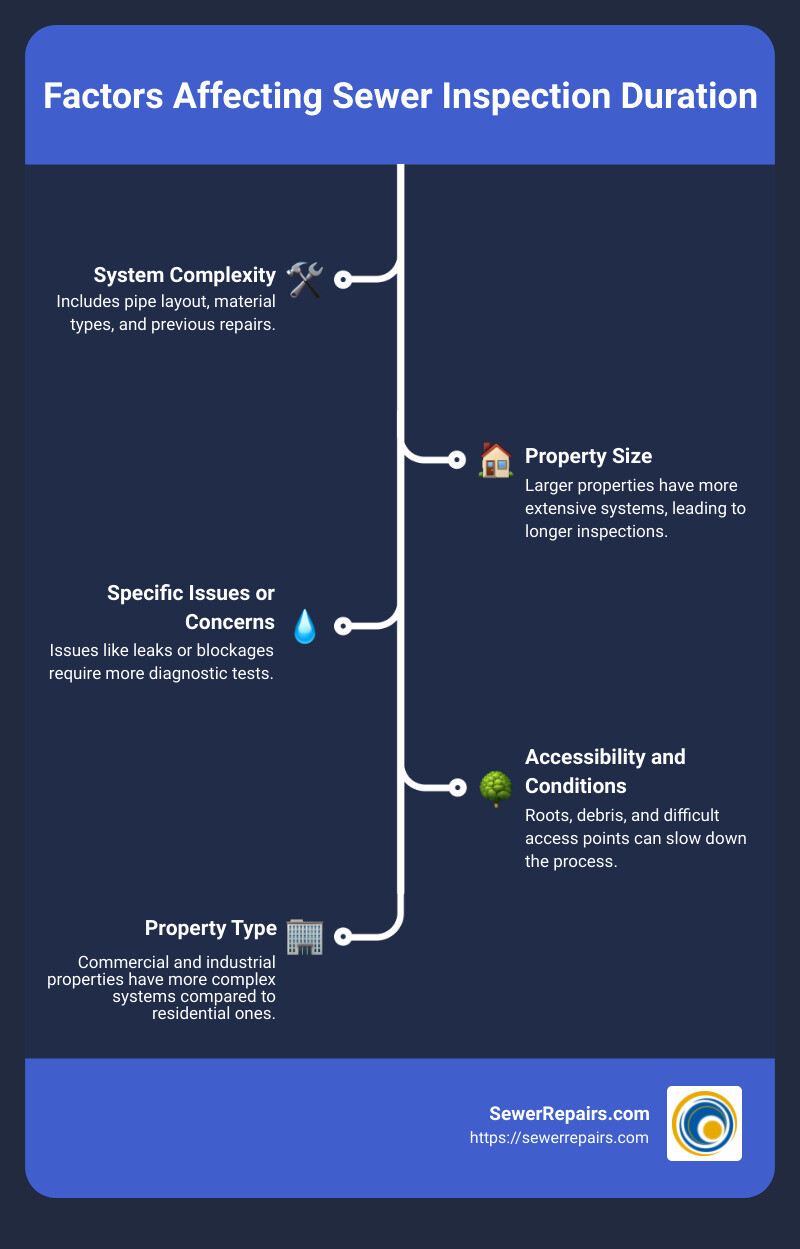
Factors Affecting the Duration of a Sewer Inspection
When asking “how long does a sewer inspection take?”, several factors come into play. Each of these variables can significantly impact the duration of the inspection process.
System Complexity
The complexity of the sewer system is a major factor. Simple systems with straight, short pipes are quicker to inspect. However, complex systems with many bends, junctions, and varying pipe sizes take longer.
Pipe Layout: A straightforward pipe layout is easier and faster to inspect. Complex layouts with multiple branches and connections require more time and effort.
Material Types: Different materials, like PVC, cast iron, or clay, can affect inspection time. Older materials may have more issues, needing a thorough check.
Previous Repairs: If the system has had multiple repairs, it might have weak points or non-standard configurations that need extra attention.
Property Size
The size of the property also plays a crucial role. Larger properties have more extensive sewer systems, which naturally take longer to inspect.
Residential Properties: For a standard home, expect the inspection to last 1-3 hours.
Commercial Properties: These inspections can take from a few hours to a full day due to their larger and more intricate systems.
Specific Issues or Concerns
Existing problems in the sewer system can extend the duration.
Leaks and Blockages: If there are known issues like leaks or blockages, the inspector will need additional time to diagnose and locate the problem areas.
Diagnostic Tests: Sometimes, specific diagnostic tests are required to identify the root cause of issues, adding more time to the inspection.
Accessibility and Conditions
How easily the sewer lines can be accessed and the conditions during the inspection can also impact the time.
Easy Access: If the lines are easily accessible through cleanouts or manholes, the inspection will be quicker.
Roots and Debris: The presence of roots, debris, or other obstructions can slow down the process as these need to be steered or cleared.
Inspection Conditions: Weather and ground conditions can also play a part. For example, wet or frozen ground can make access more challenging.
Understanding these factors helps set realistic expectations for the duration of a sewer inspection. This knowledge ensures that you are well-prepared and can plan accordingly.
The Sewer Inspection Process: What to Expect
Pre-Inspection Preparation
Before diving into the actual inspection, thorough pre-inspection preparation is crucial. The inspection team starts by gathering all relevant information about the sewer system. This includes the layout, materials used, and any past maintenance records. Reviewing previous reports or known issues helps the team focus on specific areas that might need more attention.
Planning is key. The team outlines a strategy to ensure a smooth and efficient inspection. This prep work sets the stage for a successful evaluation.
Conducting Visual Inspections
The first step in the inspection process is often a visual inspection of above-ground components. Professionals will examine manholes, vent stacks, and other visible parts of the sewer system. They look for signs of damage or potential hazards that could impact the system’s performance.
Visual inspections provide initial insights and help guide the next steps. For example, if a manhole shows signs of wear, it might indicate issues further down the line.
Equipment Setup and Camera Insertion
Modern sewer inspections rely heavily on advanced technology. One of the most common tools is a CCTV (Closed-Circuit Television) system. The team sets up this equipment by identifying suitable access points like maintenance holes or cleanouts.
Camera insertion is a delicate process. The camera, attached to a flexible wire, is carefully inserted into the sewer pipes. As it moves through the pipes, it sends live video footage to a monitor, allowing the team to see the interior condition in real-time.
Thorough Inspection and Reporting
Once the camera is inside, the team steers it through the sewer pipes. They pay special attention to critical areas like pipe joints, regions prone to debris accumulation, and any spots where issues are suspected.
Identifying problems is a crucial part of this stage. The camera footage can reveal clogs, cracks, root intrusions, and corrosion. The team documents these findings carefully, taking timestamped videos, photos, and detailed notes.
Accurate documentation is essential for future analysis and maintenance planning. This thorough approach ensures no potential trouble spots are missed, enabling a comprehensive assessment of the sewer system’s condition.
By understanding the inspection process, you can be better prepared for what’s involved and ensure your sewer system remains in optimal condition.
Frequently Asked Questions about Sewer Inspections
How often should I get a sewer inspection?
Professionals recommend getting a sewer inspection every 1 to 3 years. Regular inspections help catch issues early before they turn into costly repairs. For routine maintenance, an annual check-up is ideal, especially in older homes. Newer homes might stretch it to every three years.
What are the costs associated with a sewer inspection?
The cost of a sewer inspection can range from $125 to $500, with the average cost being around $285. On the low end, you might find inspections for as little as $75, while on the high end, it could go up to $1,000. These costs vary based on factors like location, the complexity of the system, and the scope of services provided.
Is a sewer inspection worth it?
Absolutely. Spending a few hundred dollars on a sewer inspection can prevent thousands or even tens of thousands of dollars in repairs. Inspections help identify potential issues like clogs, leaks, or root intrusions early on. This not only saves money but also ensures your sewer system remains in good health.
Regular inspections are a small investment compared to the potential cost of major sewer repairs. By catching problems early, you can avoid emergency repairs and extend the lifespan of your sewer system.
Call SewerRepairs.com Today!
In summary, a sewer line inspection is a vital part of maintaining your property’s plumbing health. It helps identify potential issues early on, such as clogs, leaks, and root intrusions. This proactive approach can save you from costly repairs and inconvenient emergencies down the line.
Regular sewer inspections should be part of your maintenance routine. For residential properties, inspections typically take between one to three hours, while commercial and industrial inspections can take from a few hours to a full day due to their complexity.
Key Points:
– Residential Inspections: Generally take 1-3 hours.
– Commercial and Industrial Inspections: Can take a few hours to a full day.
– Factors Affecting Duration: System complexity, property size, specific issues, and accessibility.
By investing in regular inspections, you ensure the longevity and efficiency of your sewer system. It’s a small investment that can prevent major headaches and expenses in the future.
At SewerRepairs.com, we offer comprehensive sewer inspection services to help you maintain a healthy and efficient sewer system. Don’t wait for a problem to arise—schedule your inspection today and ensure peace of mind for years to come.