
How does a house drain system work? Imagine every sink, shower, toilet, and appliance in your home teaming up to send wastewater on a downward journey. This journey relies on gravity and a network of pipes, called plumbing fixtures, directing waste either to a public sewer system or a private septic tank. As long as everything is sloped right, gravity helps water flow smoothly out your home without a hitch.
Your residential drain system is your home’s unsung hero, keeping things safe, clean, and efficient. Knowing basics like gravity and water flow principles lets homeowners tackle minor issues confidently and discuss them clearly with professionals.
I’m Jason Best, founder of SewerRepairs.com with over two decades in sewer repair expertise. My team and I know how does a house drain system work inside out and aim to clarify these concepts to keep your facilities running smoothly.
What is a House Drain System?
A house drain system is like your home’s personal waste management team. It collects and removes wastewater, sewage, and rainwater, keeping your home clean and odor-free.
Collection and Removal
Every time you flush a toilet or run a faucet, wastewater is generated. This wastewater includes everything from the water you use to wash your hands to the sewage from your toilet. The house drain system efficiently collects this waste and channels it away from your living space.
Wastewater and Sewage
Wastewater refers to any water that’s been used in the home, while sewage is the waste and liquid carried away from toilets. Both are guided through a series of pipes, eventually reaching either a municipal sewer line or a private septic tank.
Rainwater Management
Rainwater is also part of the house drain system’s responsibilities. Proper drainage prevents water from pooling around your home, which can cause structural damage. Drainage grates and covers help direct rainwater away from your foundation.
Sewer Gases
Traps and vent pipes in the system play a crucial role in preventing sewer gases from entering your home. Traps hold water to block gases, while vent pipes maintain air pressure, allowing gases to escape safely through the roof.
Sewer Line and Septic Tank
The sewer line is the main pipeline that carries all collected waste to the municipal sewer system. If your home relies on a septic tank, the waste is treated on-site. The tank separates solids from liquids, which are then safely absorbed into the ground.
Understanding these components of a house drain system helps you appreciate the unseen work that goes into maintaining a sanitary home environment. It also equips you with the knowledge to identify and address potential issues before they escalate.
How Does a House Drain System Work?
A house drain system is a marvel of engineering, quietly working behind the scenes to ensure our homes remain clean and free of wastewater. It relies heavily on the principles of gravity and slope to function efficiently.
Gravity and Slope
The magic begins with gravity. Gravity-fed systems are the backbone of most drainage systems. Water naturally flows from high to low points, which is why homes are designed with a slight slope in their drainage pipes. This slope ensures that water, along with any waste, moves smoothly through the system without the need for mechanical pumps.
Natural slopes refer to the natural inclination of the land, while artificial slopes are created during construction to guide water flow effectively. The angle of the pipe slope is crucial—too steep, and the water flows too quickly, leaving solids behind; too shallow, and the water may not flow at all.
Components of a Drain System
A house drain system is made up of several key components, each playing a vital role in managing waste and water.
- Drain Pipes: These are the highways of your drainage system. Typically made of PVC, ABS, or cast iron, they connect all your home’s plumbing fixtures to the main drain line.
- Fixture Drains: These are the starting points, found under sinks, bathtubs, showers, toilets, and washing machines. They funnel wastewater into the drain pipes.
- Traps: These U-shaped bends in the pipes hold water, forming a barrier that prevents sewer gases from entering your home. They’re essential for keeping bad odors at bay.
- Vent Pipes: These pipes maintain air pressure within the drain system, preventing negative pressure that could disrupt water flow. They also allow sewer gases to escape safely through roof caps.
- Main Drain Line: This is the central highway that carries all wastewater out of the house, connecting to either a municipal sewer system or a private septic tank.
- Cleanouts: These are access points along the drain pipes that allow for maintenance and removal of clogs. They are sealed with cleanout plugs to prevent gas escape.
- Sewer or Septic Connection: This is the final destination for your wastewater. Homes connected to a municipal sewer system send waste to a treatment facility, while those with septic tanks treat waste on-site.
- Drainage Grates and Covers: These are used in outdoor areas to prevent debris from entering the drainage system while allowing water to flow freely.
- Pump Systems: In some homes, sump pumps or sewage ejector pumps are used to move wastewater from lower levels, like basements, to higher drainage points.
Understanding these components and their functions not only helps you appreciate the complexity of your house drain system but also prepares you to tackle any issues that might arise.
Parts of a Home Drain System
Understanding the various components of a house drain system is crucial for managing your home’s plumbing effectively. Each part plays a specific role in ensuring that wastewater is efficiently removed from your home. Let’s explore the essential components.

Drain Pipes
Drain pipes act as the main highways for wastewater, connecting all plumbing fixtures to the main drain line. They are typically made from durable materials like PVC, ABS, cast iron, or copper. These materials are chosen for their durability and resistance to corrosion, ensuring a long-lasting system.
Fixture Drains
Fixture drains are the starting points of your drainage system. Located under sinks, bathtubs, showers, toilets, and washing machines, they channel wastewater into the drain pipes. These drains are often the first place where clogs can occur, especially from hair or grease buildup.
Traps
Traps are U-shaped bends in the pipes located beneath fixtures. They hold a small amount of water, creating a seal that prevents sewer gases and unpleasant odors from entering your home. This simple yet effective component is vital for maintaining indoor air quality.
Vent Pipes
Vent pipes play a critical role in maintaining proper air pressure within the drain system. They prevent negative pressure that could slow down or stop water flow. By venting sewer gases safely through roof caps, they also help maintain a fresh indoor environment.
Main Drain Line
The main drain line is the central artery of your house drain system. It collects wastewater from all fixture drains and carries it out of the house. This line connects to either a municipal sewer system or a private septic system, depending on your home’s setup.
Cleanouts
Cleanouts are strategically placed access points in the drain pipes, allowing for easy maintenance and removal of clogs. They come with removable caps, known as cleanout plugs, which seal the access points and prevent sewer gases from escaping.
Sewer or Septic Connection
At the end of the line, wastewater is directed to a sewer or septic connection. Homes connected to a municipal sewer system send waste to a treatment facility, while those with a private septic system handle waste on-site.
Drainage Grates and Covers
In outdoor areas, drainage grates and covers prevent debris from entering the drainage system while allowing water to flow freely. This helps maintain efficient drainage and prevents clogs from forming in the outdoor pipes.
Cleanout Plugs
Cleanout plugs are used to seal cleanouts when not in use, preventing sewer gases from escaping into the atmosphere. They ensure that maintenance can be performed easily without compromising the system’s integrity.
Pump Systems
In homes where fixtures are below the level of the main sewer line, pump systems like sump pumps or sewage ejector pumps are used. These pumps lift wastewater to the appropriate level, ensuring it flows efficiently through the drainage system.
By understanding these components, you’ll gain a deeper appreciation for the complexity and efficiency of your home’s drainage system. This knowledge is invaluable when addressing any plumbing issues that may arise.
How Does a House Drain System Work Step by Step?
Understanding how a house drain system works can help you manage your plumbing more effectively. Let’s break it down into simple steps.
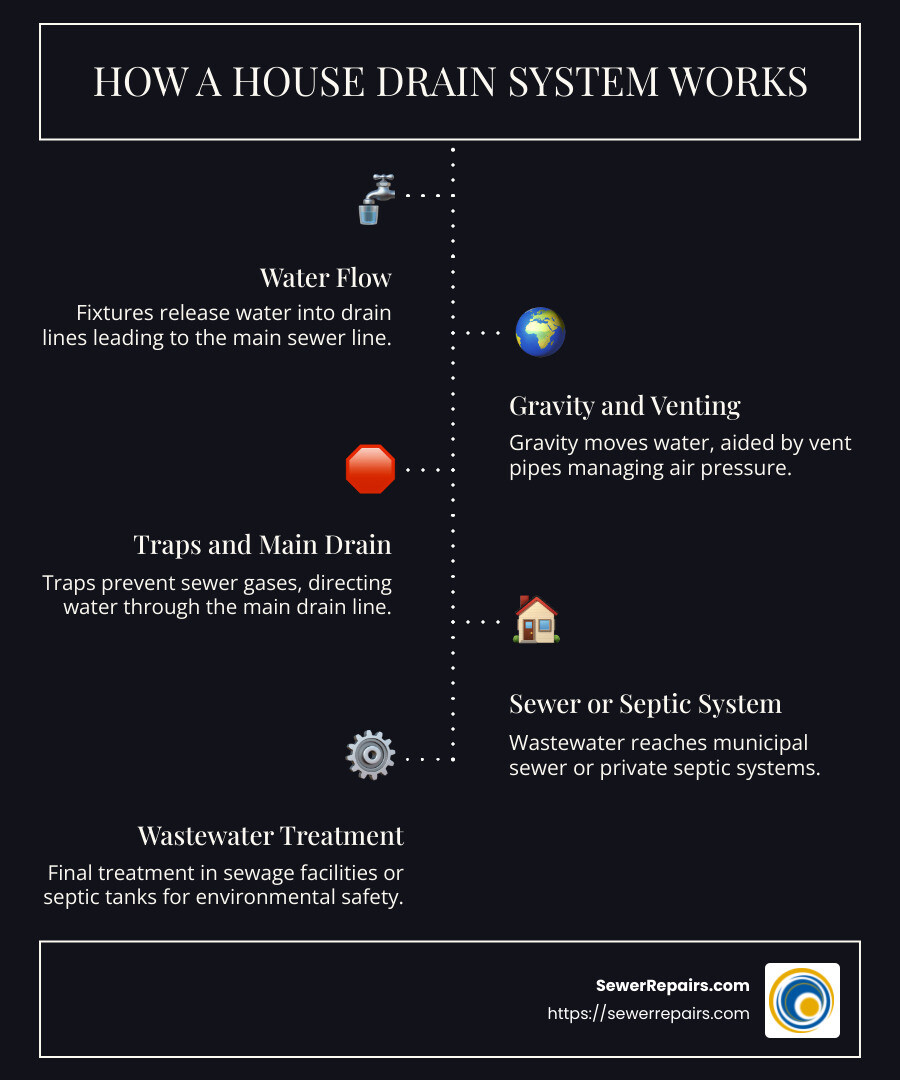
Step 1: Water Flow
It all starts with the water flow from your home’s fixtures, like sinks, showers, and toilets. Each fixture has its own drain line that carries wastewater away. These lines connect to larger pipes, eventually leading to the main sewer line.
This network of pipes ensures that waste is efficiently removed from your home. Think of it as a highway system for your water, where smaller roads merge into bigger ones.
Step 2: Gravity and Venting
Gravity is the unsung hero of your house drain system. All pipes are installed with a slight slope, using gravity to move wastewater down and out. This natural force ensures water flows smoothly without needing additional energy.
But gravity alone isn’t enough. Vent pipes play a crucial role by allowing air to enter the system. This prevents the formation of a vacuum, which could slow down or stop the water flow. Proper venting ensures that water travels swiftly through the pipes, maintaining the system’s efficiency.
Step 3: Traps and Main Drain
As water flows, it passes through traps—U-shaped bends in the pipes. These traps hold a small amount of water, creating a barrier that prevents sewer gases from entering your home. It’s a simple but essential feature for keeping your living space odor-free.
Once past the traps, wastewater travels to the main drain line. This is the central artery of your drainage system, collecting all the water from your home and directing it outwards.
Step 4: Sewer or Septic System
Finally, the wastewater reaches the sewer or septic system. If your home is connected to a municipal sewer, the waste is carried to a treatment facility, where it is processed and cleaned. In homes with a private septic tank, the waste is treated on-site. The septic system breaks down waste naturally, allowing the treated water to safely seep into the ground.
Both systems ensure that waste is handled responsibly, protecting both your home and the environment.
By understanding these steps, you can better appreciate the efficiency and reliability of your home’s drainage system. This knowledge empowers you to tackle minor plumbing issues and communicate effectively with professionals when needed.
Frequently Asked Questions about House Drain Systems
How does a house drain system work?
A house drain system is a marvel of simple engineering, relying on gravity and clever design to whisk wastewater away from your home. Waste from plumbing fixtures like sinks, showers, and toilets flows through drain pipes. These pipes are installed at a slight angle to take advantage of gravity, allowing the water to move downward effortlessly.
The system is supported by vent pipes that prevent air pressure from building up and slowing the flow. As water moves through the pipes, it passes through traps, which are U-shaped sections designed to hold water and block sewer gases from entering your home. The water then travels through the main drain line, eventually reaching either a municipal sewer system or a private septic tank.
Do toilet and shower use the same drain?
Toilets and showers typically connect to the same main drain line, but they don’t share the same waste trap arm. Each fixture has its own trap that prevents sewer gases from entering the home. The waste from both the toilet and shower eventually combines in the main drain, which then directs it to the larger sewer line or septic system.
This setup ensures that water and waste flow smoothly and efficiently, reducing the risk of clogs and backups. By having separate traps, each fixture maintains its own barrier against odors, contributing to a healthier living environment.
How does a main drain work in a house?
The main drain is the central component of your home’s drainage system. It collects wastewater from all the individual drain lines connected to fixtures like showers, toilets, and sinks. This large pipe typically runs horizontally, with a slight downward slope, to use gravity for moving waste out of the house.
The main drain line connects to the municipal sewer line or a private septic tank, where the waste is processed. In homes with a septic system, the main drain directs waste into the septic tank for treatment and decomposition.
The efficiency of the main drain is crucial, as any blockages here can affect the entire house. Regular maintenance and cleanouts—access points for clearing blockages—help keep the main drain functioning smoothly, ensuring a reliable and odor-free drainage system.
Call SewerRepairs.com Today!
At SewerRepairs.com, we understand that a well-functioning drain system is crucial for a healthy and comfortable home. Based in Riverside, California, we specialize in providing expert sewer inspection, repair, and maintenance services. Our team uses cutting-edge techniques like CIPP lining and trenchless repairs to ensure that your sewer system is not only fixed but also upgraded with minimal disruption to your property.
Our approach is both cost-effective and minimally invasive, which means you get top-quality service without the hassle of traditional repair methods. Whether you’re dealing with clogged drains, sewer line leaks, or any other plumbing issue, our skilled professionals are equipped to handle it all efficiently.
For more information on how we can help keep your home’s drain system in peak condition, visit our service page to learn more or schedule a consultation. We’re here to provide you with peace of mind and a smooth-flowing plumbing system.