
Why Sewer Systems are Essential
Understanding how a sewer works is crucial for any homeowner dealing with sewer issues or seeking to maintain their property. At the most basic level, sewers are underground networks designed to carry waste away from homes and businesses to treatment plants, preventing potentially hazardous conditions. Here’s a quick overview:
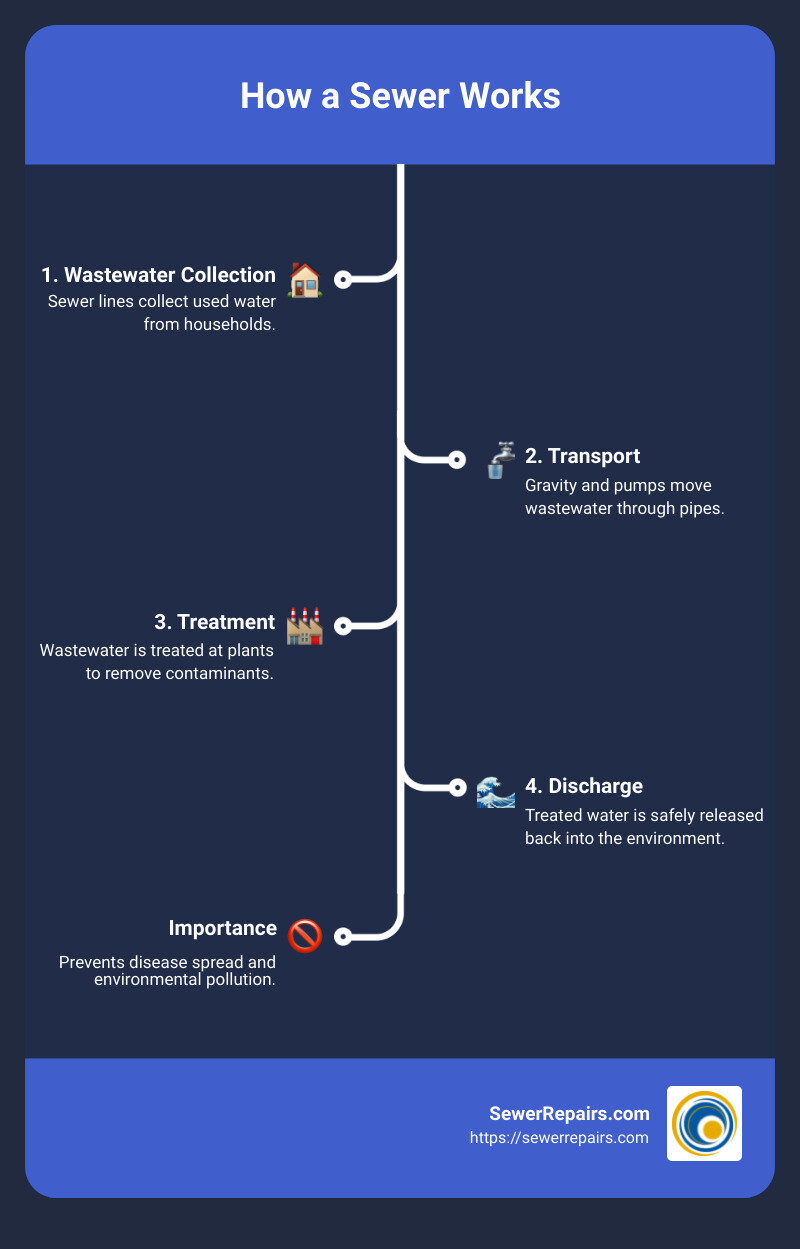
- Wastewater Collection: Sewer lines collect used water from households.
- Transport: Gravity and pumps move wastewater through pipes.
- Treatment: Wastewater is treated at plants to remove contaminants.
- Discharge: Treated water is safely released back into the environment.
Sewer systems are vital for public health and environmental protection. They prevent the spread of diseases by safely transporting waste away from populated areas and treat the water to remove harmful substances before release. This prevents pollution and protects local water bodies from contamination.
I’m Jason Best, the founder of SewerRepairs.com with over 20 years of experience in the plumbing industry. We’ll dive deeper into understanding how a sewer works and why it’s so essential for our communities.
Step 1: Understanding the Basics of Sewer Systems
Sanitary Sewer Systems
Sanitary sewers are designed to handle wastewater from homes and businesses. This includes water from sinks, toilets, showers, and industrial processes. The key components of sanitary sewer systems are:
- Pipes and Laterals: Smaller pipes (usually PVC) connect individual buildings to larger main sewer lines.
- Main Sewer Lines: These larger pipes transport wastewater to treatment plants.
- Pump Stations: Used where gravity alone can’t move the wastewater.
- Manholes: Provide access for maintenance and inspection.
- Wastewater Treatment Plants: Facilities where wastewater is cleaned before being released back into the environment.
Sanitary sewer systems are essential for preventing contamination of groundwater and local water sources. They must be well-maintained to avoid leaks and overflows, which can lead to sanitary sewer overflows (SSOs) and environmental pollution.
Stormwater Sewer Systems
Stormwater sewers handle stormwater from rain, hail, snow, and other precipitation. Instead of transporting water to treatment plants, these systems direct it to local water bodies like creeks, rivers, and lakes. Key components include:
- Catch Basins: Collect water from streets and properties.
- Gutters and Channels: Guide water into the stormwater system.
- Pipes and Tunnels: Move water to its final destination.
- Local Water Bodies: Where stormwater is discharged.
Stormwater systems are designed to prevent flooding by quickly moving water away from urban areas. However, they do not treat the water, so any contaminants (like oil or trash) can pollute local water bodies.
Combined Sewer Systems
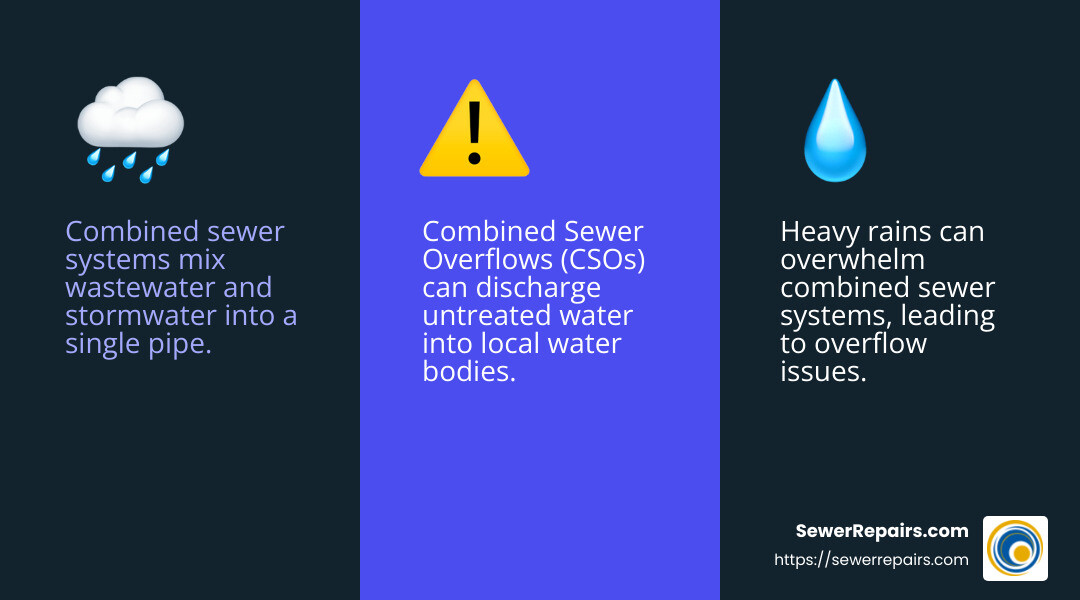
Combined sewer systems are older systems that mix wastewater and stormwater in a single pipe. While efficient in some ways, they pose significant challenges:
- Excess Stormwater: During heavy rains, the volume of water can overwhelm the system.
- Combined Sewer Overflows (CSOs): When the system exceeds capacity, untreated sewage and stormwater can be discharged directly into local water bodies, causing severe pollution.
Because of these issues, combined systems are rarely used in new developments. Cities with existing combined systems often invest in upgrades to separate the wastewater and stormwater systems.
Understanding these three types of sewer systems is crucial for grasping how a sewer works. Each type has its own design, purpose, and challenges, but all are essential for maintaining public health and protecting the environment.
Step 2: How a Sewer System Works
Gravity and Flow
Gravity plays a critical role in how a sewer works. Wastewater flows from your home to treatment plants primarily due to gravity. Engineers design sewer systems with a slight slope to keep the wastewater moving. This slope ensures that waste travels downhill, reducing the need for mechanical pumping.
- Gravity: Wastewater flows naturally from higher to lower elevations.
- Slope: Pipes are laid on a gentle slope to maintain flow.
- Velocity: The speed of wastewater must be high enough to keep solids suspended, a concept known as self-cleaning velocity. This prevents blockages and ensures efficient transport.
Wastewater Treatment Process
Once the wastewater reaches the treatment plant, it undergoes several stages to remove contaminants and make it safe for release into the environment.
- Screening: Large debris like sticks, rags, and plastic are removed using screens. This prevents damage to the equipment in later stages.
- Sedimentation: The wastewater is allowed to sit in large tanks where heavier solids settle to the bottom, forming sludge. Lighter materials float to the top, forming a scum layer.
- Biological Treatment: Microorganisms are used to break down organic matter. This stage often involves aeration tanks where air is pumped in to help bacteria digest the waste.
- Disinfection: Finally, the treated water is disinfected, usually with chlorine or UV light, to kill any remaining harmful bacteria and pathogens.
Inflow and Infiltration (I&I)
Inflow and Infiltration (I&I) are significant challenges in sewer systems. Inflow refers to stormwater entering the sewer system through direct connections like downspouts or manholes. Infiltration happens when groundwater seeps into sewer pipes through cracks or joints.
- Inflow: Can overwhelm the system during heavy rains.
- Infiltration: Increases the volume of water that needs to be treated, raising operational costs.
Sanitary Sewer Overflow (SSO)
When the sewer system can’t handle the volume of wastewater, it can result in Sanitary Sewer Overflows (SSOs). SSOs are discharges of untreated sewage into the environment, posing health risks and environmental hazards.
- Causes: Blockages, I&I, equipment failure, or excessive rainfall.
- Impacts: Contamination of water bodies, health hazards, and costly clean-ups.
Understanding these elements gives you a clearer picture of how a sewer system works. Gravity and flow ensure wastewater reaches treatment plants, where it undergoes a rigorous cleaning process. However, challenges like I\&I and SSOs require constant vigilance and maintenance to keep the system running smoothly.
Step 3: Challenges in Sewer System Design and Maintenance
Designing and maintaining a sewer system is no small feat. Engineers and utility providers must consider various factors to ensure everything runs smoothly. Let’s break down some of the key challenges they face:
Inflow and Infiltration (I&I)
Inflow and Infiltration (I&I) are major headaches for sewer systems.
- Inflow: This occurs when stormwater enters the sewer system through direct connections like downspouts or manholes. During heavy rains, this can overwhelm the system.
- Infiltration: Groundwater seeps into sewer pipes through cracks, joints, or manhole leaks. This increases the volume of water that needs to be treated, raising operational costs.
Case Study: Atlanta experienced a “boil water” advisory due to a power failure at the treatment plant. While the clean water and wastewater systems are separate, the increased load from I&I during storms can complicate operations, leading to such advisories.
System Capacity and Population Growth
Sewer systems need to be designed not just for current usage but also for future growth. Joseph Bazalgette, who designed London’s original sewer system, famously doubled the proposed sizes of the tunnels. He said, “We’re only going to do this once.” This foresight helped London manage its growing population without frequent upgrades.
- System Capacity: Ensuring the pipes can handle both current and future wastewater volumes.
- Population Growth: More people mean more wastewater. Planners must anticipate this growth to avoid system overloads.
Maintenance Techniques
Regular maintenance is crucial to keep sewer systems functioning efficiently. Here are some common techniques:
- Root Control: Tree roots can invade sewer pipes, causing blockages. MetroConnects uses proactive root control to prevent this.
- Line Cleaning: Debris like fats, oils, and grease can block pipes. Regular cleaning helps maintain flow.
- Smoke and Dye Testing: These tests help locate problem spots by identifying leaks or illegal connections. MetroConnects uses these methods to find and fix issues before they become major problems.
Cracks in Pipes and Illegal Drainage Systems
Cracks in pipes and illegal drainage systems can severely impact sewer operations.
- Cracks in Pipes: These can occur due to age, ground movement, or root intrusion. They allow groundwater to infiltrate the system.
- Illegal Drainage Systems: Some properties may have unauthorized connections to the sewer system, adding to the inflow during storms.
Fact: In New York City, approximately 60% of the area uses a combined sewer system. During heavy rains, the combined flow of wastewater and stormwater can exceed the system’s capacity, leading to Combined Sewer Overflows (CSOs).
Manhole Leaks
Manholes are essential but can be points of weakness in the system.
- Leaks: Manholes can allow stormwater to enter the sewer system, contributing to I&I. Regular inspections and repairs are necessary to keep them sealed.
Understanding these challenges helps us appreciate the complexity of sewer system design and maintenance. It’s not just about laying pipes; it’s about planning for the future, preventing leaks, and ensuring everything flows smoothly.
Step 3: Challenges in Sewer System Design and Maintenance
In this section, we will dive into the complexities involved in designing and maintaining sewer systems. These challenges include system capacity, population growth, inflow and infiltration (I&I), and various maintenance techniques.
System Capacity and Population Growth
Designing a sewer system that can handle not just today’s waste but also future demands is crucial.
- System Capacity: Engineers must ensure that pipes can handle both current and future wastewater volumes. This means calculating the average and peak flows, and designing the system to accommodate these.
- Population Growth: More people mean more wastewater. Planners need to anticipate population growth to avoid system overloads. For example, Joseph Bazalgette, who designed London’s original sewer system, famously doubled the proposed sizes of the tunnels, saying, “We’re only going to do this once.” This foresight was essential for accommodating London’s growing population.
Inflow and Infiltration (I&I)
Inflow and Infiltration (I&I) are major issues that can overwhelm sewer systems.
- Inflow: This occurs when stormwater enters the sewer system through direct connections like downspouts or manholes. During heavy rains, this can flood the system.
- Infiltration: Groundwater seeps into sewer pipes through cracks, joints, or manhole leaks. This increases the volume of water that needs to be treated, raising operational costs.
Case Study: Atlanta experienced a “boil water” advisory due to a power failure at the treatment plant. While the clean water and wastewater systems are separate, the increased load from I&I during storms can complicate operations, leading to such advisories.
Maintenance Techniques
Regular maintenance is crucial to keep sewer systems functioning efficiently. Here are some common techniques:
- Root Control: Tree roots can invade sewer pipes, causing blockages. Proactive root control can prevent this.
- Line Cleaning: Debris like fats, oils, and grease can block pipes. Regular cleaning helps maintain flow. Jet trucks are commonly used for this purpose.
- Smoke and Dye Testing: These tests help locate problem spots by identifying leaks or illegal connections. This method is used to find and fix issues before they become major problems.
Cracks in Pipes and Illegal Drainage Systems
Cracks in pipes and illegal drainage systems can severely impact sewer operations.
- Cracks in Pipes: These can occur due to age, ground movement, or root intrusion. They allow groundwater to infiltrate the system.
- Illegal Drainage Systems: Some properties may have unauthorized connections to the sewer system, adding to the inflow during storms.
Fact: In New York City, approximately 60% of the area uses a combined sewer system. During heavy rains, the combined flow of wastewater and stormwater can exceed the system’s capacity, leading to Combined Sewer Overflows (CSOs).
Manhole Leaks
Manholes are essential but can be points of weakness in the system.
- Leaks: Manholes can allow stormwater to enter the sewer system, contributing to I&I. Regular inspections and repairs are necessary to keep them sealed.
Understanding these challenges helps us appreciate the complexity of sewer system design and maintenance. It’s not just about laying pipes; it’s about planning for the future, preventing leaks, and ensuring everything flows smoothly.
Call SewerRepairs.com Today!
At SewerRepairs.com, we take pride in offering expert plumbing services to the residents of Riverside, California. Our team specializes in cost-effective and minimally invasive techniques for water line replacement, including the innovative pipe bursting method.
Expert Plumbing Services: With over 20 years of experience, we are leaders in pipe rehabilitation and underground plumbing repair. Our certified master plumbers are dedicated to delivering top-notch service and ensuring your plumbing systems are in optimal condition.
Cost-Effective Solutions: We understand that plumbing issues can be both stressful and expensive. That’s why we offer competitive pricing and easy financing options to make our services accessible to all homeowners. Our trenchless technologies like pipe bursting save you money by reducing labor costs and minimizing property damage.
Minimally Invasive Techniques: Traditional methods of water line replacement often involve extensive digging, which can disrupt your yard, landscaping, and even your daily life. Our trenchless pipe bursting technology requires only minimal excavation, preserving the beauty of your property while efficiently replacing old or damaged pipes.
For reliable and professional water line replacement services, contact SewerRepairs.com. We are committed to providing high-quality, environmentally friendly solutions that meet your needs and exceed your expectations.