
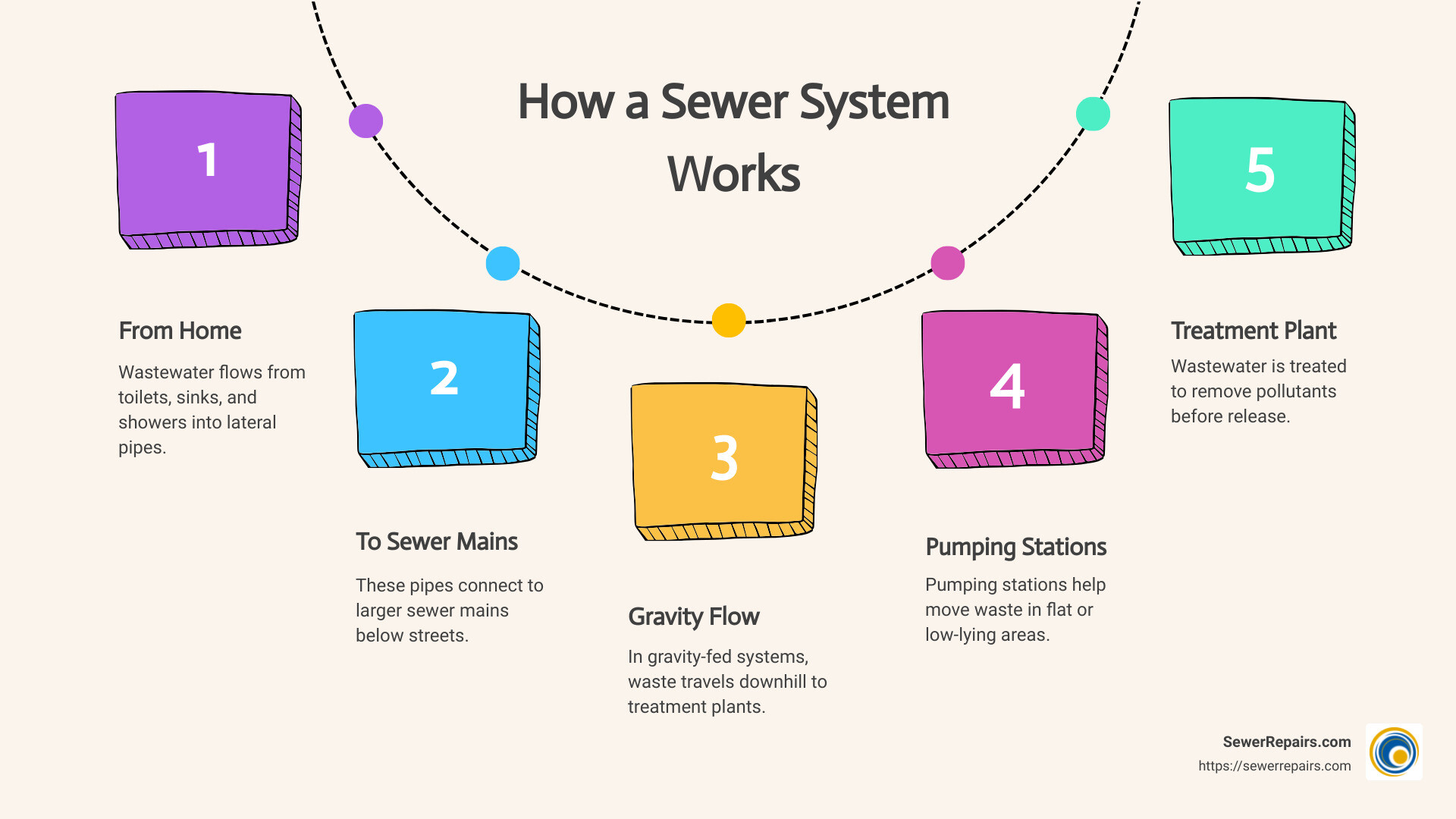
How a sewer system works is a fascinating journey of innovation that we often take for granted. Our waste travels an intricate path from our homes to treatment facilities, ensuring our environment and water sources remain safe and clean. Here’s a quick overview of how a sewer system works:
- Wastewater flows from toilets, sinks, and showers into lateral pipes.
- These pipes connect to larger sewer mains below streets.
- In gravity-fed systems, waste travels downhill to treatment plants.
- Pumping stations help move waste in flat or low-lying areas.
Understanding how a sewer system works helps us appreciate the role it plays in connecting our daily lives to the broader ecosystem. From minimizing pollution in rivers and streams to supporting healthy water cycles, these underground structures are vital for maintaining ecological balance.
I’m Jason Best, and I’ve spent over 20 years in the sewer repair industry, deeply invested in understanding and improving how a sewer system works. My focus is on quality and safety, ensuring that our systems perform efficiently, keeping our environment and homes safe.
Types of Sewer Systems
In our cities, sewer systems are the unsung heroes, quietly working beneath our feet. They ensure that wastewater is managed efficiently, protecting both public health and the environment. There are three main types of sewer systems: sanitary sewers, stormwater sewers, and combined sewers. Each plays a unique role in managing water and waste.
Sanitary Sewer Systems
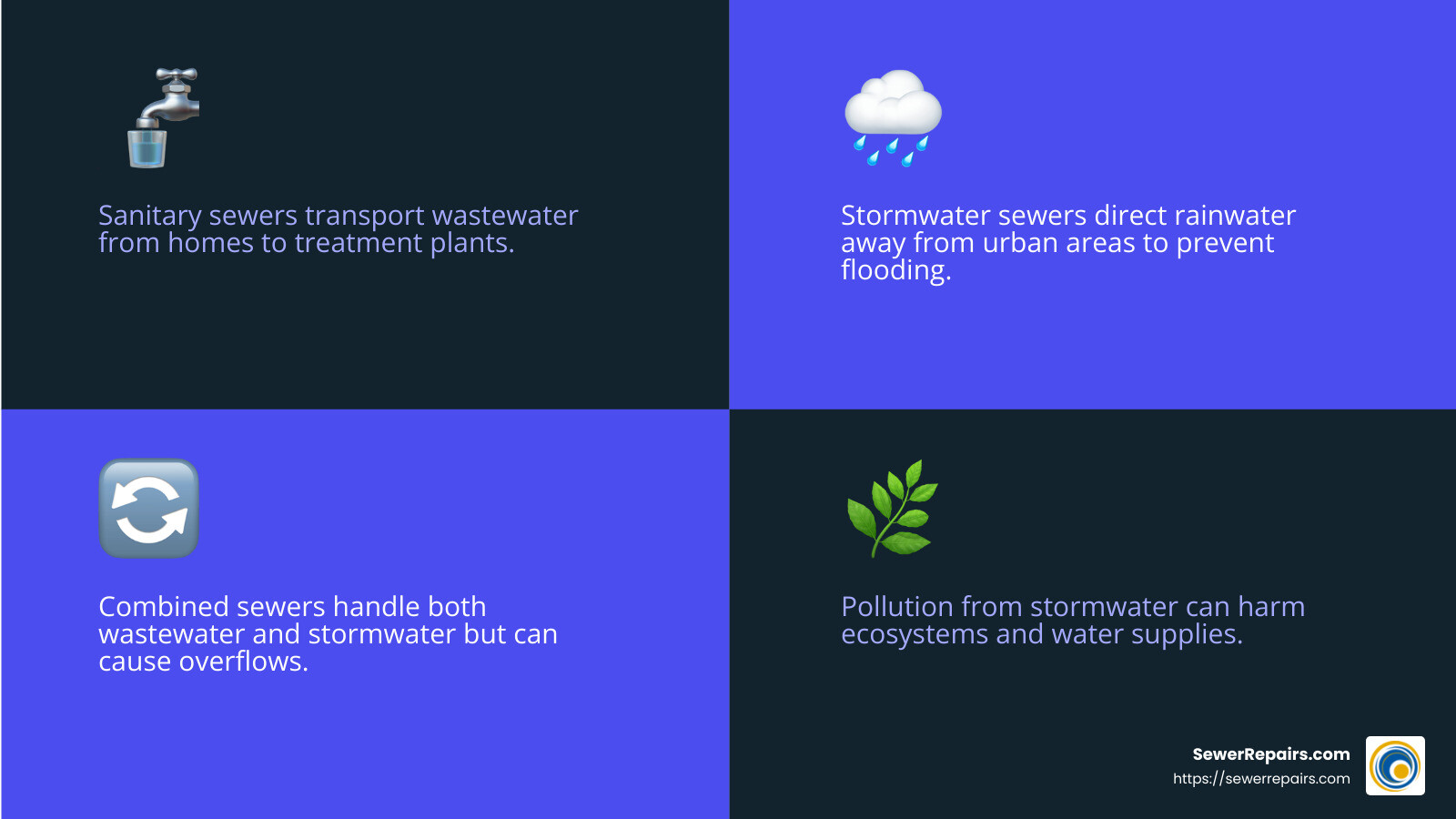
Sanitary sewers are dedicated to transporting wastewater from homes and businesses to wastewater treatment plants. This system includes a network of pipes known as laterals, which connect individual buildings to the main sewer lines. These main lines then carry the wastewater to treatment facilities.
Key components of this system are pump stations and manholes. Pump stations assist in moving waste through areas where gravity alone isn’t enough, while manholes provide access for maintenance and inspections.
An essential part of maintaining sanitary sewers is preventing inflow and infiltration (I&I). This occurs when stormwater enters the system through cracks or illegal connections, leading to overflows and increased treatment costs.
Stormwater Sewer Systems
Stormwater sewers handle rainwater and other precipitation, directing it away from urban areas to prevent flooding. Unlike sanitary sewers, stormwater systems do not treat the water before releasing it into local water bodies like rivers, lakes, or oceans.
These systems include catch basins, gutters, channels, and tunnels. They are designed to quickly transport stormwater to natural bodies of water. However, because this water isn’t treated, keeping contaminants out of stormwater drains is crucial. Pollution from stormwater can negatively impact ecosystems and drinking water supplies.
Combined Sewer Systems
Combined sewers are less common today but still exist in many older cities. These systems carry both wastewater and stormwater in the same pipes. While efficient in terms of infrastructure, they pose significant challenges during heavy rainfall.
When the system is overwhelmed, it results in combined sewer overflow (CSO), where untreated water is discharged into nearby water bodies. This can lead to severe pollution and environmental damage. Cities like Washington, D.C., are investing in projects like the Clean Rivers Project to mitigate these issues by building massive tunnels to hold excess stormwater.
Understanding the different types of sewer systems helps us recognize the importance of proper maintenance and pollution prevention. Each system has its role in protecting our cities and natural resources, ensuring a cleaner and safer environment for all.
How a Sewer System Works
From Home to Sewer
Every time you flush a toilet, wash your hands, or take a shower, you’re contributing to a larger network of sewer systems that manage waste in cities. This network is a combination of gravity-fed systems and pumping stations that work together to transport wastewater from homes to treatment facilities.
The journey begins with your household appliances—toilets, sinks, washers, and showers—which release wastewater into a sewer lateral. This is a small pipe that connects your home to the larger municipal sewer system. Ideally, these systems rely on gravity to move waste downhill. However, if your house is below the elevation of the main sewer line or a treatment plant, pumping stations are used to push the waste uphill.
In some areas, homes may use a private septic tank instead of connecting to a municipal sewer system. These tanks collect and treat wastewater on-site but require regular maintenance to prevent issues.
Wastewater Treatment Process
Once the wastewater reaches the municipal sewer system, it travels through main sewer lines to a wastewater treatment plant. Here, the magic of turning waste into clean water happens through several stages.
First, the wastewater enters a primary digester, which breaks down solid waste. This is followed by a trip through a super shredder that grinds up any remaining solids to prevent clogs in the system. The sludge, which is the concentrated waste, is then treated further in a heat exchanger. This process involves heating the sludge to destroy harmful bacteria and pathogens.
After these treatments, the clean water is released back into local waterways, completing the journey from your home to the environment. This careful treatment process ensures that any water returned to nature is free from harmful contaminants, protecting both public health and ecosystems.
Maintaining an efficient sewer system is crucial for cities to manage waste effectively and protect the environment. Understanding how a sewer system works helps us appreciate the complex processes that keep our water clean and our communities safe.
Sewer System Infrastructure
Sewer Lines and Sizes
The backbone of any city’s sewer system is its network of sewer lines. These come in various sizes and materials to accommodate the flow of wastewater from homes to treatment facilities. Main sewer lines are the largest, typically ranging from 3 to 5 feet in diameter. They collect waste from smaller neighborhood lines, which are usually 6 to 12 inches in diameter. These smaller lines connect directly to homes and businesses.
The materials used for constructing these sewer lines vary, but commonly include PVC, concrete, brick, and metal. Each material has its advantages: PVC is lightweight and resistant to corrosion, concrete is durable, brick is traditional and can be used for older systems, and metal, particularly cast iron, is strong but prone to rust over time.
Pumping Stations and Gravity Systems
In an ideal world, all sewer systems would be gravity-fed, allowing wastewater to flow naturally downhill to treatment plants. However, geographical challenges often make this impossible. This is where pumping stations come into play. Located in low-lying areas, these stations use powerful pumps to move wastewater uphill, ensuring it continues its journey to the treatment plant.
Force main sewers are pressurized pipes that transport wastewater from pumping stations to gravity sewers, which then carry the waste the rest of the way using the natural slope of the land. This combination of gravity sewers and pumping stations ensures that waste can be efficiently transported even in hilly or uneven terrains.
Manholes provide essential maintenance access to these sewer lines and pumping stations. They are strategically placed to allow workers to inspect, clean, and repair the sewer infrastructure. This regular maintenance is crucial to prevent clogs and leaks, ensuring the system operates smoothly.
Challenges and Maintenance
Common Issues
Sewer systems, while essential, face a variety of challenges that can disrupt their smooth operation. One such issue is leaks, which can occur due to aging infrastructure or damage from external factors like ground movement. Leaks not only waste water but can also lead to contamination of the surrounding environment.
Another significant problem is sanitary sewer overflow (SSO). This occurs when the system is overwhelmed, often due to heavy rainfall or blockages, causing untreated sewage to spill into the environment. SSOs pose serious public health risks and can severely damage ecosystems.
Inflow and infiltration (I&I) is another common issue. This happens when stormwater or groundwater enters the sewer system through cracks or illegal connections. I&I increases the volume of water that needs to be treated, putting extra strain on wastewater treatment facilities and driving up costs.
Stormwater contamination is a concern as well. When stormwater flows into the sewer system, it can carry pollutants like oil, chemicals, and debris, which can then enter water bodies untreated.
Inside the pipes, garbage influx is problematic. Items like wet wipes, fats, oils, and grease can cause blockages. Despite being labeled as “flushable,” many products do not break down easily and can clog pipes, leading to backups and overflows.
Invasive roots from nearby trees can also infiltrate sewer lines, causing cracks and blockages. Roots are naturally drawn to the moisture in sewer pipes, and once inside, they can expand and cause significant damage.
Maintenance Solutions
Effective maintenance practices are crucial to address these challenges and ensure the sewer system functions efficiently. Proactive maintenance involves regular inspections and cleaning to prevent issues before they become major problems. Techniques such as root control help manage invasive roots and prevent them from damaging pipes.
Line cleaning is another essential practice. It involves removing debris, fats, oils, and grease from the pipes to prevent blockages. Smoke and dye testing can be used to identify leaks and illegal connections, helping to pinpoint areas that need repair.
Organizations like MetroConnects play a vital role in maintaining and rehabilitating sewer infrastructure. They use a proactive maintenance schedule to keep systems running smoothly and are actively working on rehabilitating deteriorating sewer pipes and manholes.
A significant boost to these efforts is the $20 million grant from the South Carolina Infrastructure Investment Program. This funding supports projects aimed at upgrading and repairing sewer systems in key areas, ensuring they remain reliable and efficient.
By investing in maintenance and infrastructure upgrades, cities can minimize the risk of leaks, SSOs, and other issues, protecting both public health and the environment. Understanding these challenges and solutions is key to appreciating how our sewer systems work and the efforts required to keep them functioning effectively.
Frequently Asked Questions about How a Sewer System Works
How does a sewer system work in a house?
In a typical house, the sewer system begins with the wastewater generated from various sources like toilets, sinks, washers, and showers. This wastewater travels through a sewer lateral, which is a pipe connecting your home to the municipal sewer system.
For homes not connected to a municipal system, a septic tank is often used. This tank collects and treats wastewater on-site. However, in urban areas, the wastewater usually flows into a larger network of underground pipes that transport it to a wastewater treatment plant.
How does a sewer system function?
A sewer system functions by efficiently transporting wastewater from homes and businesses to treatment facilities, ensuring water quality and protecting public health. The system relies heavily on gravity-fed pipes to move wastewater downhill, reducing the need for pumping and minimizing the risk of leaks.
Manholes provide access points for maintenance and inspection, ensuring that blockages or damages can be quickly addressed. In areas where gravity flow isn’t possible, pumping stations are used to move wastewater to higher elevations or across long distances. Once at the wastewater treatment plant, the water undergoes various treatment processes to remove contaminants before being released as clean water back into the environment.
Where does the sewage go in your city?
In many cities, the journey of sewage involves an intricate network of wastewater resource recovery facilities. These facilities treat the city’s wastewater through a series of processes designed to protect local waterways.
During treatment, sewage undergoes primary and secondary processes to remove solids and pollutants. The treated water is then safely released into the surrounding waterways, helping to maintain the health of the city’s aquatic ecosystems. This system is crucial for managing the city’s wastewater and ensuring the clean water release back into the environment.
Understanding these elements is essential to grasping how a sewer system works, demonstrating the complex yet vital role these systems play in urban infrastructure and environmental protection.
Call SewerRepairs.com Today!
Proper sewer system maintenance is essential for both public health and environmental protection. A well-maintained sewer system ensures that wastewater is efficiently transported and treated, preventing harmful contaminants from entering our ecosystems. This is crucial for preserving local water sources and maintaining the balance of our natural environments.
At SewerRepairs.com, we understand the importance of effective sewer maintenance. Located in Riverside, California, we specialize in providing expert plumbing services that focus on cost-effective, minimally invasive sewer repair techniques. Our innovative solutions, like CIPP lining and trenchless repairs, allow us to address issues without the need for extensive excavation, saving both time and resources.
By prioritizing proactive maintenance and using advanced technologies, we help prevent common sewer issues such as blockages, leaks, and root intrusions. This not only extends the life of the sewer infrastructure but also reduces the risk of sanitary sewer overflows and environmental contamination.
In conclusion, maintaining a healthy sewer system is vital for protecting our environment and ensuring public health. At SewerRepairs.com, we’re committed to providing top-notch services that keep your sewer systems running smoothly and efficiently, while also safeguarding our precious natural resources.