
Understanding Galvanized Pipe Corrosion
Galvanized pipe corrosion happens when the zinc coating on steel pipes breaks down over time, leading to rust and other problems. This is crucial because it affects many homeowners, particularly those with older properties.
Here’s a quick breakdown:
- Why it Happens: The zinc coating wears away, exposing the steel to moisture and oxygen, causing rust.
- Signs to Watch For: Discoloration, rust, flaking, leaks, and reduced water pressure.
- Why It Matters: Corroded pipes can contaminate water, lower its quality, and eventually lead to costly repairs.
If you notice any signs of corrosion, take action immediately to prevent further damage and ensure the longevity of your plumbing system.
I’m Jason Best, founder of SewerRepairs.com, with over two decades of experience in diagnosing and repairing galvanized pipe corrosion. Let’s dive deeper into understanding galvanized pipes and how to prevent their corrosion.
Words about galvanized pipe corrosion:
- cast iron sewer pipe corrosion
- how can you prevent rusting
What Are Galvanized Pipes?
Galvanized pipes are steel pipes coated with a layer of zinc to prevent rust and corrosion. This zinc coating acts as a protective barrier, shielding the steel from moisture and oxygen, which are primary causes of rust.
Historical Use and Lead Alternative
Galvanized pipes became popular in the early 20th century, especially as an alternative to lead pipes. Before the 1960s, many homes were built with lead pipes, which posed significant health risks. The introduction of galvanized pipes offered a safer option for water supply lines.
How Are They Made?
The process of making galvanized pipes involves dipping steel pipes into molten zinc. This process, known as galvanization, ensures that the zinc coating adheres evenly, providing a robust layer of protection.
Corrosion Resistance
Initially, galvanized pipes offer excellent corrosion resistance. The zinc coating prevents the steel from coming into direct contact with water and oxygen, which are key contributors to rust. However, over time, even this protective layer can degrade. When the zinc wears off, the steel underneath becomes vulnerable to corrosion.
Why They Were Popular
Galvanized pipes were widely used because they were:
- Durable: With proper maintenance, they could last between 40 to 100 years.
- Affordable: They were cheaper than copper pipes.
- Effective: They provided a reliable way to transport water without the immediate risk of rust.
The Downside
Despite their initial advantages, galvanized pipes have some drawbacks:
- Internal Corrosion: Over time, the zinc coating can fail, leading to internal corrosion. This can restrict water flow and contaminate the water supply.
- Mineral Deposits: Minerals can build up inside the pipes, causing blockages and reducing water pressure.
- Health Concerns: Older galvanized pipes can release lead and other harmful substances into the water.

Causes of Galvanized Pipe Corrosion
While galvanized pipes are initially resistant to rust, several factors can lead to their eventual corrosion. Understanding these causes can help in identifying and preventing issues before they become serious.
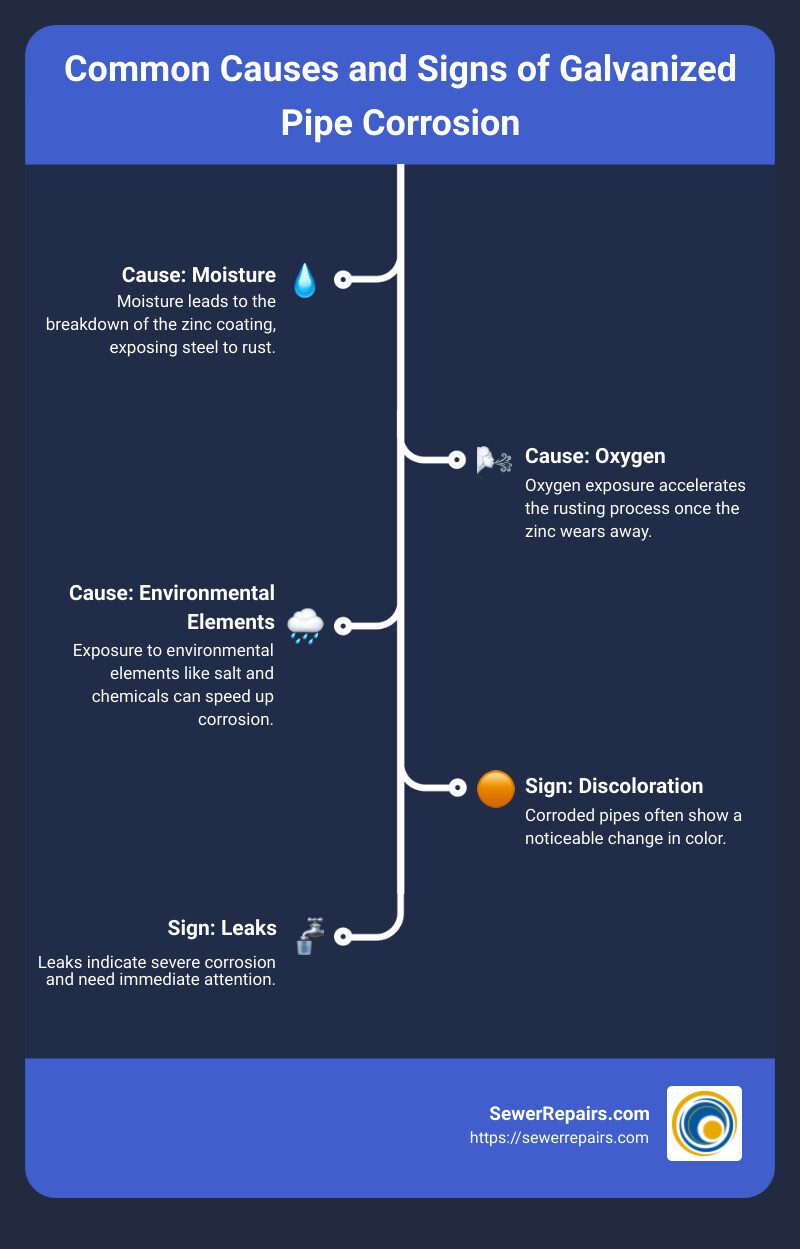
Moisture and Oxygen
Moisture and oxygen are the primary culprits behind most types of metal corrosion, including galvanized pipes. When the zinc coating on the pipes starts to wear down, the underlying steel is exposed to water and air. This exposure initiates the rusting process, leading to corrosion.
Environmental Elements
Environmental factors like humidity, temperature fluctuations, and the presence of salts or chemicals can accelerate the corrosion process. For example, in coastal areas, the salty air can hasten the breakdown of the zinc coating, exposing the steel underneath much faster.
Zinc Breakdown
Over time, the zinc coating that protects the steel pipe can degrade. This breakdown is due to natural wear and tear, water flow, and environmental conditions. Once the zinc layer is compromised, the steel is left unprotected and more susceptible to rust and corrosion.
Rust Formation
When the steel is exposed, rust begins to form. Rust is essentially iron oxide, which occurs when iron reacts with oxygen and moisture. This rust can build up inside the pipe, restricting water flow and leading to leaks or bursts.
Electric Current and Galvanic Corrosion
Another significant cause of corrosion in galvanized pipes is electric current. When two different metals are connected in a plumbing system, a small electric current can flow between them, causing galvanic corrosion. This is common when galvanized steel pipes are connected to copper pipes without a proper dielectric union.
Case Study: In Orleans, New York, residents experienced severe corrosion in their water systems due to environmental factors and the breakdown of protective coatings. This led to significant issues with water quality and plumbing integrity.
Galvanic Corrosion
Galvanic corrosion occurs when two dissimilar metals are in electrical contact with each other in the presence of an electrolyte, such as water. The less noble metal (in this case, the galvanized steel) corrodes faster than it would alone, while the more noble metal (like copper) corrodes slower. This reaction can severely damage galvanized pipes, leading to leaks and other plumbing issues.
Preventive Measures
To prevent these types of corrosion, consider:
- Regular Inspections: Periodically check your pipes for signs of wear and tear.
- Protective Coatings: Apply additional protective coatings to slow down the corrosion process.
- Cathodic Protection: Use electrochemical inhibitors to prevent galvanic corrosion.
- Dielectric Unions: Install dielectric unions when connecting galvanized pipes to copper pipes to prevent electric current from causing corrosion.
Regular maintenance and timely interventions can significantly extend the lifespan of galvanized pipes and maintain water quality in your home.
Signs of Galvanized Pipe Corrosion
Identifying galvanized pipe corrosion early can save you a lot of trouble and money. Here are the common signs to watch for:
Discoloration
Discoloration is one of the first signs. Corrosion can cause the zinc coating to wear off unevenly, resulting in patches that look dull, white, or chalky. If you notice these patches, it’s time to inspect further.
Rust
Despite the zinc coating, rust can still appear once the protective layer is compromised. Look for reddish-brown rust on the pipe’s surface. This is a clear indication that the steel underneath is starting to corrode.
Fact: Rust is essentially iron oxide, formed when iron reacts with oxygen and moisture. It’s not just unsightly; it can weaken the pipe structure over time.
Flaking and Peeling
As corrosion progresses, the zinc coating may begin to flake or peel away. This exposes the steel underneath, accelerating the corrosion process. If you see flakes or peeling, it’s a sign of advanced corrosion.
Reduced Water Pressure
One of the more noticeable signs is reduced water pressure. As corrosion builds up inside the pipe, it can restrict water flow. If you suddenly find your water pressure weaker than usual, corrosion might be the cause.
Leaks
Corrosion weakens the pipe’s structure, making it more prone to leaks. Look for water stains, dampness, or even puddles near the pipes. These are clear signs that your pipes are leaking due to corrosion.
Rough Texture
Corroded areas on galvanized pipes might feel rough or uneven to the touch. This is due to the degradation of the zinc coating and the formation of rust. Running your hand along the pipe can help you detect these rough spots.
Unpleasant Taste or Odor
Corrosion can affect the water quality, leading to an unusual taste or odor. If your water has a metallic taste or smells off, it could be due to corroded pipes.
Corrosion Scale
Inside the pipes, corrosion can lead to the formation of scale, which is a buildup of corrosion byproducts. This scale can restrict water flow and contribute to the overall deterioration of the pipe.
Noises
If you hear unusual sounds like rattling or banging when you turn on the water, it could be due to corrosion. Corroded pipes can become weakened and more susceptible to movement, causing these noises.
Visible Corrosion on Joints and Fittings
Corrosion is often more prominent at pipe joints and fittings. These areas are more vulnerable due to the disruption of the zinc coating during installation. Check these spots for signs of rust and deterioration.
Case Study: In central Pennsylvania, the Underhill family found that their well water was corrosive, leaching lead from their plumbing. This led to liftd lead levels in their young son, highlighting the serious health risks associated with corroded pipes.
How Long Do Galvanized Pipes Last?
Galvanized pipes have a typical lifespan of 40 to 100 years. But this wide range depends on several factors. Let’s explore what affects how long these pipes can last.
Lifespan: 40 to 100 Years
When galvanized pipes were first installed, many believed they could last up to 100 years. However, the reality is often different. Most homes built before the 1960s with galvanized pipes are nearing the end of their service life.
Factors Affecting Lifespan
1. Environment:
The environment where the pipes are installed plays a significant role. Pipes in humid or coastal areas tend to corrode faster due to higher moisture levels in the air.
2. Water Quality:
The quality of the water running through the pipes can also impact their lifespan. Hard water, which contains high levels of minerals, can cause more rapid corrosion and scale buildup inside the pipes.
3. Water Exposure:
Continuous exposure to water speeds up the corrosion process. Homes with frequent water usage or leaks will see their galvanized pipes corrode faster.
Real-World Example
Case Study: In a Chicago suburb, a family noticed their water pressure getting weaker and water turning a brownish color. Upon inspection, they finded their 1950s-era galvanized pipes were heavily corroded. They opted for a full pipe replacement to avoid further issues.
4. Installation Quality:
How well the pipes were installed initially also matters. Poor installation can lead to quicker wear and tear, reducing the lifespan of the pipes.
5. Maintenance:
Regular maintenance can extend the life of galvanized pipes. This includes periodic inspections, cleaning, and addressing any signs of corrosion early.
What This Means for You
If your home has galvanized pipes and was built before the 1960s, it’s likely time to consider replacing them. Even if they’re still functioning, the risk of corrosion and leaks increases with age.
Health Risks Associated with Galvanized Pipe Corrosion
Galvanized pipe corrosion isn’t just a plumbing issue; it can also pose significant health risks. Let’s explore these risks, especially focusing on lead poisoning, mineral deposits, water contamination, and their effects on health, particularly for children.
Lead Poisoning
One of the most serious health risks associated with galvanized pipe corrosion is lead poisoning. Older galvanized pipes, especially those installed before the 1960s, were often coated with zinc that contained impurities, including lead. As these pipes corrode, lead can leach into the water supply.
Symptoms of Lead Poisoning:
- Fatigue
- Headaches
- Insomnia
- Nausea
- Abdominal pain
Lead poisoning is particularly dangerous for children as it can hinder brain development and lead to lifelong health issues.
Mineral Deposits
Over time, mineral deposits can accumulate inside galvanized pipes. These deposits can restrict water flow, leading to reduced water pressure and uneven water distribution. But more importantly, these deposits can also harbor harmful substances.
Health Impact:
- Polluted water supply
- Potential for bacterial growth
- Increased risk of waterborne diseases
Water Contamination
As galvanized pipes corrode, they can release not only lead but also other harmful metals and contaminants into the water supply. This can result in water discoloration, unusual tastes, and odors.
Common Contaminants:
- Rust particles
- Zinc byproducts
- Other heavy metals
Health Symptoms
Consuming contaminated water can lead to a range of health issues. These symptoms can vary from mild to severe, depending on the level of contamination and the duration of exposure.
Symptoms to Watch For:
- Gastrointestinal problems
- Skin rashes
- Respiratory issues
- Neurological symptoms
Children’s Health
Children are particularly vulnerable to the health risks posed by galvanized pipe corrosion. Their developing bodies and brains are more susceptible to the harmful effects of lead and other contaminants.
Impact on Children:
- Reduced cognitive abilities
- Developmental delays
- Behavioral issues
Real-World Example
Case Study: In central Pennsylvania, the Underhill family found elevated lead levels in their one-year-old son’s blood. The source was their home’s well water, which had become corrosive and was leaching lead from galvanized pipes. This case underscores the importance of regular water testing and pipe maintenance.
What This Means for You
If you have galvanized pipes, regular inspection and maintenance are crucial to prevent these health risks. Consider replacing old pipes to ensure a safe and clean water supply for your family.
How to Identify Galvanized Pipes
Identifying galvanized pipes in your home is crucial for preventing corrosion-related issues. Here are some simple methods to determine if your pipes are galvanized:
Visual Inspection
Start with a visual inspection. Galvanized pipes typically have a distinct, metallic gray color. Over time, they may also show signs of rust, especially at the joints.
Scratch Test
Perform a scratch test to check the pipe material. Use a screwdriver or a similar tool to scratch the surface of the pipe. If the underlying metal is shiny and silver-gray, it’s likely galvanized steel.
Magnet Test
A magnet test can also help. Galvanized pipes are made of steel, which is magnetic. If a magnet sticks to the pipe, it’s a good indication that the pipe is galvanized steel.
Color Indicators
Pay attention to the color of the pipes:
- Galvanized Pipes: Typically gray or silver
- Copper Pipes: Reddish-brown
- PVC Pipes: White or cream-colored
Pipe Joints
Check the pipe joints. Galvanized pipes often have threaded joints. Over time, these joints may show signs of rust and corrosion, which are clear indicators of galvanized steel.
Real-World Example
Case Study: The Smith family in Colorado noticed brownish water coming from their kitchen tap. A quick visual inspection revealed gray pipes with rust at the joints. A scratch test confirmed that they had galvanized pipes, leading them to take immediate action to replace the corroded sections.
Repairing Galvanized Pipe Corrosion
Repairing galvanized pipe corrosion is essential to maintain the integrity of your plumbing system. Here’s a step-by-step guide to help you through the process:
Step 1: Assessment
Begin by assessing the extent of the corrosion. Look for visible signs like rust, flaking, and leaks. If you’re unsure about the severity, consider seeking professional assistance to evaluate the condition of your pipes.
Step 2: Gather Materials
For localized repairs, you’ll need the following materials:
- Wire brush or sandpaper
- Rust converter
- Epoxy putty or compound
- Galvanized pipe repair clamp
For larger repairs, add these materials:
- Replacement galvanized pipes
- Pipe cutter or hacksaw
- Pipe joint compound
- Pipe wrenches
Step 3: Repair Process
Localized Corrosion
- Clean the Area: Use a wire brush or sandpaper to remove loose rust and debris from the corroded area.
- Apply Rust Converter: Apply a rust converter to halt further corrosion and create a stable surface for repairs.
- Apply Epoxy Putty: Fill pits and holes with epoxy putty, smoothing it out to match the pipe’s contour. Allow it to cure according to the manufacturer’s instructions.
- Galvanized Pipe Repair Clamp: For small leaks, use a galvanized pipe repair clamp. Follow the manufacturer’s guidelines for installation.
Larger Corroded Sections
- Cut Out the Corroded Section: Using a pipe cutter or hacksaw, carefully remove the corroded portion of the pipe. Ensure to cut back to healthy, uncorroded pipe.
- Prepare Replacement Pipe: Cut a new section of galvanized pipe to match the length of the removed segment. Clean the pipe ends and apply the pipe joint compound.
- Attach the Replacement Pipe: Use pipe wrenches to securely attach the replacement pipe, ensuring tight and leak-free connections.
Professional Assistance
If you feel overwhelmed or if the corrosion is extensive, don’t hesitate to seek professional assistance. Skilled plumbers can provide a thorough assessment and ensure the repairs are done correctly, minimizing future issues.
By following these steps, you can effectively repair galvanized pipe corrosion and extend the lifespan of your plumbing system.
Preventing Galvanized Pipe Corrosion
Preventing galvanized pipe corrosion is crucial for maintaining a healthy plumbing system. Here are some effective strategies:
Regular Inspection
Regularly inspect your galvanized pipes for signs of corrosion like discoloration, rust, and leaks. Early detection can save you from costly repairs. Make it a habit to check your pipes at least once a year.
Protective Coatings
Applying protective coatings like epoxy or polyurethane can add an extra layer of defense against corrosion. These coatings help seal the pipe surface, preventing moisture and oxygen from reaching the underlying steel.
Cathodic Protection
Cathodic protection involves using sacrificial anodes made of a more reactive metal, such as zinc or magnesium. These anodes corrode instead of the pipe, extending the life of your galvanized pipes. This method is especially useful in underground or submerged pipes.
Electrochemical Inhibitors
Electrochemical inhibitors can be introduced into the pipeline to reduce corrosion. These chemicals interfere with the electrochemical reactions that cause corrosion, offering another line of defense for your pipes.
Regular Cleaning
Keeping your pipes clean is essential. Debris, sediment, and mineral deposits can accelerate corrosion. Regular cleaning prevents the buildup of these corrosive materials. Use mild cleaners and avoid harsh chemicals that can damage the zinc coating.
Maintenance Schedule
Develop a maintenance schedule that includes routine checks, cleaning, and timely repairs. A well-maintained plumbing system is less likely to suffer from severe corrosion. Keep a log of inspections and maintenance activities to ensure nothing is overlooked.
Consult Professionals
For a comprehensive prevention plan, consult with corrosion experts and engineers. They can assess the condition of your pipelines and recommend custom solutions. Professional guidance ensures that your preventive measures are both effective and efficient.
By implementing these preventive strategies, you can significantly extend the lifespan of your galvanized pipes and avoid the headaches that come with corrosion-related issues.
Replacement Options for Galvanized Pipes
When it’s time to replace your galvanized pipes, you have several options. Each material has its own pros and cons, so let’s break them down.
Copper Pipes
Copper pipes are a reliable choice. They have been used for decades and are known for their durability. Copper is resistant to rust and can handle high temperatures.
Lifespan: Copper pipes can last over 50 years.
Cost: They are more expensive than other options, both in terms of material and installation.
Pros: Long-lasting, durable, and resistant to bacteria.
Cons: Higher cost and complex installation requiring specialized tools.
PEX Pipes
PEX (cross-linked polyethylene) pipes are flexible and easy to install. They are a newer option but have quickly gained popularity.
Lifespan: PEX pipes can last between 25 to 40 years.
Cost: Generally lower than copper, both in material and installation.
Pros: Flexible, resistant to scale and chlorine, fewer fittings needed.
Cons: Not suitable for outdoor use due to UV sensitivity.
PVC Pipes
PVC (polyvinyl chloride) pipes are commonly used for drain, waste, and vent lines. They are not usually used for drinking water.
Lifespan: PVC pipes can last 25 to 40 years.
Cost: Affordable and easy to install.
Pros: Lightweight, resistant to corrosion, and inexpensive.
Cons: Not suitable for hot water lines, can become brittle over time.
CPVC Pipes
CPVC (chlorinated polyvinyl chloride) pipes are similar to PVC but can handle hot water.
Lifespan: CPVC pipes can last 50 to 75 years.
Cost: Slightly more expensive than PVC but still affordable.
Pros: Suitable for hot and cold water, resistant to corrosion and chemical damage.
Cons: Can become brittle over time, not as flexible as PEX.
Cost Considerations
The cost of replacing galvanized pipes depends on several factors:
- Material: Copper is the most expensive, followed by CPVC, PEX, and PVC.
- Labor: Copper requires specialized skills and tools, making it more costly to install.
- Home Size: Larger homes require more materials and labor.
- Accessibility: Hard-to-reach areas can increase labor costs.
Lifespan of Replacement Materials
When choosing a replacement material, consider the lifespan:
- Copper: Over 50 years
- PEX: 25 to 40 years
- PVC: 25 to 40 years
- CPVC: 50 to 75 years
Choosing the right material for your home depends on your budget, the specific needs of your plumbing system, and how long you plan to stay in your home.
Frequently Asked Questions about Galvanized Pipe Corrosion
How long does it take for galvanized pipe to corrode?
Galvanized pipes typically last between 40 to 100 years. However, their lifespan can vary greatly based on several factors:
- Water Quality: Hard water with high mineral content can speed up corrosion.
- Environment: Pipes exposed to harsh environmental conditions, such as high humidity or salty air, corrode faster.
- Usage: Frequent use and high water pressure can also accelerate wear and tear.
In older homes, especially those built before the 1960s, galvanized pipes are likely nearing the end of their functional life.
What causes galvanized pipe corrosion?
Galvanized pipe corrosion happens when the protective zinc coating on the steel pipes breaks down. Here are the main culprits:
- Zinc Breakdown: Over time, the zinc layer wears off, exposing the steel to corrosive elements.
- Moisture and Oxygen: When water and oxygen come into contact with the exposed steel, rust forms.
- Environmental Elements: Salty air, chemicals, and other environmental factors can accelerate the corrosion process.
- Electric Current: Stray electrical currents from nearby electrical systems can also cause galvanic corrosion, where dissimilar metals in contact with each other corrode faster.
These factors combined lead to rust, leaks, and eventually, pipe failure.
Should galvanized pipes be replaced?
In short, yes. Here’s why:
- Health Risks: Corroded pipes can release lead and other harmful minerals into your water supply. This can lead to health issues like lead poisoning, especially in children.
- Water Quality: Corrosion can cause water discoloration, bad taste, and unpleasant odors.
- Structural Integrity: Corroded pipes are prone to leaks and bursts, leading to costly water damage.
Professional Advice: If your home still has galvanized pipes, consult with a plumbing professional. They can assess the condition of your pipes and recommend the best course of action. Often, replacing galvanized pipes with modern materials like copper or PEX can save you money and hassle in the long run.
Call SewerRepairs.com Today!
At SewerRepairs.com, we understand the complexities and challenges of dealing with corroded galvanized pipes. Based in Riverside, California, we offer a range of expert plumbing services designed to keep your home’s plumbing system in top shape.
Expert Plumbing Services
Our team specializes in sewer inspection, repair, and maintenance. We use advanced techniques like CIPP lining and trenchless repairs to ensure that your plumbing issues are resolved efficiently and cost-effectively.
Sewer Inspection
Regular inspections are crucial for identifying potential problems before they escalate. Our comprehensive sewer inspection services can catch issues early, saving you time and money in the long run.
Repair and Maintenance
Whether it’s a minor leak or a major pipe burst, our repair services cover all your needs. We also offer maintenance plans to keep your plumbing system running smoothly, reducing the risk of unexpected failures.
CIPP Lining
For pipes that are still structurally sound but have minor cracks or leaks, our CIPP lining service is an excellent option. This method involves installing a durable liner inside your existing pipes, effectively sealing any leaks without the need for extensive excavation.
Trenchless Repairs
Our trenchless repair techniques allow us to fix your pipes with minimal disruption to your property. This method is not only faster but also more cost-effective compared to traditional repair methods.
Cost-Effective Solutions
We believe in providing solutions that offer the best value for your investment. By using modern techniques and materials, we ensure that our repairs are both durable and affordable.
If you’re experiencing issues with your galvanized pipes or any other part of your plumbing system, don’t hesitate to contact us. Our team of experts is here to provide you with reliable, professional service to keep your home safe and your water flowing smoothly.
By choosing SewerRepairs.com, you’re opting for peace of mind and the assurance that your plumbing system is in good hands.