
 Despite being marketed as safe for toilets, so-called “flushable” wipes pose a significant threat to household plumbing and municipal sewer systems. Unlike toilet paper, these wipes do not break down easily in water, leading to clogs, costly repairs, and even environmental damage. As their popularity continues to rise, so do the problems they create beneath the surface—out of sight, but far from harmless. Understanding the dangers they present is the first step toward protecting your pipes and the broader wastewater infrastructure.
| Quick Facts About Flushable Wipes and Sewer Lines |
|---|
| ✓ Do NOT flush any wipes, even those labeled “flushable” |
| ✓ Wipes remain intact in sewer systems, unlike toilet paper |
| ✓ They can cause backups costing homeowners $75-$350+ to repair |
| ✓ Only flush the “3 P’s”: pee, poop, and (toilet) paper |
| ✓ Always dispose of wipes in the trash |
Many homeowners find the dangers of flushable wipes only after facing a messy, expensive sewer backup. Unlike toilet paper, which disintegrates within 24 hours, flushable wipes maintain their strength when wet. This durability means they can snag on pipe joints, tree roots, or combine with fats and oils to form massive “fatbergs” that completely block sewer lines.
The problem has worsened since the pandemic, with many households continuing to use wipes after toilet paper shortages ended. In Detroit, one pumping station now collects about 4,000 pounds of wipes weekly—four times as much as before the pandemic.
I’m Jason Best, founder of SewerRepairs.com and a master technician with over 20 years of experience clearing flushable wipes sewer line blockages throughout Southern California. I’ve witnessed how these seemingly innocent products can create catastrophic damage to residential and municipal sewer systems.
What Are Flushable Wipes and How Do They Differ from Toilet Paper?
Ever wondered why plumbers and sewer experts cringe when you mention “flushable” wipes? The answer lies in their fundamental design. Unlike toilet paper, which is designed to disintegrate rapidly in water, “flushable” wipes are engineered to remain durable and intact when wet—setting the stage for serious sewer line issues.
They say they’re flushable, but they are not. ‘Flushable’ simply means that the wipe can make it past your toilet bowl when flushed—not that it will break down or dissolve once it’s in your pipes.
The difference is striking: toilet paper dissolves into tiny fibers within 24 hours, while flushable wipes maintain their strength indefinitely. This happens because wipes contain a mix of cellulose (wood pulp) and synthetic polyester fibers, held together by chemical resins that provide “wet strength”—exactly what you don’t want happening in your sewer line.
A revealing Canadian study tested over 20 different brands of “flushable” wipes in a model septic system. The disappointing result? None of them disintegrated enough to safely pass through without risking a clog. Meanwhile, good old toilet paper was breaking down completely, just as designed.
Materials & Myth-Busting
The manufacturing process for flushable wipes deliberately creates a durable product. Think about it—you wouldn’t want a wipe that falls apart while you’re using it, right? Unfortunately, this durability becomes a serious problem once it enters your plumbing system.
Manufacturers combine:
- Wood pulp (similar to toilet paper)
- Synthetic fibers like polyester
- Chemical binders and resins
- Lotions, fragrances, and preservatives
When subjected to tensile-strength tests, the truth becomes obvious: toilet paper disintegrates almost immediately in water, while flushable wipes stay stubbornly intact.
The nonwoven fabrics industry, through their trade association INDA (Association of the Nonwoven Fabrics Industry), has created voluntary guidelines for products labeled as “flushable.” But wastewater professionals widely criticize these guidelines as inadequate for real-world sewer systems.
How Wipes Travel and Turn Into Clogs
Ever wonder what happens after you flush a wipe down your toilet? Unlike toilet paper, which quickly dissolves into tiny particles, wipes start an intact journey through your home’s plumbing that often ends in disaster.
The typical path looks something like this: First, the wipe slides through your toilet trap, then travels through your home’s drain pipes and enters your main sewer line. At this point, one of two things usually happens—it either snags on pipe joints, tree roots, or existing debris, or it continues to municipal systems where it wreaks havoc on pumps and equipment.
“I’ve seen perfectly good pipes turn into complete blockages in just months because of these wipes,” I often tell my customers in Riverside, Corona, and throughout the Inland Empire. In these Southern California communities with aging sewer infrastructure, these problems are especially common.
What we professionals call “ragging” is when wipes catch on minor pipe defects or tree roots and begin forming a collection point. Flushable wipes sewer line blockages don’t happen instantly—they’re more like a snowball rolling downhill, gathering mass as they go.
Wipes are like magnets for trouble. They stick to fat, oil, and grease and create unbiodegradable masses that just keep growing. One single wet wipe catching on a tree root can start a blockage that grows for weeks.
| Material | Disintegration Time in Sewer System |
|---|---|
| Toilet Paper | 1-4 hours |
| “Flushable” Wipes | Weeks to months |
| Baby Wipes | Months to years |
| Paper Towels | Weeks to months |
| Feminine Hygiene Products | Months to years |
The Birth of a Fatberg: Grease + Wipes
The marriage of cooking grease and wipes creates what might be the most disgusting phenomenon in modern plumbing: fatbergs. These massive, solid blockages form when homeowners pour cooking fats, oils, and grease down drains. As this FOG cools, it sticks to pipe walls, creating a perfect trap for passing wipes. More wipes catch, more debris accumulates, and before you know it, you’ve got a monster growing in your sewer line.
The scale can be truly mind-boggling. London made headlines with a fatberg measuring 250 meters long—roughly the weight of a double-decker bus—that cost $2 million and took workers two months to remove.
Ragging and Equipment Failures in Municipal Systems
The damage doesn’t stop at your property line. Flushable wipes create massive headaches for municipal systems too.
A municipal engineer I spoke with lamented, “We’re seeing pumps that should run for years needing replacement after just months.” With each pump potentially costing tens of thousands of dollars, these expenses ultimately find their way to your water bill.
Many utilities now install specialized grinders and screens as a defensive measure, but these solutions aren’t cheap and represent yet another cost passed on to homeowners.
At SewerRepairs.com, we strongly recommend scheduling regular Sewer Camera Inspection Service to catch potential blockages before they become emergencies. Our specialized cameras can spot wipe accumulations in your line early, allowing for simple maintenance rather than middle-of-the-night emergency calls.
Environmental and Financial Fallout of Wipe-Related Blockages
When your toilet backs up due to flushed wipes, it’s not just an inconvenience—it’s the beginning of what could become an environmental and financial nightmare. Flushable wipes blockages create ripple effects that extend far beyond your bathroom.
In Baltimore, a massive fatberg formed by wipes and grease triggered a catastrophic spill of 1.2 million gallons of raw sewage into local waterways. These aren’t isolated incidents. When sewer lines clog, untreated waste often has nowhere to go but up through drains or out into nature, contaminating water sources, harming wildlife, and forcing beach closures that impact entire communities.
“The most heartbreaking part is seeing the wildlife affected by these completely preventable spills,” says one environmental cleanup specialist. “Fish, birds, even plant life—they all suffer when sewage overflows into their habitats.”
For homeowners, the financial punch hits immediately. A typical plumber visit to clear a wipe-related clog will set you back between $75 and $350. But if sewage backs up into your home? The cleanup costs can skyrocket into thousands of dollars.
“Many of our customers are shocked to learn their standard homeowners insurance doesn’t cover sewer backups,” our customer service manager at SewerRepairs.com often explains. “Without specific sewer backup coverage, they’re facing these costs entirely out-of-pocket.”
Throughout Riverside, Corona, and the entire Inland Empire region we serve, emergency calls for wipe-related blockages have jumped dramatically since 2020. The pandemic’s toilet paper shortages introduced many households to wipes, but the habit stuck around long after store shelves were restocked.
Regulations, Lawsuits, and Industry Responses
The flushable wipes sewer line crisis hasn’t gone unnoticed in the halls of government or courtrooms across America. As sewage systems nationwide continue to struggle with wipe-related clogs, a wave of regulatory action and legal challenges has emerged.
Washington D.C. took a bold step in 2018 by passing legislation requiring clear “Do Not Flush” labeling on non-flushable wipes. This pioneering law also established standards for products claiming to be “flushable,” requiring them to actually break down in sewer systems – imagine that!
“The disconnect between marketing claims and plumbing reality has finally caught the attention of lawmakers,” says Jason Best, founder of SewerRepairs.com. “It’s about time we addressed the misleading nature of the ‘flushable’ label.”
The legal system has also stepped in. In the notable Kurtz v. Kimberly-Clark case, consumers banded together in a class-action lawsuit alleging that so-called “flushable” wipes were falsely advertised since they don’t break down as claimed. You can read more about this landmark case at ABC News. Similar lawsuits have targeted other major manufacturers, putting the entire industry on notice.
At the federal level, the aptly named WIPPES Act (Wastewater Infrastructure Pollution Prevention and Environmental Safety Act) has been introduced to establish national “Do Not Flush” labeling requirements. This bill would force non-flushable wipes to carry clear warnings against flushing – a simple step that could save billions in infrastructure damage.
Meanwhile, the nonwoven fabrics industry has responded with voluntary measures through INDA (Association of the Nonwoven Fabrics Industry) and created the Responsible Flushing Alliance to promote proper labeling and consumer education. Some might call this a case of the fox guarding the henhouse, but it’s at least a recognition of the problem.
What “Flushable” Actually Means—Current Standards
Here’s the rub: currently, there’s no federal regulation defining what “flushable” actually means on product packaging. The industry has established its own voluntary guidelines through INDA that include seven tests a product must pass to earn the flushable designation:
- Toilet and drain line clearance
- Slosh box disintegration
- Household pump test
- Settling test
- Aerobic biodisintegration
- Anaerobic biodisintegration
- Municipal pump test
Critics argue these tests don’t reflect real-world sewer conditions. A wipe might pass these controlled tests but still cause havoc in actual sewer systems with their unique bends, joints, and existing debris.
“The industry’s definition of ‘flushable’ differs dramatically from what wastewater professionals consider safe for sewer systems,” one utility director told us with notable frustration. “It’s like saying something is ‘swimwear’ just because it doesn’t immediately dissolve in water.”
The proposed federal legislation would establish a standardized “Do-Not-Flush” logo for non-flushable wipes, making it easier for consumers to identify products that should stay out of toilets. This simple visual cue could prevent countless clogs and expensive repairs.
Keeping the Flushable Wipes Sewer Line Problem in Check With New Laws
Beyond federal efforts, states are taking matters into their own hands:
California is considering legislation requiring clear labeling on non-flushable wipes, which would impact millions of households including our service area in Riverside County.
Minnesota municipalities have sued manufacturers over costs associated with wipe-related clogs, seeking compensation for damaged equipment and increased maintenance.
Maine passed a law requiring manufacturers to label products that should not be flushed, setting a precedent other states are watching closely.
Here in Southern California, where SewerRepairs.com helps homeowners recover from sewer disasters daily, local utilities have launched educational campaigns with catchy slogans like “Trash Your Wipes, Not Your Pipes” and “No Wipes in Pipes.” These simple, memorable messages aim to change bathroom habits before pipes get clogged.
Some utilities have even begun imposing fines on businesses caught flushing inappropriate materials. A restaurant in Riverside County recently faced a $5,000 penalty after repeatedly disposing of cleaning wipes through their plumbing system, which contributed to a neighborhood sewer backup.
The battle between convenience and infrastructure continues, but with increased awareness and proper regulation, we might just keep our flushable wipes sewer line problems from growing into an even costlier mess.
How Homeowners & Businesses Can Prevent Wipe-Induced Clogs
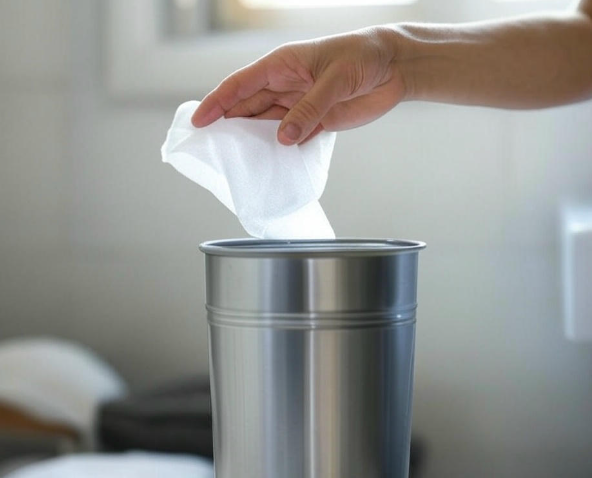
Let’s face it – nobody wants to deal with a backed-up sewer line. The good news? Preventing flushable wipes sewer line problems is simpler than you might think. It all starts with remembering the “3 P’s” rule we live by at SewerRepairs.com: only flush pee, poop, and (toilet) paper.
Place a small trash can next to every toilet in your home – this simple step makes proper disposal convenient for everyone, including guests who might not know better. When that flushable wipe has done its job, it belongs in that trash can, not swirling down your toilet.
“I’ve seen too many homeowners learn this lesson the hard way,” says our lead technician. “That $5 box of wipes can easily turn into a $500 repair bill when they clog your main line.”
Proper disposal habits extend beyond wipes. Those bacon drippings and cooking oils? Let them cool completely, then pour them into a container for the trash – never down the drain where they can combine with wipes to create those nightmare-inducing fatbergs we discussed earlier.
For homes throughout Riverside and the Inland Empire, we recommend scheduling annual sewer line inspections. Think of it as preventative healthcare for your plumbing! Our camera inspections can catch small problems before they become sewage emergencies.
If your line has already suffered damage from wipes, consider trenchless repair options. These innovative techniques allow us to fix your pipes without digging up your beautiful yard – saving you time, money, and landscaping headaches.
Signs Your Sewer Line Is Blocked by Wipes
Catching a flushable wipes sewer line clog early can save you thousands in repair costs. Be on the lookout for these warning signs:
When multiple drains throughout your home start running slowly, that’s your plumbing trying to tell you something – usually that there’s a blockage in your main sewer line. Listen for gurgling toilets or drains, which indicate air trapped in the system due to a blockage.
Take a walk around your yard occasionally. Unusual wet spots might mean sewage is leaking from a blocked pipe. Similarly, those unpleasant sewer odors, whether inside or outside, are never normal and often signal a backup.
Perhaps the most alarming sign is when using one fixture causes water to back up in another – like when running the washing machine makes your toilet overflow. This almost always indicates a main line blockage that needs immediate attention.
If you notice any of these warning signs, don’t wait – contact us right away for a Sewer Line Video Inspection to identify and address the problem before it gets worse.
Proper Disposal and Eco-Friendly Alternatives
If you love the convenience of wipes but don’t want to risk your plumbing, you have options! Many of our customers in Temecula and Corona have switched to bidet attachments – affordable devices that connect to existing toilets and provide a cleansing spray of water. They’re more hygienic, better for the environment, and your pipes will thank you.
For baby care or makeup removal, washable cloth wipes are gentle on both sensitive skin and your plumbing. Some families keep a small covered pail in the bathroom for used cloths until laundry day.
“I switched to a bidet attachment after our third wipe clog,” one Riverside homeowner told us. “It was under $40, installed in 20 minutes, and I’ll never go back to wipes.”
Here are the top items we find causing clogs that should NEVER be flushed: wet wipes (even “flushable” ones), paper towels, feminine hygiene products, cotton balls, dental floss, diapers, medications, cooking grease, cat litter, and cigarette butts. All of these belong in the trash, not your toilet.
Remember what our friends at the water treatment plant like to say: “Use these wipes to your heart’s content, but just put them in the trash can rather than the toilet.” Your sewer line – and wallet – will thank you.
Frequently Asked Questions about Flushable Wipes and Sewer Lines
Are “flushable” wipes really flushable?
Despite what the packaging claims, the answer is a clear and resounding no.
Think about it this way: just because something can be flushed doesn’t mean it should be. A Canadian study put this to the test by examining over 20 brands of so-called “flushable” wipes. The results? Not a single one broke down sufficiently to be considered truly safe for sewer systems.
“These wipes might disappear from your toilet bowl,” explains Jason from SewerRepairs.com, “but they’re just beginning their troublesome journey through your pipes.”
While toilet paper dissolves quickly in water, these wipes maintain their strength and integrity – the very qualities that make them appealing for cleaning but disastrous for your plumbing. They remain intact as they travel through your home’s pipes and into the municipal sewer system, creating potential blockages along the way.
How do I know if wipes are clogging my sewer line?
Your home will usually give you several warning signs before a flushable wipes sewer line clog becomes a full-blown emergency. Be on the lookout for:
Multiple slow-draining fixtures throughout your home – this suggests the problem isn’t isolated to just one drain but affects your main sewer line. You might also notice gurgling sounds coming from toilets or drains when you use water elsewhere in the house. These gurgles are trapped air bubbles trying to escape past a blockage.
Another telltale sign is water backing up in unexpected places. For example, if running your washing machine causes your shower drain to overflow, that’s your plumbing system crying out for help!
Don’t ignore sewage odors inside or outside your home – these unpleasant smells often indicate waste isn’t flowing properly. And if you spot mysterious wet spots in your yard, especially along the path where your sewer line runs, you might have a serious clog causing leaks.
If you notice any of these warning signs in your Riverside, Corona, or Inland Empire home, it’s time to call the professionals at SewerRepairs.com. A prompt inspection could save you thousands in emergency repairs.
What items should never be flushed down a toilet?
Your toilet isn’t a trash can, though many of us treat it like one. To protect your home’s plumbing and our community’s sewer infrastructure, remember the simple “3 P’s” rule: only flush pee, poop, and (toilet) paper.
Everything else belongs in the trash, including those supposedly flushable wipes. The most common culprits we pull from clogged lines include paper towels, tissues, feminine hygiene products, and diapers – all items that don’t break down properly in water.
“I once removed what looked like an entire package of dental floss from a residential line in Moreno Valley,” recalls our senior technician. “It had created a net that caught everything else flowing through the pipe.”
Small items like cotton balls, hair, and medication might seem harmless, but they can accumulate over time. And never, ever flush cooking grease or oils – they solidify in your pipes and create sticky traps for debris.
Cat owners, take note: cat litter is particularly problematic, as it’s designed to clump when wet, creating perfect pipe blockages.
By keeping these items out of your toilet, you’re not just protecting your home’s plumbing – you’re helping maintain our community’s wastewater infrastructure and preventing environmental contamination from sewage overflows.
Call SewerRepairs.com Today!
Let’s face it—those “flushable” wipes might feel nice on your bottom, but they’re causing a world of hurt for your plumbing. Despite what the packaging promises, these wipes stubbornly refuse to break down like toilet paper, creating a genuine threat to your home’s sewer system and beyond.
At SewerRepairs.com, we’ve invested in specialized equipment and mastered trenchless repair techniques that let us tackle these issues with minimal disruption to your property and landscaping. But we’d much rather help you avoid the problem altogether!
If you’re concerned your sewer line might already be affected by wipes or other non-flushable items, don’t wait for disaster to strike. Those early warning signs—gurgling toilets, slow drains, mysterious odors—deserve immediate attention. Our team is ready to perform a professional inspection and explain our sewer pipeline solutions in plain English.
The small change you make today in how you dispose of wipes can prevent a significant plumbing emergency tomorrow. It’s not just about protecting your home—it’s about being a good neighbor and environmental steward by helping maintain our community’s vital infrastructure.
Convenience shouldn’t come at the cost of your plumbing’s health. Keep those wipes out of your pipes, and you’ll save yourself time, money, and a whole lot of mess down the road.