
Fixing belly in sewer line is a crucial task for maintaining the health of your home’s plumbing system. A sewer line belly, or sag, is a common issue where a section of the sewer line dips, causing wastewater to pool and sediment to collect. Left unaddressed, this can lead to significant plumbing problems, including clogs, backups, and even pipe breakages.
Quick Answers:
- What is a sewer line belly? A dip in the sewer line causing standing water.
- Signs of a sewer line belly: Slow drainage, frequent clogs, foul odors, and yard sinkholes.
- Fixing methods: Primarily involves digging up the affected section and replacing it.
The importance of fixing belly in sewer line cannot be overstated. If ignored, the resulting blockages or breaks could lead to expensive repairs and potential health hazards from sewage leaks. Professionals typically use an open trench method to replace the sagging section, ensuring the line is properly supported and sloped.
My name is Jason Best, and I have over 20 years of experience as a master technician in sewer line repairs. Through SewerRepairs.com, I’ve helped countless homeowners fix belly in sewer line issues effectively and efficiently, ensuring their plumbing systems function smoothly.

What is a Sewer Line Belly?
A sewer line belly refers to a section of the sewer pipe that has sagged or dipped, creating a U-shaped curve. This dip disrupts the otherwise smooth flow of wastewater and debris. Think of it like a small valley in your sewer line, where water and waste can pool and accumulate.
Understanding the Sag
In an ideal scenario, sewer lines are installed with a slight downward slope to facilitate the smooth flow of wastewater from your home to the main sewer system or septic tank. However, due to various reasons like ground settling, poor installation, or soil erosion, a section of the pipe may dip, forming a belly.
The U-Shaped Curve: A Closer Look
A sewer line belly essentially creates a U-shaped curve in the pipe. This U-shape acts as a trap for wastewater and debris, leading to potential clogs and blockages.
Wastewater Flow Disruption
When a sewer line has a belly, it disrupts the otherwise efficient flow of wastewater. Instead of flowing smoothly through the pipe, water and waste get trapped in the dip. Over time, this can lead to:
- Clogs: Accumulated waste and debris can form blockages.
- Slow Drainage: Water flow is impeded, causing slow drainage in your home.
- Backups: Severe blockages can cause wastewater to back up into your home.
- Foul Odors: Stagnant water and waste can produce unpleasant smells.
Addressing a sewer line belly is crucial to maintaining a healthy plumbing system. Ignoring it can lead to extensive damage, costly repairs, and health hazards from potential sewage leaks.
Causes of Sewer Line Bellies
Poor Installation
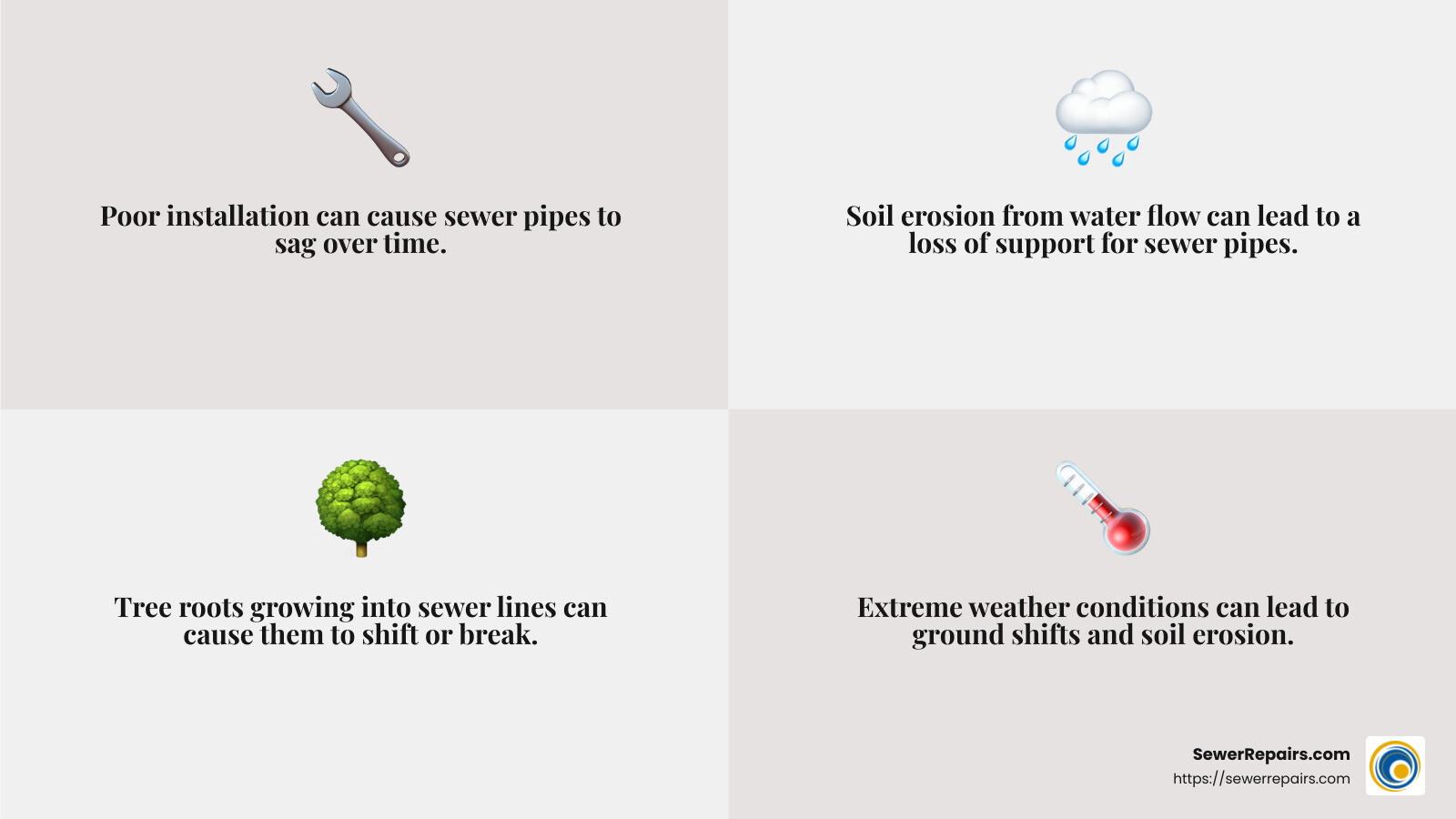
One of the main causes of a sewer line belly is poor installation. When sewer pipes are not installed correctly, they can sag over time. Proper bedding, good materials, and the correct slope are crucial for preventing this issue. If these factors are ignored, the sewer line may settle unevenly, creating a belly.
Soil Erosion
Soil erosion can also lead to sewer line bellies. Over time, the soil around the sewer pipe can erode due to water flow, causing the pipe to lose its support. This lack of support can result in sections of the pipe sagging and forming a belly.
Ground Shifting
Ground shifting is another natural cause of sewer line bellies. Factors like earthquakes, heavy rains, and even minor ground movements can cause the soil to shift. This movement can lead to the sewer pipe settling unevenly, resulting in a belly.
Tree Roots
Tree roots are a common culprit when it comes to sewer line issues. As trees grow, their roots can extend into the sewer line, causing it to shift or even break. The pressure from these roots can create a belly in the pipe, leading to water and waste accumulation.
Weather Conditions
Various weather conditions can also contribute to the formation of sewer line bellies. Extreme heat can cause the ground to expand and contract, while cold weather can cause it to freeze and thaw. These fluctuations can lead to ground shifts and soil erosion, both of which can result in sewer line bellies.
Signs of a Sewer Line Belly
Detecting a sewer line belly early can save you from significant plumbing issues down the road. Here are some common signs to look out for:
Slow Drainage
One of the first signs of a sewer line belly is slow drainage. If you notice that multiple fixtures, like sinks, showers, and toilets, are draining slower than usual, it could indicate a problem. The belly in the sewer line traps water and debris, slowing down the flow.
Frequent Clogs
Are you dealing with constant clogs despite using plungers or drain cleaners? Frequent blockages in various drains can be a red flag. A sewer line belly can trap solid waste, causing clogs that keep coming back even after you’ve cleared them.
Gurgling Sounds
Hearing strange gurgling or bubbling sounds from your drains? This can be another sign of a sewer line belly. These sounds occur when trapped air and wastewater struggle to move through the sagging section of the pipe.
Foul Odors
Unpleasant sewage odors emanating from your drains or around your yard can indicate a sewer line belly. The trapped wastewater and debris can create foul smells, making your home uncomfortable and potentially unsanitary.
Lush Patches in Yard
If you notice unusually lush or wet patches in your yard, it could mean a sewer line belly is leaking wastewater into the soil. This can create soggy areas that stand out from the rest of your lawn.
Backups
In severe cases, you might experience sewage backups into lower-level fixtures like basement drains or even toilets. This is a clear sign that something is obstructing the flow in your sewer line, and a belly could be the culprit.
If you notice any of these signs, it’s crucial to get a professional inspection to confirm whether a sewer line belly is the issue. Early detection can help you avoid more severe problems and costly repairs.
Diagnosing a Sewer Line Belly
Diagnosing a sewer line belly is not a DIY task. It requires professional expertise and specialized equipment. Here’s how the process typically works:
Sewer Camera Inspection
The most effective way to diagnose a sewer line belly is through a sewer camera inspection. This involves inserting a small, waterproof video camera into the sewer line. The camera is attached to a long, flexible rod that can steer through the pipes.
The camera sends live video footage to a monitor, allowing the plumber to see the inside of the sewer line in real-time. This helps identify any sags, blockages, or other issues that might be affecting the flow of wastewater.
Professional Plumbers
Hiring a professional plumber is essential for accurate diagnosis and repair. Experienced plumbers have the skills and knowledge to interpret the video footage and determine the best course of action. They can also differentiate between a sewer line belly and other issues like sewer line channelling, which can be easily misdiagnosed by less experienced individuals.
Video Technology
Modern video technology has revolutionized sewer line inspections. The high-resolution cameras provide a clear and detailed view of the sewer line’s interior. This technology allows plumbers to pinpoint the exact location and extent of the belly. It also helps in planning the most effective repair strategy.
Using video technology, plumbers can:
- Identify the precise location of the belly.
- Assess the severity of the sag.
- Check for additional issues like tree roots or cracks.
- Provide a detailed report and video evidence to the homeowner.
Routine Inspections
Since sewer lines are underground and not easily visible, regular inspections are crucial. Experts recommend having your sewer line inspected every 2-3 years or if you notice any signs of trouble. Routine inspections can catch issues early, potentially saving you from more extensive and expensive repairs down the line.
Fixing Belly in Sewer Line
Fixing a belly in a sewer line is essential to prevent recurring clogs, backups, and potential damage to your plumbing system. Here are the main methods used to address this issue:
Open Trench Method
The open trench method is a traditional approach to fixing a sewer line belly. This involves excavating the ground to expose the affected section of the sewer pipe. Once the pipe is accessible, it can be replaced or repaired.
Steps involved:
- Excavation: Dig a trench along the sewer line to reach the sagging section.
- Pipe Replacement: Remove the damaged pipe and replace it with a new one.
- Ground Reinforcement: Fill the trench with proper materials like gravel and sand to support the new pipe and prevent future sags.
- Proper Materials: Use high-quality, durable pipes (e.g., Schedule 40 PVC) to ensure long-lasting repairs.
While effective, the open trench method can be disruptive and expensive, especially if the sewer line runs under a concrete slab or landscaped area.
Pipe Replacement
Pipe replacement is often necessary if the sewer line belly has caused significant damage or if the pipe is old and corroded. This method involves removing the old pipe and installing a new one.
Key considerations:
- Severity of Damage: If the pipe is severely damaged, replacing it is often the best long-term solution.
- Material Quality: Use high-quality materials to ensure the new pipe lasts longer and withstands environmental stresses.
- Cost: While replacement can be costly, it provides a permanent fix, reducing the need for future repairs.
Ground Reinforcement
Proper ground reinforcement is crucial to prevent sewer line bellies from recurring. The soil around the sewer line must be stable and well-compacted.
Steps for effective ground reinforcement:
- Compaction: Compact the soil around the pipe to provide a stable base.
- Material Selection: Use large-grade gravel and sand to support the pipe and prevent settling.
- Slope Correction: Ensure the pipe is installed with the correct slope to facilitate wastewater flow.
Proper Materials
Using proper materials is essential for a durable and reliable sewer line repair. High-quality pipes and bedding materials can significantly extend the lifespan of your sewer line.
Recommended materials:
- Schedule 40 PVC: This type of pipe is thicker and more durable, making it less prone to bending and sagging.
- Gravel and Sand: These materials provide excellent support and drainage, reducing the likelihood of future sags.
Repair Methods for Sewer Line Bellies
Open Trench Method
The open trench method is a traditional but effective way to fix a belly in a sewer line. This method involves digging a trench to expose the problematic section of the pipe. Here’s how it works:
- Excavation: Dig a trench along the sewer line to reach the sagging section. This might be disruptive, especially if the line runs under concrete or landscaping.
- Pipe Replacement: Remove the damaged or sagging pipe and replace it with a new one. This ensures that the flow of wastewater is restored.
- Ground Reinforcement: Fill the trench with proper materials like gravel and sand to support the new pipe. This helps prevent future sags.
- Proper Materials: Use high-quality, durable pipes (e.g., Schedule 40 PVC) to ensure long-lasting repairs.
This method is thorough but can be costly and time-consuming. It’s best for severe cases where the pipe’s integrity is compromised.
Cured-In-Place Pipe (CIPP) Lining
Cured-In-Place Pipe (CIPP) lining is a trenchless repair method that can be a less invasive alternative. However, it’s important to note that CIPP is not ideal for fixing bellies in sewer lines, as it doesn’t correct the sag but can extend the pipe’s life. Here’s how it works:
- Trenchless Repair: This method doesn’t require extensive digging. A liner coated with resin is inserted into the existing pipe.
- Slip Lining: The liner is inflated and cured in place, forming a new pipe within the old one. This process can be quicker and less disruptive than open trench methods.
- Chemical Risks: The chemicals used to cure the resin can be toxic and harmful to local groundwater. It’s crucial to ensure proper permits are obtained and that the process is handled by professionals.
While CIPP can extend the life of a sewer line, it’s not a solution for sags or bellies. It’s more suitable for pipes that are still structurally sound but need reinforcement.
Pipe Replacement
In some cases, pipe replacement is the most practical solution, especially if the sewer line belly has caused significant damage or the pipe is old and corroded.
Key considerations:
- Severity of Damage: If the pipe is severely damaged, replacing it is often the best long-term solution.
- Material Quality: Use high-quality materials to ensure the new pipe lasts longer and withstands environmental stresses.
- Cost: While replacement can be costly, it provides a permanent fix, reducing the need for future repairs.
Ground Reinforcement
Proper ground reinforcement is crucial to prevent sewer line bellies from recurring. The soil around the sewer line must be stable and well-compacted.
Steps for effective ground reinforcement:
- Compaction: Compact the soil around the pipe to provide a stable base.
- Material Selection: Use large-grade gravel and sand to support the pipe and prevent settling.
- Slope Correction: Ensure the pipe is installed with the correct slope to facilitate wastewater flow.
Proper Materials
Using proper materials is essential for a durable and reliable sewer line repair. High-quality pipes and bedding materials can significantly extend the lifespan of your sewer line.
Recommended materials:
- Schedule 40 PVC: This type of pipe is thicker and more durable, making it less prone to bending and sagging.
- Gravel and Sand: These materials provide excellent support and drainage, reducing the likelihood of future sags.
Preventing Sewer Line Bellies
Preventing sewer line bellies is crucial to maintaining a healthy plumbing system. Here are some key strategies to ensure your sewer lines remain problem-free:
Proper Installation
The foundation of a reliable sewer line is proper installation. This includes:
- Correct Slope: Ensure the pipe is installed with a consistent downward slope towards the sewer main. This helps wastewater flow smoothly, preventing stagnation.
- Professional Expertise: Always hire experienced professionals to handle the installation. Poor planning and installation can lead to future issues, including sewer line bellies.
Correct Slope
Maintaining the correct slope is essential. A sewer line should have a slope of about 1/4 inch per foot. This ensures that gravity helps move waste efficiently.
- Regular Checks: Over time, soil can settle, altering the slope. Routine inspections can catch these changes early.
Quality Materials
Using high-quality materials is a long-term investment in your plumbing system’s health.
- Schedule 40 PVC: This type of pipe is durable and less prone to sagging.
- Proper Bedding: Use materials like gravel and sand to support the pipe. This prevents future settling and sagging.
Routine Inspections
Regular inspections can catch potential problems before they become severe.
- Every 2-3 Years: Have a professional inspect your sewer lines every 2-3 years. This can help identify early signs of bellies or other issues.
- After Major Events: Inspect after significant events like heavy rains, earthquakes, or construction activities nearby.
By following these preventive measures, you can significantly reduce the risk of developing a belly in your sewer line.
Frequently Asked Questions about Fixing Belly in Sewer Line
How serious is a belly in a sewer line?
A belly in a sewer line can be quite serious. When a section of the pipe sags, it creates a U-shaped curve that disrupts the normal flow of wastewater. This can lead to standing water, sediment build-up, and eventually, clogs. If left unaddressed, the structural integrity of the pipe can be compromised, causing cracks, leaks, and even a collapse.
Can you reline a pipe with a belly?
Relining a pipe with a belly is generally not recommended. Traditional relining methods, like Cured-In-Place Pipe (CIPP) lining, won’t correct the sag in the pipe. The best way to fix a belly is by digging up the affected section and replacing it. This involves:
- Excavation: Digging an open trench to access the sagging pipe.
- New Section: Installing a new section of pipe with the correct slope.
- Directional Boring: In some cases, this trenchless method can be used to install a new pipe without extensive digging.
Is Hydro Jetting safe for pipes?
Hydro jetting is a method that uses high-pressure water to clean the interior surfaces of plumbing pipes. It’s generally safe for most types of pipes, including PVC, ABS, clay, and cast iron. However, it’s crucial to perform a camera inspection first to ensure the pipes are in good condition. Hydro jetting can be harmful to pipes that are already compromised or weak.
By addressing these common questions, we hope to provide clarity on the complexities of fixing bellies in sewer lines. If you have more questions or need professional help, don’t hesitate to reach out to us at SewerRepairs.com.
Call SewerRepairs.com Today!
Fixing a belly in your sewer line is not a DIY project. It requires professional expertise to ensure that the problem is properly diagnosed and effectively addressed. A belly in a sewer line can lead to serious issues like standing water, clogs, and even pipe collapse if not fixed promptly.
At SewerRepairs.com, we specialize in cost-effective, minimally invasive sewer repair techniques. Our team of expert plumbers in Riverside, California, is equipped with the latest technology to inspect, diagnose, and repair sewer line bellies efficiently.
We offer a range of services, including trenchless repairs and CIPP lining, to minimize disruption to your property. Our commitment to quality workmanship ensures that your sewer system will be reliable for years to come.
If you’re experiencing sewer line issues, don’t wait for the problem to escalate. Contact us today to get a professional assessment and explore the best solutions for your situation.
Learn more about our sewer pipeline services.
By trusting the experts at SewerRepairs.com, you can rest easy knowing that your plumbing system is in good hands. Let us help you maintain a healthy, efficient, and problem-free sewer line.