
How Cured-in-Place Pipe Lining Revolutionizes Sewer Repair
Cured-in-place pipe lining, or CIPP, is transforming the way homeowners address sewer repair. This trenchless technology offers a quick, affordable, and minimally invasive alternative to traditional pipe repair methods.
For those in a hurry, here’s what you need to know:
– Definition: CIPP is a method of repairing existing pipes without excavation by inserting and curing a resin-coated tube within the damaged pipe.
– Benefits: It’s cost-effective, quick, and causes little to no property damage.
– Longevity: Can extend the life of your sewer system by up to 100 years.
– Cost Consideration: Much cheaper than traditional methods, price varies by pipe size, cleaning required, and accessibility.
CIPP repairs your pipes from the inside out, forming a “pipe within a pipe.”
My name is Jason Best, and I’ve been in the sewer repair industry for over 20 years. With extensive experience installing CIPP, I lead SewerRepairs.com in providing advanced solutions for lasting pipe repairs.
Now, let’s dive deeper into how this technology can benefit your home.
What is Cured-in-Place Pipe (CIPP) Lining?
Cured-in-Place Pipe (CIPP) lining is a groundbreaking method for repairing damaged pipelines without the need for extensive digging. This trenchless rehabilitation technique involves creating a new pipe within the old one, using a resin-coated tube that hardens in place.
The CIPP Process
The CIPP process starts with a flexible liner made of textile material, which is saturated with a resin mixture. This resin can be epoxy, polyester, or vinyl ester. Here’s a step-by-step breakdown of the process:
- Preparation: Before lining, the existing pipeline is cleaned and inspected. This ensures the liner adheres properly.
- Insertion: The resin-coated liner is inserted into the damaged pipe. This can be done by pulling or inverting the liner using air or water pressure.
- Inflation: Once inside, the liner is inflated to fit snugly against the interior walls of the existing pipeline.
- Curing: The liner is then cured using heat (hot water or steam) or UV light. This hardens the resin, forming a durable new pipe within the old one.
- Final Steps: After curing, any lateral connections are reinstated, and a final inspection ensures the new pipe is smooth and free of defects.
Types of Resins Used
Three main types of resins are commonly used in CIPP lining:
- Epoxy Resin: Known for its strong adhesive properties and resistance to chemicals, making it ideal for various applications.
- Polyester Resin: Often used for its cost-effectiveness and good mechanical properties.
- Vinyl Ester Resin: Offers excellent corrosion resistance and is often used in environments with harsh chemicals.
Each type of resin has its own advantages, and the choice depends on the specific requirements of the pipeline being repaired.
The result is a smooth surface that improves the flow within the pipeline and extends its lifespan significantly. This method is not only efficient but also minimally invasive, causing little to no disruption to the surrounding environment.
In the next section, we’ll explore the many benefits of CIPP lining and why it’s becoming the preferred method for sewer repairs.
Benefits of CIPP Lining
Cured-in-place pipe (CIPP) lining offers several benefits that make it an attractive option for sewer repair. Let’s dive into why this method is revolutionizing the industry.
Longevity and Durability
One of the standout features of CIPP lining is its long-lasting nature. The strong epoxy coating applied inside the pipes can last up to 50-60 years. This durability is thanks to multiple layers of epoxy that create a damp-proof, corrosion-resistant, and wear-resistant lining.
The new lining essentially creates a new pipe within the old one, significantly extending the pipeline’s lifespan and reducing the need for frequent maintenance. For property owners, this means fewer disruptions and long-term peace of mind.
Cost-Effectiveness
CIPP lining is also highly cost-effective. While the initial costs can be comparable to traditional methods, the long-term savings are substantial. Here’s why:
- Less Labor: Because the process is minimally invasive, it requires less labor. Workers don’t need to spend hours digging trenches and repairing the landscape afterward.
- Minimal Property Damage: Traditional pipe repair methods often involve extensive excavation, which can damage lawns, driveways, and other property features. CIPP lining requires little to no digging, preserving the property’s aesthetics.
- Cheaper Than Replacement: Replacing old pipes entirely can be a costly and time-consuming endeavor. CIPP lining offers a more affordable alternative that delivers similar results.
Efficiency
The entire CIPP process is incredibly efficient. The lining is inserted through existing access points, inflated, and cured using heat or UV light. This means the job can often be completed in just a few hours, compared to days or weeks for traditional methods.
The quick turnaround time is especially beneficial for commercial and industrial properties, where downtime can be costly. By opting for CIPP lining, property owners can ensure their pipelines are back in service quickly, with minimal disruption.
In the next section, we’ll discuss the limitations and disadvantages of CIPP lining to provide a balanced view of this innovative technology.
Feasibility and Structural Concerns
Significant Damage and Large Internal Gaps: CIPP lining is not always feasible for pipes with significant structural damage or large internal gaps. The liner may not adhere properly, leading to incomplete repairs.
Not Always Feasible: While CIPP is versatile, it can’t solve every problem. Pipes with severe deformations or multiple bends may not be suitable for this method. In such cases, traditional excavation or other trenchless technologies might be necessary.
Understanding these limitations helps in making an informed decision about whether CIPP lining is the right choice for your sewer repair needs.
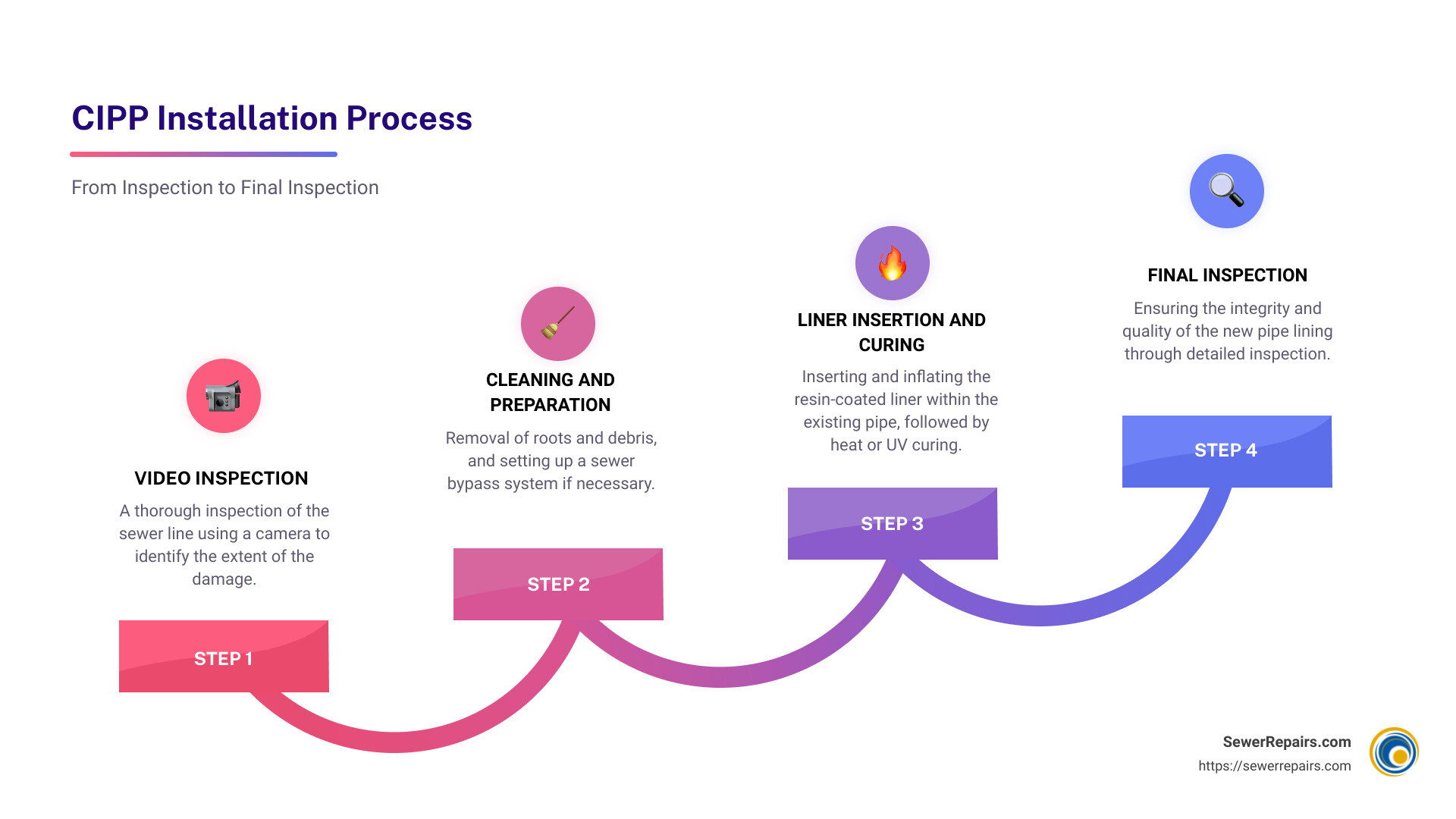
The CIPP Installation Process
Preparation and Setup
Before the cured-in-place pipe (CIPP) lining process begins, thorough preparation and setup are crucial to ensure a smooth and successful installation.
Root Removal and Debris Flushing: The first step involves clearing any roots and debris from the existing pipe. This is typically done using a hydrovac or jet vac cleaning truck. Ensuring the pipe is clean is essential for the liner to adhere properly.
Sewer Bypass System: If the pipe being repaired is part of a live sewer system, a bypass system may be needed. This system reroutes wastewater to nearby pipes, allowing the repair to proceed without disrupting service.
Vactor Truck: A vactor truck (or sewer vacuum) is used to keep the pipe free of debris and water throughout the lining process. This ensures a dry environment, which is necessary for the liner to cure correctly.
Curing and Final Steps
Once the preparation is complete, the actual CIPP lining process can begin.
Liner Insertion: The flexible liner, saturated with a resin mixture, is inserted into the existing pipe through a maintenance hole. This liner is then inflated to fit snugly against the interior walls of the old pipe.
Curing with Heat or UV Light: The liner is exposed to heat or ultraviolet (UV) light to cure, or harden, the resin. This step is critical as it transforms the liner into a strong, durable pipe within the existing pipe. The curing process can take from one hour to several hours, depending on the pipe’s diameter and the curing method used.
Lateral Connections: After the liner is cured, any sewer service lateral connections that were covered by the new lining need to be reopened. This is typically done using a remote-controlled device that drills holes at the points of lateral connections.
Quality Control Inspections: Finally, the newly lined pipe undergoes a series of quality control inspections. This often includes video pipe inspection technology to ensure that the liner is properly installed and that all problem areas have been addressed.
By following these steps, the CIPP installation process restores the functionality of old or damaged pipes, extending their lifespan and improving their performance.
In the next section, we’ll answer some frequently asked questions about CIPP lining to help you understand its benefits and limitations even better.
Frequently Asked Questions about CIPP Lining
How long does cured-in-place pipe lining last?
Cured-in-place pipe lining, or CIPP, can last between 50 to 60 years. The epoxy resin used in the process creates a durable, corrosion-resistant, and wear-resistant pipe within the existing pipe. This makes it a long-term solution for repairing damaged pipelines. Regular maintenance can help maximize this lifespan and keep the system in top shape.
Is CIPP lining worth it?
Absolutely. CIPP lining is a cost-effective and minimally invasive method for repairing sewer pipes. Unlike traditional methods that require extensive digging, CIPP involves no excavation. This means less labor, minimal property damage, and quicker job completion. It’s also efficient; the process can often be completed in a few hours, restoring pipes to near-new condition.
What are the disadvantages of pipe relining?
While CIPP lining offers many benefits, it’s not without its limitations:
- Significant Damage: If a pipe has extensive damage or large internal gaps, CIPP may not be feasible. In such cases, more invasive methods may be required.
- Health Risks: The process involves chemicals like styrene, which can release volatile organic compounds (VOCs). These can pose health risks to workers and residents if not properly managed.
- Environmental Impact: The curing process, especially when using steam, can release hazardous air pollutants. Proper regulatory oversight is essential to minimize these emissions.
By weighing these pros and cons, you can determine if CIPP lining is the right solution for your sewer repair needs.
In the next section, we’ll delve into the expert services offered by SewerRepairs.com to ensure your sewer system gets the professional care it deserves.
Conclusion
At SewerRepairs.com, we pride ourselves on being the go-to experts for all your plumbing needs in Riverside, California. Our team of skilled professionals is dedicated to providing innovative solutions that not only fix your immediate problems but also extend the life of your sewer system.
Cured-in-place pipe (CIPP) lining is one of the cutting-edge technologies we use to revolutionize sewer repair. This trenchless repair method allows us to repair your pipes without the need for disruptive digging. The result? A seamless, durable pipe within your existing pipe, offering a long-lasting solution that can extend the lifespan of your sewer system by up to 50 years.
Our approach is both cost-effective and minimally invasive, ensuring that your property remains intact while we work below ground. With our comprehensive CIPP lining services, you can rest easy knowing that your sewer system is in capable hands.
If you’re experiencing issues with your sewer system, don’t hesitate to reach out to us. We offer a full range of trenchless sewer repair services, including hydrojetting, sewer inspections, and more. Our goal is to provide you with the best possible service, ensuring that your plumbing system operates efficiently for years to come.
For more information on how we can help you with CIPP lining and other trenchless repair solutions, visit our trenchless sewer line repair page.
Contact us today to schedule a consultation and see how we can make your plumbing problems a thing of the past.
Thank you for choosing SewerRepairs.com, where expert plumbing meets innovative solutions.