
Why Corroded Pipes Are a Problem
Corroded pipes are a common issue that can lead to serious plumbing problems and water damage if left unchecked. When metal pipes corrode, they rust from the inside out, weakening the structure and leading to leaks or even bursts. This kind of damage can be very costly to repair and can cause significant disruptions to your daily life.
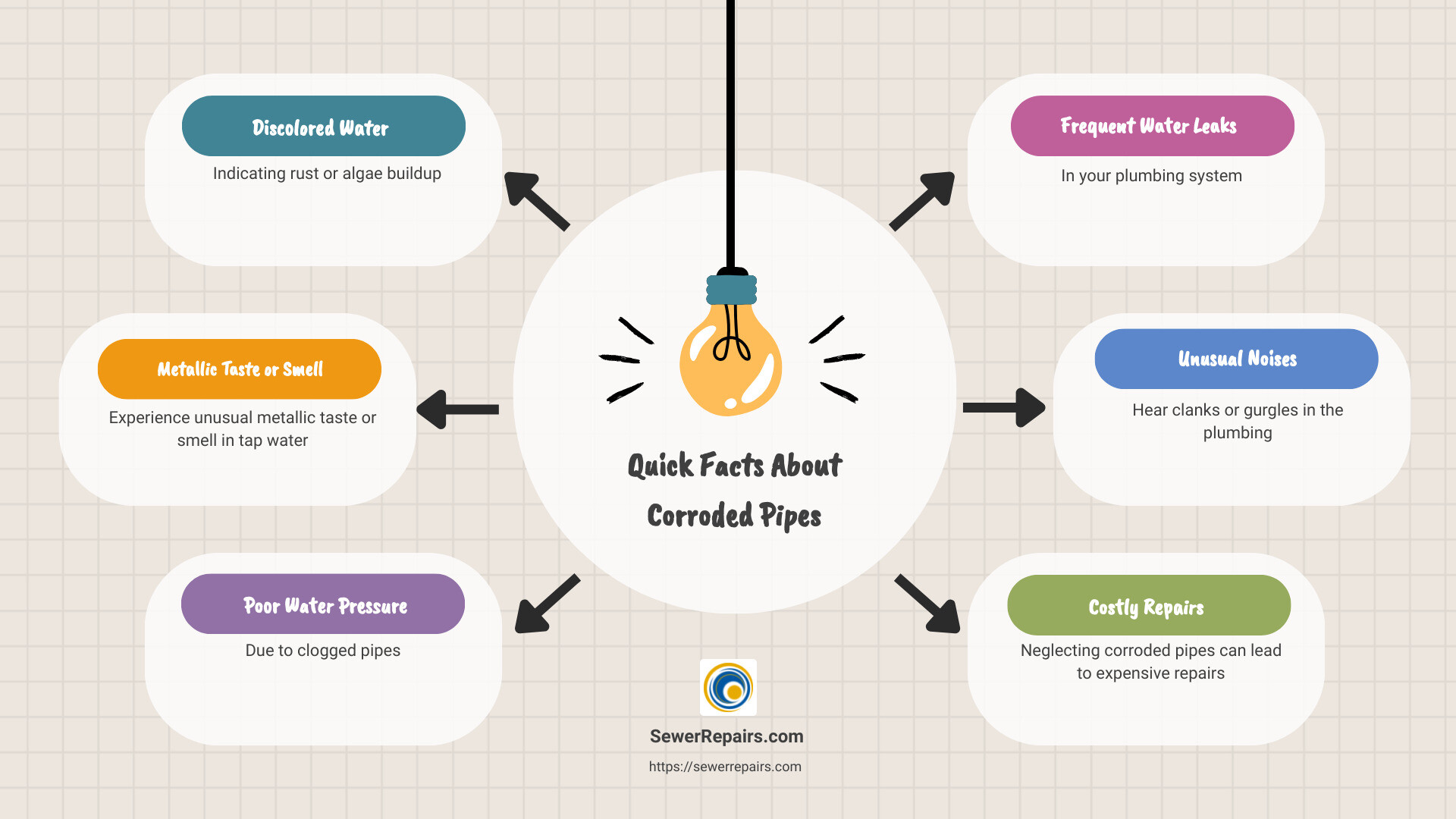
Quick Facts About Corroded Pipes:
- Discolored water indicating rust or algae buildup
- Metallic taste or smell in tap water
- Poor water pressure due to clogged pipes
- Frequent water leaks in your plumbing system
- Unusual noises like clanks or gurgles in the plumbing
Understanding the risks associated with corroded pipes is the first step in preventing major plumbing catastrophes.
I’m Jason Best, a seasoned expert with over 20 years in the plumbing industry, focusing on diagnosing and repairing corroded pipes. Trust me to guide you through managing this critical aspect of your home maintenance.
What Causes Pipe Corrosion?
Understanding what causes pipe corrosion is crucial for prevention and timely intervention. Here are the main culprits:
pH Imbalance
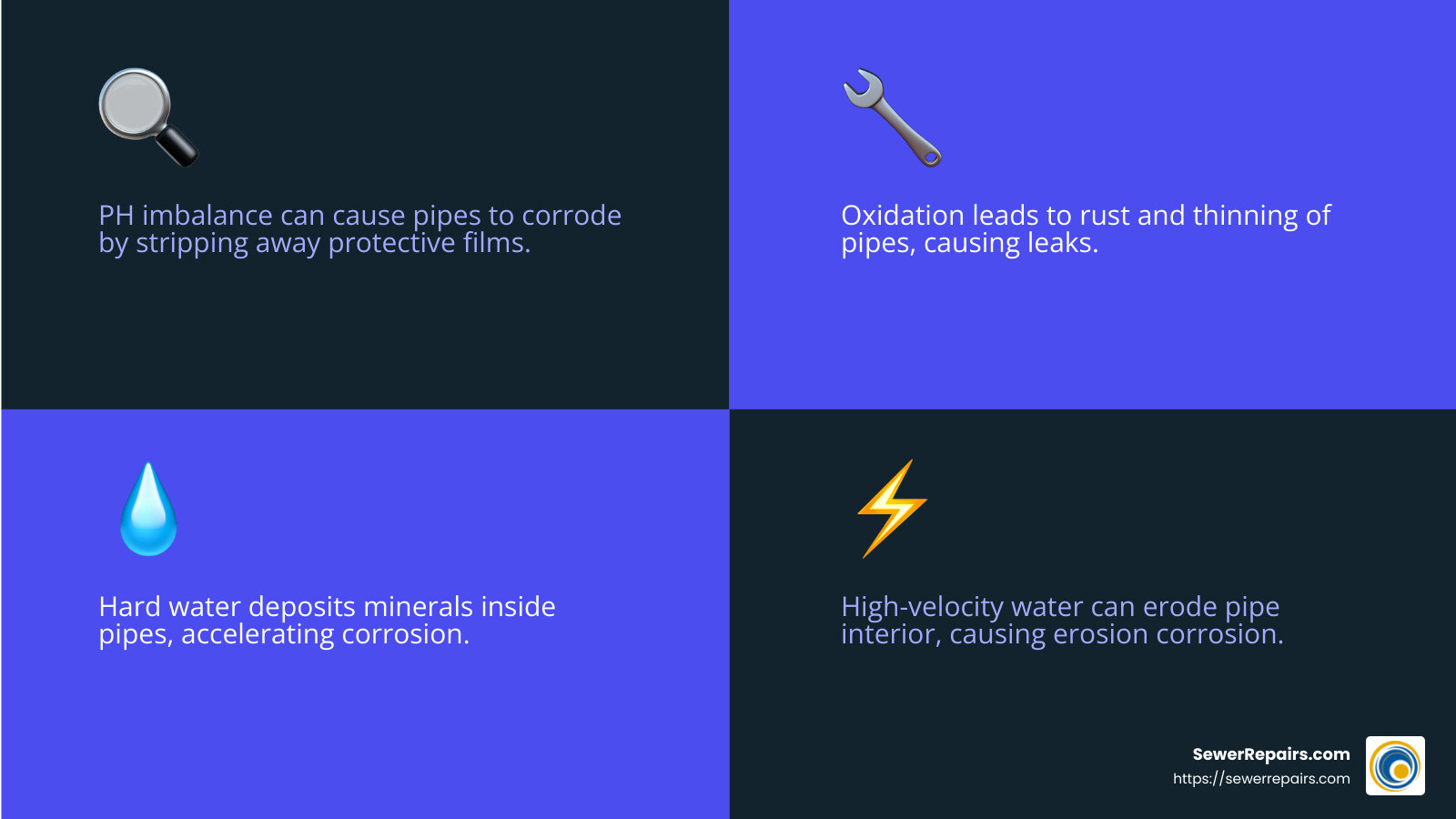
Water acidity plays a significant role in pipe corrosion. The pH scale ranges from 0 (most acidic) to 14 (most alkaline), with 7 being neutral. If your water is too acidic (low pH), it can eat away at metal pipes, especially copper ones. Acidic water strips away the protective copper oxide film, leading to rapid corrosion.
Oxidation
Water in your pipes contains oxygen and nitrogen. While nitrogen is harmless, oxygen can react with metal, causing oxidation or rust. This can lead to:
- Uneven surfaces inside pipes where impurities build up
- Thinning of pipes until they crack
- Pinhole cracks that can cause pipes to burst under pressure
Hard Water
Hard water is rich in minerals like calcium and magnesium. If you notice mineral buildup on taps or dry skin after washing, you probably have hard water. These minerals can deposit inside pipes, causing blockages and accelerating corrosion.
High-Velocity Water
High water velocity, especially in closed-loop systems, can speed up corrosion. This happens because the fast-moving water erodes the pipe’s inner surface, leading to erosion corrosion. Obstructions in the plumbing can create pressure build-ups, exacerbating the problem.
Chemical Drain Cleaners
Chemical drain cleaners might seem like a quick fix for clogs, but they’re often caustic. These chemicals can break down clogs but also corrode the interior of your pipes. Plus, they pose health risks.

Real-World Example
In Flint, Michigan, a change in water source led to widespread pipe corrosion due to a pH imbalance. The new water supply was more acidic, which corroded old lead pipes, releasing toxic levels of lead into the water supply. This crisis highlighted the importance of maintaining balanced pH levels in water.
These factors can all contribute to the deterioration of your pipes. Regular maintenance and professional inspections can help you catch these issues early, saving you from costly repairs down the line.
Signs of Corroded Pipes
Identifying corroded pipes early can save you from significant water damage and costly repairs. Here are the key signs to watch for:
Discolored Water
If your water looks anything but clear, it’s a red flag. Water that appears brown, blue, or green when you first turn on the tap is a common sign of pipe corrosion.
- Brown Water: Often indicates rust from steel or iron pipes.
- Blue-Green Water: Likely points to copper pipe corrosion.
Strange Smells
Does your water smell unusual? A metallic scent could mean your pipes are breaking down and transferring metal particles into your water.
- Metallic Odor: Often due to copper or iron corrosion.
Unusual Tastes
If you’re brave enough to taste the water, corrosion can make it taste off.
- Metallic Taste: Common with corroded copper pipes.
- Sweet Taste: Could indicate lead pipes, which should be replaced immediately.
Poor Water Pressure
Low water pressure can be frustrating and is often a sign of corroded pipes. Over time, corrosion and mineral buildup can clog pipes, reducing water flow.
- Trickling Water: Indicates significant buildup inside the pipes.
Water Leaks
Leaks are a clear sign that something is wrong. Corroded pipes develop small holes that lead to leaks, and in severe cases, the pipes can burst.
- Chronic Leaks: Hard-to-repair leaks often signal extensive corrosion.
- Burst Pipes: A severe and urgent issue requiring immediate attention.
Unusual Noises
Healthy plumbing should be relatively quiet. If you hear loud noises like clanks, bangs, or gurgles, it might indicate a problem.
- Clanking or Banging: Could be due to corroded pipes causing pressure issues.
- Gurgling: Often a sign of air pockets formed by corrosion.
Temperature Fluctuations
Does your water temperature change unexpectedly? Corrosion can affect the anti-scald mechanisms in your plumbing, leading to sudden temperature shifts.
- Inconsistent Temperatures: Particularly in hot water, as hot water pipes corrode faster.
By recognizing these signs early, you can prevent further damage and save money on repairs. If you notice any of these symptoms, it’s crucial to contact a professional plumber for an inspection.
How to Check for Corroded Pipes
Knowing how to check for corroded pipes can save you time, money, and a lot of headaches. Here are some simple steps to help you identify pipe corrosion:
Know Your Pipes
First, identify the type of pipes in your home. Different materials corrode differently. For example, copper pipes are more prone to blue-green stains, while galvanized steel might rust. If your pipes are corrosion-proof, you might not need to worry about this at all.
Test Your Water
A water test can reveal a lot about your plumbing system. Check for abnormal levels of metals like copper or iron. High levels can indicate corrosion. You can use a home test kit or contact a professional for more accurate results.
Check for Blue Stains
Look for blue stains around your fixtures or in your toilet tank. These stains are often a sign of copper pipe corrosion. If you find them, it’s a good idea to dig deeper.
Check for Rust
Rust is a common sign of pipe corrosion, especially in galvanized steel pipes. An easy place to check is your toilet tank. Rusty water or sediment in the tank is a clear indicator.
Inspect Cut Pipe Portions
If you’re having plumbing work done, take a close look at any cut sections of pipe. This is a great opportunity to see the inside of your pipes. Look for signs of rust, scaling, or other corrosion.
Inspect the Exterior
If your pipes are accessible, visually inspect them. Look for pinhole leaks, which are tiny holes caused by corrosion. Also, check for any rusty, bluish, white, or salt-like deposits around the leaks.
By following these steps, you can catch signs of corrosion early, potentially saving yourself from more severe issues down the line. If you find any signs of corrosion, it’s best to consult a professional plumber for a thorough inspection and advice on how to proceed.
How to Treat and Prevent Pipe Corrosion
Treating and preventing pipe corrosion is crucial for maintaining a healthy plumbing system. Here are some effective methods to keep your pipes in top shape:
Acidic Solution
One simple way to treat minor corrosion is by using an acidic solution. A mix of vinegar and water can help dissolve mineral buildup inside your pipes. Pour the solution into the affected pipes and let it sit for 24 hours before flushing it out with water.
Light Abrasive Rub
For external corrosion, a light abrasive rub can be effective. Use a fine sandpaper or a wire brush to gently scrub away rust or mineral deposits. Be careful not to scrub too hard, as this can damage the pipe further.
Frequent Cleaning
Regular cleaning can prevent buildup that leads to corrosion. Clean your faucets and showerheads to remove any mineral deposits. This simple step can extend the life of your pipes.
Anti-Rust Paint
Applying anti-rust paint to your pipes can provide an extra layer of protection against corrosion. This is particularly useful for metal pipes that are exposed to moisture.
Moisture Barriers
Installing moisture barriers can help keep high humidity levels away from vulnerable areas like exterior walls, doors, and windows. This extra precaution can prevent condensation and potential pipe corrosion.
Water Filter
Using a water filter can remove corrosive elements from your water supply. Filters can help reduce the amount of minerals and contaminants that contribute to pipe corrosion.
Corrosion Inhibitor
A corrosion inhibitor is a chemical that can be added to your water supply to prevent corrosion. These inhibitors form a protective layer inside the pipes, shielding them from corrosive substances.
Secure Pipes
Ensure that your pipes are properly secured to prevent movement and friction, which can cause wear and tear. Loose pipes can rub against surfaces, leading to corrosion over time.
Repairing Corroded Pipes
When it comes to repairing corroded pipes, the approach you take will depend on the severity of the corrosion. Here are some common methods:
Patching Pinhole Leaks
Pinhole leaks are tiny holes that can cause big problems if left untreated. To patch these leaks:
- Epoxy Putty: This is a quick fix. Apply the putty over the leak, and it will harden to seal the hole.
- Pipe Clamps: These are metal bands that can be tightened around the pipe to stop the leak. They are a temporary solution until a permanent repair can be made.
Epoxy or Clamp Fitting
For more extensive damage, an epoxy or clamp fitting can be used:
- Epoxy Lining: This method involves coating the inside of the pipe with an epoxy resin. The resin hardens and forms a new pipe within the old one. It’s less invasive and can extend the life of your pipes.
- Clamp Fitting: Similar to patching pinhole leaks, clamp fittings can be used for larger leaks. They provide a tight seal and are good for temporary fixes.
Replacing Pipes
In cases of severe corrosion, replacement is often the best option. Here’s how it’s done:
- Partial Replacement: If only a section of the pipe is corroded, you can replace just that part. This is less expensive than a full replacement.
- Full Replacement: For pipes that are extensively corroded, a full replacement is necessary. This can be a major job and may involve trenching or, more conveniently, trenchless methods.
Professional Plumber
While some minor repairs can be done by homeowners, it’s often best to call a professional plumber for corroded pipes. Here’s why:
- Expertise: Professional plumbers have the experience and tools to diagnose and fix the problem correctly.
- Safety: Handling corroded pipes can be hazardous. Professionals know how to manage these risks.
- Long-term Solutions: A plumber can provide permanent solutions and offer maintenance tips to prevent future corrosion.
Pro Tip: If you have corroded pipes, consider asking your plumber about installing a water softener or corrosion inhibitor to protect your plumbing system in the future.
Frequently Asked Questions about Corroded Pipes
Can corroded pipes be repaired?
Yes, corroded pipes can be repaired, but the method depends on the extent of the damage.
- Patching Leaks: For minor leaks, you can use epoxy putty or pipe clamps. These are quick fixes but should be seen as temporary solutions.
- Epoxy Lining: This involves coating the inside of the pipe with epoxy resin. It’s less invasive and can extend the life of your pipes.
- Replacing Pipes: For severe corrosion, replacing the affected sections or the entire pipe may be necessary. This can involve trenchless methods, which are less disruptive.
Pro Tip: Always consult a professional plumber to assess the damage and recommend the best course of action.
How do you treat corrosion on pipes?
Treating corroded pipes involves several steps:
- Acidic Solution: You can use a mild acidic solution, like vinegar, to clean the pipes. This helps dissolve minor rust and mineral buildup.
- Kitchen Ingredients: Baking soda and lemon juice can also be effective in cleaning and maintaining pipes.
- Frequent Cleaning: Regularly clean your pipes to prevent buildup. Flush them with a vinegar solution every few months.
- Anti-Rust Paint: For exterior pipes, applying anti-rust paint can help protect them from corrosion.
- Water Filter: Installing a water filter can help remove corrosive elements from your water supply.
- Corrosion Inhibitor: These chemicals can be added to your water system to slow down the corrosion process.
Pro Tip: Regular maintenance and inspections by a professional plumber can help catch and treat corrosion early.
Are corroded pipes safe?
No, corroded pipes are not safe and can pose several health risks:
- Health Problems: Corroded pipes can contaminate your water supply with rust and other harmful substances. This can lead to health issues like gastrointestinal problems.
- Mold and Mildew: Leaks from corroded pipes can create damp environments, perfect for mold and mildew growth. This can cause respiratory problems and other health issues.
- Structural Damage: Water leaks can also damage your home’s structure, leading to costly repairs.
Pro Tip: If you suspect your pipes are corroded, get a plumber to inspect them immediately. They can provide a thorough assessment and recommend appropriate solutions.
Call SewerRepairs.com Today!
Dealing with corroded pipes can be a daunting task, but it’s crucial for maintaining a safe and functional home. Ignoring the problem can lead to severe water damage, health risks, and costly repairs down the line.
SewerRepairs.com specializes in professional inspections and cost-effective solutions for all your plumbing needs. Our team is experienced in handling even the most stubborn cases of pipe corrosion. We offer innovative techniques like trenchless repairs, which allow us to fix your pipes without the need for extensive excavation.
Why Choose SewerRepairs.com?
1. Professional Inspection: Our experts conduct thorough inspections to identify the extent of pipe corrosion. Early detection can save you time and money.
2. Cost-Effective Solutions: We offer a range of solutions custom to your specific needs and budget. From epoxy lining to complete pipe replacement, we ensure you get the best value for your investment.
3. Trenchless Repairs: Our trenchless repair methods are minimally invasive, reducing disruption to your property. This innovative technique allows us to repair or replace pipes without digging up your yard, saving you time and hassle.
4. Experienced Team: With over 20 years in the plumbing industry, we have the expertise to handle any plumbing issue. Our licensed plumbers are skilled, professional, and committed to providing top-notch service.
Take Action Now
Don’t wait for a minor issue to become a major problem. If you suspect your pipes are corroded, contact SewerRepairs.com for a professional inspection and custom repair plan.
Visit our service page to learn more about our trenchless sewer line repair options.
By taking proactive steps now, you can protect your home, ensure the safety of your water supply, and avoid costly repairs in the future. Trust SewerRepairs.com to keep your plumbing system in top condition.