
The Basics of CIPP Lining Materials
If you’re searching for CIPP lining material, you’re in the right place. Here’s what you need to know:
- CIPP (Cured-In-Place-Pipe) is a trenchless rehabilitation technique.
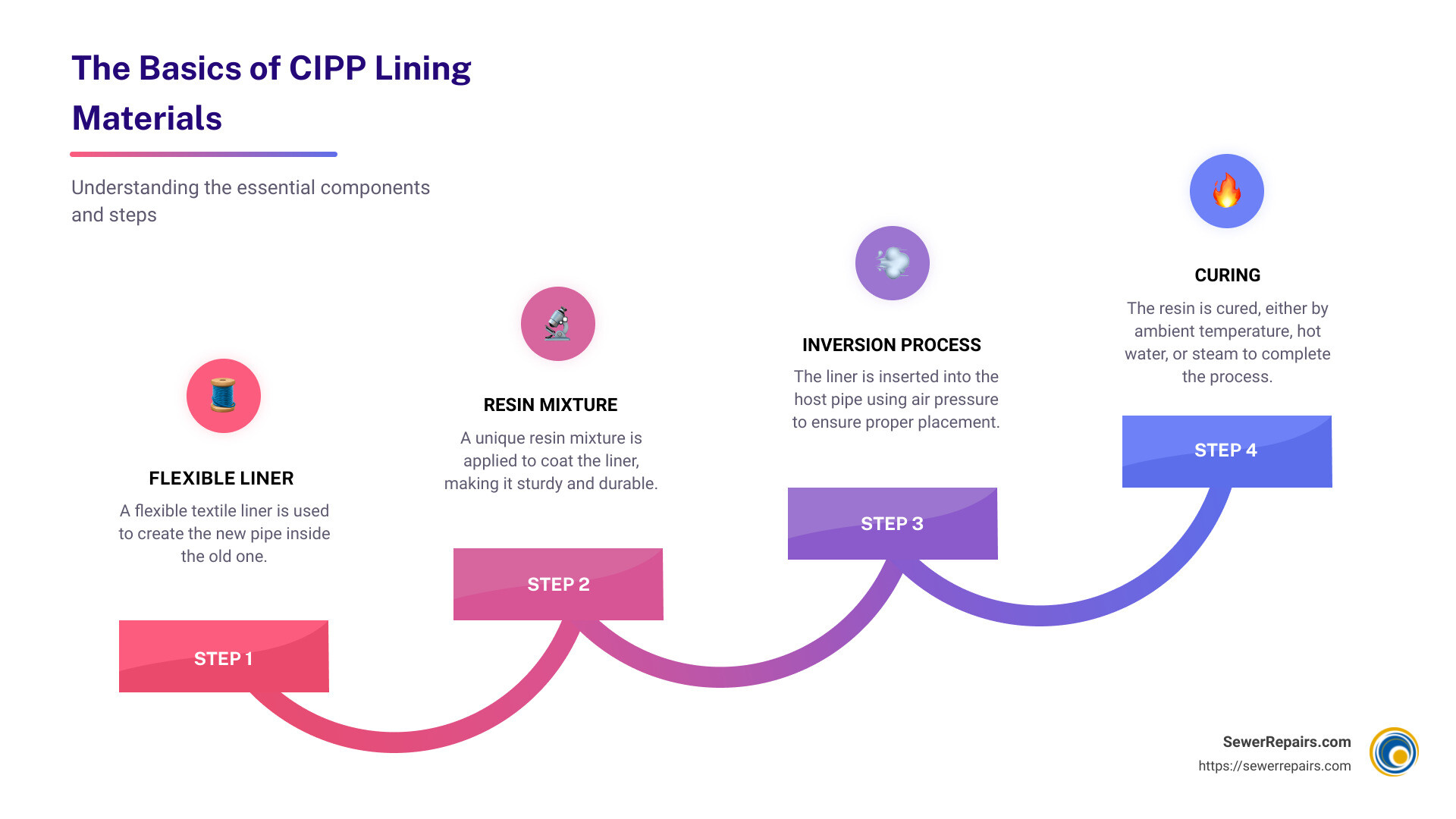
- It involves a flexible liner and a unique resin mixture.
- This method creates a new, durable pipe inside an old one.
- It’s efficient, cost-effective, and minimizes disruption.
CIPP lining materials are essential in trenchless rehabilitation, allowing for the effective repair and restoration of aging or damaged pipes without the hassle of digging up yards or disrupting buildings.
I’m Jason Best, and with over 20 years of experience in sewer repair, I’ve seen how CIPP lining can be. Join me as we dive deeper into the specifics of these incredible materials and their process.
What is CIPP Lining?
Cured-in-Place-Pipe (CIPP) lining is a trenchless method used for the rehabilitation of underground pipes. This innovative technique allows for the repair of existing pipelines without the need for extensive digging or excavation.
How CIPP Lining Works
The process involves inserting a flexible liner impregnated with resin into the damaged pipe. This liner is then cured in place, forming a new, durable pipe inside the old one. The result is a seamless, jointless pipe that is resistant to corrosion and leaks.
Materials Used
CIPP lining typically involves the use of styrene-based resins, epoxy, and other types of resin to ensure a strong and long-lasting repair. The resin-saturated liner is usually made of materials like felt or fiberglass, which are flexible enough to steer through the existing pipe’s bends and curves.
The Curing Process
Once the liner is in place, it undergoes a curing process. This can be done using different methods such as:
- Ambient Curing: Letting the resin harden at room temperature.
- Hot Water Curing: Circulating hot water through the pipe to speed up the curing.
- Steam Curing: Using steam to accelerate the hardening process.
Each method has its advantages, but all aim to ensure that the resin hardens correctly, forming a new, solid pipe within the old one.
Why Choose CIPP Lining?
- Trenchless: No need for digging, which means minimal disruption to landscapes and structures.
- In-Situ: The repair happens within the existing pipe, making it ideal for hard-to-reach areas.
- Rehabilitation: Extends the life of the current pipe, often up to 50-60 years.
- Cost-Effective: Reduces the need for extensive labor and resources, saving up to 75% compared to traditional methods.
Types of CIPP Lining Materials
When it comes to CIPP lining material, there are several options, each with unique properties that make them suitable for different applications. Here, we break down the primary materials used in CIPP lining: felt liners, fiberglass liners, polyester resin, vinyl ester resin, and epoxy resin.
Felt Liners
Felt liners are known for their flexibility. They can curve and stretch, making them ideal for pipes with up to 90° bends. This flexibility allows them to provide optimal results in various applications, including lateral and vertical pipelines.
- Applications: Residential sewer lines, commercial buildings, and even pipelines with complex configurations.
- Advantages: Easy to install, adaptable to different pipe shapes, and cost-effective.
Fiberglass Liners
Fiberglass liners are favored for their durability and strength. These liners are reinforced, making them highly resistant to wear and tear, and ideal for high-performance applications.
- Applications: Industrial pipelines, main sewer lines, and areas requiring extra structural integrity.
- Advantages: Long-lasting, high strength, and capable of handling high-pressure environments.
Polyester Resin
Polyester resin is an economical and versatile option commonly used in CIPP lining. It offers good durability and is suitable for a wide range of applications.
- Applications: General sewer repairs, cost-sensitive projects, and areas where chemical resistance is not a primary concern.
- Advantages: Cost-effective, versatile, and easy to work with.
Vinyl Ester Resin
Vinyl ester resin stands out for its chemical resistance and high performance in specific applications. It is particularly used in environments where the pipe is exposed to harsh chemicals.
- Applications: Industrial pipelines, chemical plants, and areas with high chemical exposure.
- Advantages: Excellent chemical resistance, high performance, and suitable for specialized applications.
Epoxy Resin
Epoxy resin is known for its high performance and ecologically-friendly properties. It is odorless and styrene-free, making it safe to use in sensitive areas such as basements and behind walls in commercial buildings.
- Applications: Residential and commercial sewer lines, environmentally sensitive areas, and pipelines requiring a safe, non-toxic solution.
- Advantages: High performance, environmentally friendly, and odorless.
Calibration Tubes
Calibration tubes, like the Max CalTube®, provide optimum flexibility and excellent resistance against tearing. They are used in the curing process to ensure the liner fits perfectly within the host pipe.
- Applications: Used during the curing phase of CIPP lining to maintain the shape and position of the liner.
- Advantages: High flexibility, tear resistance, and essential for a smooth curing process.
The CIPP Lining Process
Cured-in-Place Pipe (CIPP) lining involves several key stages, ensuring the effective rehabilitation of underground pipes. Let’s break down each step to understand how this innovative process works.
Wet-Out Stage
The wet-out stage is where the magic begins. In this phase, a textile liner is saturated with a resin mixture. This mixture typically consists of an epoxy base combined with a predetermined hardener. The result is a flexible, resin-soaked liner ready for insertion into the damaged pipe.
Inversion Process
Once the liner is prepared, it’s time for the inversion process. Using air pressure, the liner is inverted into the existing pipe. This means the resin-coated side of the liner is pressed firmly against the host pipe wall, ensuring a snug fit. The air pressure helps the liner steer through bends and curves, adhering to the pipe’s interior.
Curing Methods
After the liner is in place, the curing process begins. There are three primary curing methods used in CIPP lining:
- Ambient Curing: This method allows the resin to cure naturally at room temperature. It’s slower but effective for certain applications.
- Hot Water Curing: Hot water is circulated through the liner to accelerate the curing process. This method is faster and ensures a thorough cure.
- Steam Curing: Steam is used to heat the liner from the inside, speeding up the curing time significantly. This method is often preferred for its efficiency and effectiveness.
Robotic Cutting Device
Once the liner is cured and hardened, any branch line connections must be reinstated. This is where a robotic cutting device comes into play. This device is inserted into the newly lined pipe and uses precision cutting to reopen branch connections. This ensures that all parts of the pipe system are fully functional and connected.

Advantages of CIPP Lining
Minimal Disruption
One of the biggest advantages of CIPP lining is its minimal disruption. Unlike traditional pipe repair methods, CIPP does not require digging up your yard, driveway, or basement. This trenchless technology means no excavation is needed, preserving your landscape and structures.
This is especially important for places like restaurants, hospitals, and historic buildings where disruption can be costly or even impossible. By avoiding excavation, CIPP keeps businesses running smoothly and homes intact.
Cost-Effective
CIPP lining is not just less disruptive; it’s also cost-effective. Traditional pipe repair can be expensive due to the labor and resources needed for digging and restoring the area. With CIPP, these costs are significantly reduced.
In fact, CIPP can save you up to 75% compared to conventional methods. Fewer resources and less labor mean more savings for you. Plus, the faster completion time reduces downtime, saving even more money.
Long-Lasting
Durability is another strong point of CIPP lining. Once installed, the new pipe lining can last between 50-60 years with minimal maintenance. This long lifespan means you won’t have to worry about frequent repairs or replacements.
The materials used in CIPP, like epoxy resin, are designed to withstand the test of time. This ensures that your newly lined pipes remain functional and reliable for decades.
Corrosion-Resistant
CIPP lining creates a smooth, fitted, new pipe wall that is highly corrosion-resistant. The epoxy or other resin materials used in the process form a protective barrier inside the existing pipe. This barrier prevents rust, corrosion, and other forms of deterioration.
This corrosion resistance not only extends the life of your pipes but also improves the flow of water or waste through the system. A smooth interior means fewer blockages and better overall performance.
Risks and Limitations of CIPP Lining
Health Risks
Working with CIPP lining materials can pose health risks. The curing process releases volatile organic compounds (VOCs), including styrene. Styrene VOCs can cause respiratory diseases like asthma and obliterative bronchiolitis.
Obliterative bronchiolitis is a severe condition where the small airways in the lungs become inflamed and scarred, leading to breathing difficulties. Proper ventilation and protective gear are essential for workers to minimize these risks.
Confined Spaces
CIPP installations often occur in confined spaces like manholes. These environments can be hazardous. Limited airflow, tight quarters, and the presence of harmful gases make safety precautions crucial.
Workers must follow strict safety guidelines, including using proper ventilation and wearing safety gear, to mitigate risks.
VOCs and Odors
Styrene VOCs are not just a health risk but also a nuisance. Humans can detect styrene at concentrations below 0.5 ppm, making it easily noticeable during the curing process.
To combat this, products like the HP2 Styrene Barrier are designed to contain these vapors, reducing potential human exposure and making the environment more pleasant.
Blistering
Blistering can occur during the steam curing process, especially when using TPU-based materials. Overheating can cause the liner to blister, compromising its integrity.
Following the manufacturer’s guidelines for temperature control can prevent this issue. Alternatively, using TPO lining offers a more blister-resistant solution.
Not Suitable for Upsizing
CIPP lining is ideal for renewing existing pipes but not for upsizing them. If you need to increase the pipe diameter, methods like static pipe bursting are more appropriate.
Static pipe bursting can expand a pipe’s diameter without excavation, making it suitable for sensitive environments. However, this method requires significant planning and resources.
In the following section, we will address some frequently asked questions about CIPP lining material to provide further clarity on this topic.
Frequently Asked Questions about CIPP Lining Material
What is CIPP lining made of?
CIPP lining is made from various materials, each chosen for its specific properties and applications. Here are the primary materials used:
- Felt Liners: Known for their flexibility, felt liners can curve and stretch to accommodate up to 90° bends. They are optimal for various applications, making them a versatile choice.
- Fiberglass Liners: These liners offer high durability and strength. They are reinforced for high-performance applications, providing a robust solution for pipe rehabilitation.
- Polyester Resin: This is an economical and versatile resin, commonly used due to its durability. It’s a cost-effective option for many standard CIPP lining projects.
- Vinyl Ester Resin: Known for its chemical resistance and high performance, vinyl ester resin is used in specific applications where these properties are crucial.
- Epoxy Resin: Epoxy resins are high-performing and ecologically friendly. They are odorless and styrene-free, making them safe for use in sensitive areas like basements and behind walls.
What is the life expectancy of a CIPP lining?
The life expectancy of a CIPP lining is generally between 50 to 60 years. This long lifespan is due to the durable materials and the robust curing process used. Regular maintenance can help ensure the lining reaches its maximum life expectancy.
What material is used for sewer pipe relining?
For sewer pipe relining, high-density polyethylene (HDPE) is often used due to its durability and versatility. This material is resistant to corrosion and can withstand various environmental conditions, making it an excellent choice for long-term pipe rehabilitation.
By using these high-quality materials, CIPP lining provides a reliable and long-lasting solution for sewer pipe repair.
Call SewerRepairs.com Today!
At SewerRepairs.com, we pride ourselves on our expertise in CIPP lining and trenchless sewer repair techniques. Our team has extensive experience and knowledge to ensure your sewer system gets the best possible care.
Why choose us?
First, our methods are cost-effective. Traditional sewer repairs can be expensive due to the need for extensive digging and labor. With CIPP lining, we minimize these costs by using a trenchless approach. This means fewer resources and less labor, which can result in up to 75% cost reduction compared to traditional methods.
Second, our techniques are minimally invasive. We understand the importance of preserving your landscape and structures. With CIPP lining, there’s no need for digging up your yard, driveway, or basement. This is especially beneficial for homeowners, businesses, and institutions that cannot afford disruptions.
Finally, our sewer repair techniques are reliable and long-lasting. By using high-quality materials like epoxy resin and fiberglass liners, our CIPP solutions can extend the lifespan of your pipes up to 60 years. This ensures that your sewer system remains in top condition for decades with minimal maintenance.
For more information on our trenchless sewer line repair services, visit our service page.
Choose SewerRepairs.com for expert, cost-effective, and minimally invasive sewer repair solutions.