
Can trenchless sewer repair fix a belly? The quick answer: No, trenchless technology cannot directly fix a sewer line belly due to its nature of following the existing pipe’s path, including any sag or belly present.
- Key Point: Trenchless repair methods, such as pipe lining, are not suitable for correcting bellies in sewer lines.
- Reason: The technology installs a new line within the old one, adopting any imperfections, including bellies.
- Alternative: Sewer line bellies require excavation to physically adjust the slope and remove the sag.
If you’re facing a toilet that’s backing up or slow drains throughout your Southern California home, you might be dealing with a common yet troubling issue known as a sewer line belly. Understanding the limitations of trenchless sewer repair technologies is crucial for homeowners looking to address this issue effectively. While trenchless methods offer a less invasive solution for many sewer issues, they fall short when it comes to fixing bellies.
Trenchless technology’s appeal lies in its ability to repair or replace sewer pipes without the need for extensive digging, which preserves your yard and reduces repair time. However, its effectiveness is limited by the condition of the existing pipe. A sewer line belly, characterized by a sag or low spot in the piping that collects waste and water, requires a different approach because lining methods will simply mold to the existing defective shape.
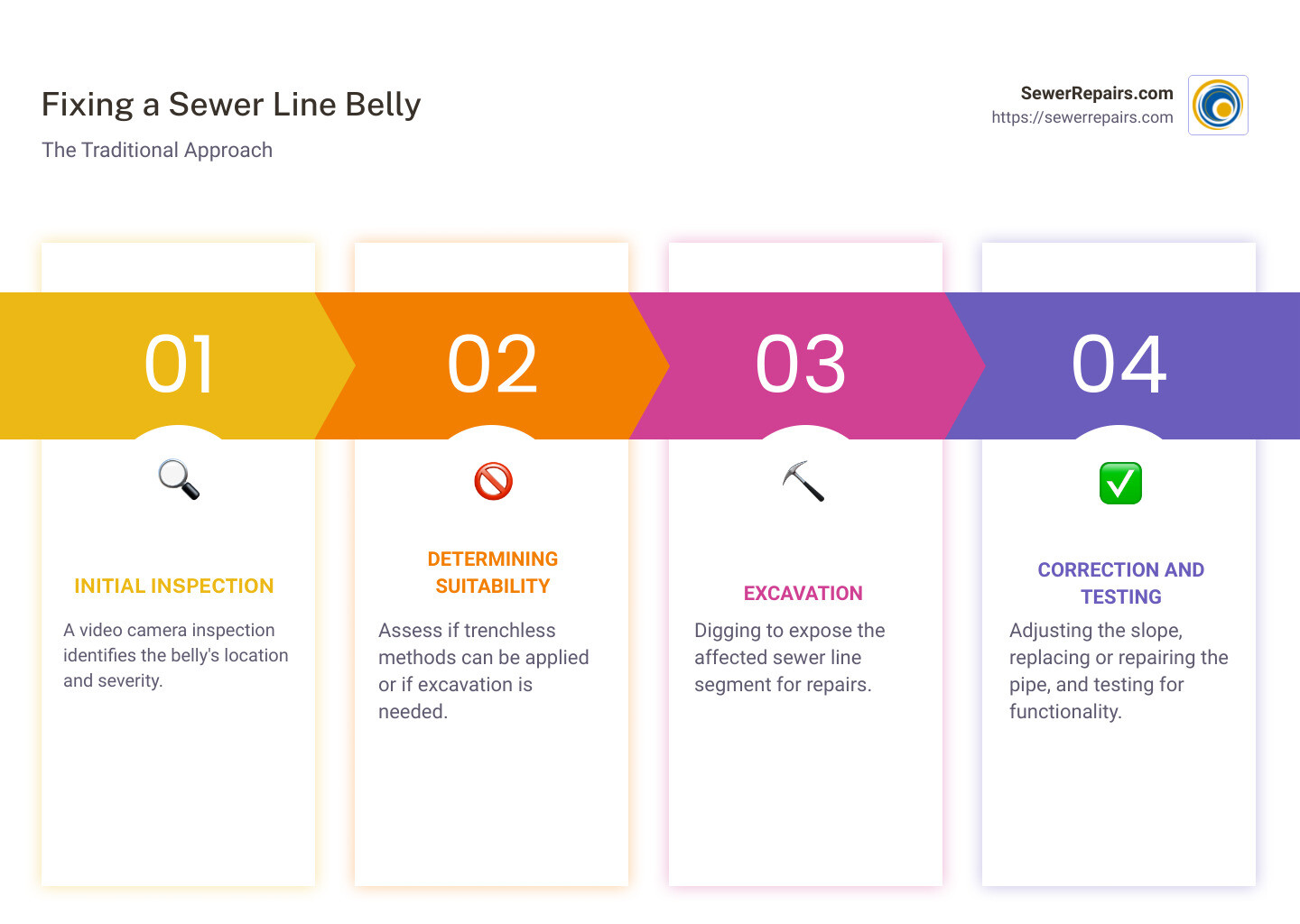
As we delve deeper into the issues of sewer line bellies and channeling, being informed is the first step toward finding a solution. Not all repair methods are created equal, and in some cases, a more traditional approach may be necessary to ensure the health of your home’s sewer system.
Understanding Sewer Line Bellies
When we talk about sewer line bellies, we’re essentially discussing a sag or bend in the sewer pipe. Imagine a garden hose lying flat and then developing a dip in the middle where water collects instead of flowing freely. That’s what happens in a sewer line belly. This sagging creates a few problems: standing water and sediment collection.
Sagging
Sagging occurs when a section of the sewer pipe has shifted downward. This can happen due to several reasons like improper installation, soil shifting, or even the weight of the ground above. The slope that’s crucial for the wastewater to flow towards the sewage system is compromised, leading to potential backups and damage.
Standing Water
The presence of standing water is a direct consequence of the sagging. In a properly sloped sewer line, water flows smoothly without any halt. However, in a bellied pipe, water pools in the sagging part. This not only slows down the wastewater movement but can also become a breeding ground for bacteria and emit unpleasant odors.
Sediment Collection
Where there’s standing water, sediment is sure to follow. Over time, particles that accompany wastewater begin to settle in the belly of the pipe. This sediment build-up can lead to blockages, further impeding the flow of sewage. If not addressed, this can escalate into more significant issues like severe backups and even pipe bursts due to increased pressure.
Understanding these aspects of sewer line bellies is crucial for homeowners. It’s not just about the inconvenience of slow drains or the fear of backups; it’s also about the potential health hazards and property damage that can arise if these issues are not properly managed. Regular inspections using advanced tools like video cameras can help spot these issues early on, before they turn into major headaches.
In the next section, we’ll explore why trenchless repair methods, although innovative and less invasive, might not always be the best solution for fixing sewer line bellies. Stay tuned as we dive into the intricacies of sewer line repair and how to ensure your home’s plumbing system remains healthy and functional.
The Difference Between Line Belly and Channeling
When we talk about sewer line issues, two terms often come up: line belly and channeling. Though they might seem similar at first glance, they’re quite different problems, each with its unique challenges. Let’s break down these differences in simple terms.
Erosion
Channeling is primarily caused by erosion. Imagine the bottom of your sewer pipe wearing away over time because of the constant flow of water. It’s like a river carving a canyon, but much less grand and much more problematic for your plumbing. This erosion can lead to significant gaps or channels in the pipe where water and waste gather but don’t move properly.
Blockage
Both line bellies and channeling can lead to blockages, but the reasons differ. A line belly collects water and waste in the sagged part of the pipe, creating a pool that makes it hard for solids to pass. On the other hand, channeling causes blockages because the eroded channels trap waste, leading to a buildup that clogs the pipe.
Orangeburg Pipe
A special mention goes to Orangeburg pipe, a fiber pipe used from the 1940s to the 1970s. These pipes are particularly prone to channeling due to their material, which doesn’t stand up well to the test of time and erosion. If your home has these, channeling might be a concern.
Buckling
Buckling is another issue that can arise, especially in areas prone to ground movement. While not exactly the same as a line belly, buckling can cause a pipe to bend or collapse, leading to similar symptoms. It’s a sign that the earth around your pipe is shifting, possibly due to heavy traffic, construction, or natural soil movement.
A line belly is like a dip in the road where water pools, while channeling is more like a pothole that’s formed over time. Both are problematic, but understanding the difference is crucial for addressing the issue correctly. Unfortunately, trenchless repair methods, which work wonders for many plumbing problems, might not be the knight in shining armor for these situations. The physical shape and integrity of the existing pipe play a significant role in determining the suitability of trenchless repairs.
In our next section, we’ll delve into why trenchless repair might not always be the best route for these particular issues. Stay tuned to learn more about ensuring the health and functionality of your home’s plumbing system with the right repair methods.
Why Trenchless Repair Might Not Be Suitable
When it comes to fixing sewer lines, trenchless repair has become a popular choice due to its less invasive nature and speed of execution. However, it’s not a one-size-fits-all solution, especially in cases involving sewer line bellies. Let’s break down the reasons why trenchless repair might not always be the right choice.
Existing Pipe Integrity
The success of trenchless repair heavily relies on the condition of the existing pipe. If a pipe is too weak, severely damaged, or has collapsed, the trenchless method, which typically involves relining the inside of the existing pipe, may not be possible. The liner needs a stable structure to adhere to, and without it, the repair can fail, leading to more problems down the line.
Sleeve Adaptation
Trenchless repair often involves inserting a new sleeve or liner into the existing pipe. However, in the case of a bellied pipe, this method faces a unique challenge. The new liner would simply follow the existing shape of the pipe, including the sagging section, or “belly.” This means the underlying issue of standing water and sediment collection in the belly wouldn’t be corrected, merely masked for a time.
Soil Conditions
The condition and stability of the soil surrounding the pipe play a crucial role in the viability of trenchless repairs. In situations where a sewer line belly has formed due to soil erosion or instability, simply relining the pipe won’t address the root cause of the problem. Without correcting the soil conditions that led to the belly in the first place, it’s likely that issues will reoccur, potentially leading to further damage and the need for more extensive repairs.
In summary, while trenchless repair methods offer many advantages, they are not a universal fix, especially when it comes to complex issues like sewer line bellies. The integrity of the existing pipe, the ability of a new sleeve to effectively correct the problem, and the surrounding soil conditions all play critical roles in determining whether trenchless repair is a suitable option. In many cases, addressing a sewer line belly may require more traditional repair methods to ensure a long-term solution.
As we continue to explore the intricacies of sewer line repairs, it’s clear that understanding the specific issue at hand is key to choosing the most effective repair method. Stay tuned as we delve deeper into diagnosing sewer line issues and the various repair options available to homeowners.
Diagnosing Sewer Line Issues
When it comes to fixing your sewer lines, knowing exactly what’s wrong is the first step. It’s like being a detective, but for pipes. Let’s break down how professionals figure out the issue with your sewer lines.
Video Inspection
Think of this as the CCTV footage for your sewer lines. A small camera is sent down your pipes to capture live images of what’s going on inside. This isn’t just any camera; it’s designed to navigate the twists and turns of your sewer lines, providing clear images of clogs, cracks, bellies, or any other issues. This method is a game-changer because it takes the guesswork out of diagnosing the problem. You can actually see the belly in the line or spot where the pipe has eroded.
Advanced Tools
Beyond cameras, professionals use a variety of high-tech tools to get a better understanding of the sewer line’s condition. Tools like sonar units can help detect blockages in non-metal pipes, while flexible rod systems with different attachments can clear or investigate the cause of the blockage. It’s like having a Swiss Army knife, but for sewer repairs.
Professional Assessment
After gathering all this intel, a seasoned expert from a reputable company like SewerRepairs.com steps in to make sense of it all. They’ll look at the footage, consider the symptoms you’ve described (like slow drains or backups), and use their experience to pinpoint the issue. They understand the nuances between different sewer line problems, whether it’s a simple clog, a line belly, or something more complex like channeling.
This professional assessment is crucial. It ensures that the repair plan is tailored to your specific problem, avoiding unnecessary work and focusing on the most effective solution. The expert might confirm a line belly and recommend the next steps, or they might find that the issue isn’t as severe as feared.
By combining video inspection, advanced tools, and professional expertise, diagnosing sewer line issues becomes a precise science. This approach saves time, money, and a lot of guesswork, ensuring that the repair method chosen is exactly what’s needed for your sewer lines to function smoothly again.
As we move on to explore the various repair options available for different sewer line issues, a correct diagnosis is the foundation of any successful repair plan. Stick with us as we delve into the solutions that can help restore your sewer lines to their best condition.
Repair Options for Sewer Line Bellies
When it comes to fixing a sewer line belly, the repair options can vary based on the severity of the sag, the condition of the existing pipe, and the surrounding soil conditions. Let’s explore some of the most effective methods used to address this issue.
Open Trench Method
The open trench method is the traditional approach to repairing sewer line bellies. This process involves:
- Digging up the area above the affected pipe.
- Removing the section of the pipe that has sagged.
- Replacing it with a new pipe section that is properly supported.
This method allows for direct access to the problem area, ensuring that the repair is thorough and long-lasting. However, it can be more disruptive to your yard and landscaping.
Directional Boring
Directional boring, also known as horizontal directional drilling, is a trenchless method that can be used to run a new sewer line without disturbing the surface above. Here’s how it works:
- A drilling rig is used to create a path for the new pipe.
- The new pipe is then pulled through the path created by the drill.
This method is less invasive than the open trench method and is particularly useful when obstacles like driveways or patios are in the way.
Pneumatic Gopher
The pneumatic gopher is another trenchless solution that can be employed for repairing sewer line bellies. It involves:
- Using a pneumatic tool to create a tunnel under the ground.
- Installing a new pipe through this tunnel.
This method is effective for shorter distances and can be a quick way to bypass a bellied section of the pipe.
Soil Bedding
Proper soil bedding is crucial for preventing future bellies in sewer lines. It involves:
- Using a specific mix of soil, sand, and gravel to support the pipe.
- Ensuring that the bedding is compacted properly to prevent settling.
Proper soil bedding provides a stable base that helps keep the sewer pipe at the correct slope and prevents sagging.
Proper Slope
Ensuring the sewer line has the proper slope is essential for preventing bellies. The slope:
- Helps wastewater flow smoothly through the pipe, preventing sediment buildup.
- Is carefully calculated based on the length of the pipe and the flow rate.
Maintaining the right slope is a critical aspect of both the installation of new sewer lines and the repair of existing ones.
By understanding these repair options, homeowners and professionals can make informed decisions on how to best address a sewer line belly. Whether it’s employing traditional methods like the open trench or utilizing trenchless technologies such as directional boring and the pneumatic gopher, the goal is to restore proper function to your sewer system with minimal disruption. Proper soil bedding and maintaining the correct slope are also key to ensuring the longevity and reliability of the repair.
Frequently Asked Questions about Sewer Line Repairs
When it comes to sewer line repairs, many homeowners have questions about the best course of action, especially when dealing with complex issues like line bellies. Here, we address some of the most common inquiries.
Can minor bellies be left untreated?
In short, no. Even minor bellies in a sewer line can escalate into major problems if left untreated. A small sag may seem harmless at first, but over time, it can collect sediment and debris, leading to blockages, slow drainage, and eventually, a complete failure of the sewer line. Addressing a belly early on can save you from more costly and extensive repairs down the line.
What are the cons of trenchless sewer repair?
While trenchless sewer repair offers many benefits, including less disruption to your property and a quicker repair time, it’s not without its drawbacks. Here are a few key points to consider:
- Not Suitable for All Damage Types: Trenchless methods may not be effective for severely damaged pipes or those with extensive bellies, as the new lining can mimic the existing faults.
- Access Limitations: Certain properties or pipe locations may not be suitable for trenchless repair due to limited access or narrow spaces.
- Specialized Equipment Required: This method requires specialized tools and expertise, which may not be available in all areas.
How can I prevent future sewer line bellies?
Preventing sewer line bellies largely revolves around ensuring proper installation and maintenance. Here are a few tips:
- Proper Installation: Ensure that your sewer line is installed with the correct slope and bedding material to prevent future sagging.
- Regular Inspections: Utilize advanced video inspection services to monitor the condition of your sewer line and catch any early signs of trouble.
- Avoid Planting Trees Near Sewer Lines: Tree roots can cause soil displacement and contribute to the formation of bellies.
- Address Ground Movement: In areas prone to earthquakes or significant ground movement, take additional precautions to secure and support sewer lines.
By staying proactive and informed, homeowners can significantly reduce the risk of sewer line bellies and maintain a healthy, functioning sewer system. For any sewer line concerns or questions, don’t hesitate to reach out to the experts at SewerRepairs.com. We’re here to ensure your sewer system gets all the professional services it needs, with minimal disruption to your daily life.
Conclusion
At SewerRepairs.com, we understand the complexities and challenges that come with sewer line issues, particularly when it comes to line bellies and channeling. Our expertise in the field has shown us that while trenchless sewer repair offers numerous benefits for many situations, it’s not a one-size-fits-all solution—especially when dealing with the intricacies of a sewer line belly.
We’ve seen how the right diagnosis and repair strategy can make all the difference in effectively addressing sewer line problems. Our team of professionals is equipped with the latest technology for video inspection and advanced tools to accurately assess and diagnose the condition of your sewer lines. This enables us to recommend the most effective repair options tailored to your specific situation.
When trenchless repair isn’t suitable, such as with line bellies where the existing pipe integrity is compromised or the soil conditions are unfavorable, we have the skills and experience to employ alternative methods. Our open trench method, directional boring, and pneumatic gopher techniques are designed to not only correct the current issue but also to prevent future occurrences by ensuring proper slope and soil bedding.
We understand that sewer line repairs can be daunting, and you might have many questions. Whether you’re wondering if minor bellies can be left untreated, the cons of trenchless sewer repair, or how to prevent future sewer line bellies, we’re here to provide the answers and guidance you need. Our goal is to ensure that your sewer system operates efficiently and reliably, with minimal disruption to your life.
Our commitment to excellence, combined with over 20 years of plumbing experience, positions us as the trusted experts in trenchless sewer line replacement, camera inspections, repair, and maintenance. At SewerRepairs.com, we take pride in our work and treat every project as if it were our own home or business.
For professional, knowledgeable, and reliable sewer repair services, look no further than SewerRepairs.com. We’re here to ensure your sewer system receives all the professional services it needs. Explore our range of services and find out how we can support you by visiting our service locations page.
When it comes to sewer line repairs, trust the experts at SewerRepairs.com. We’re just a call away, ready to provide the professional service and peace of mind you deserve.