
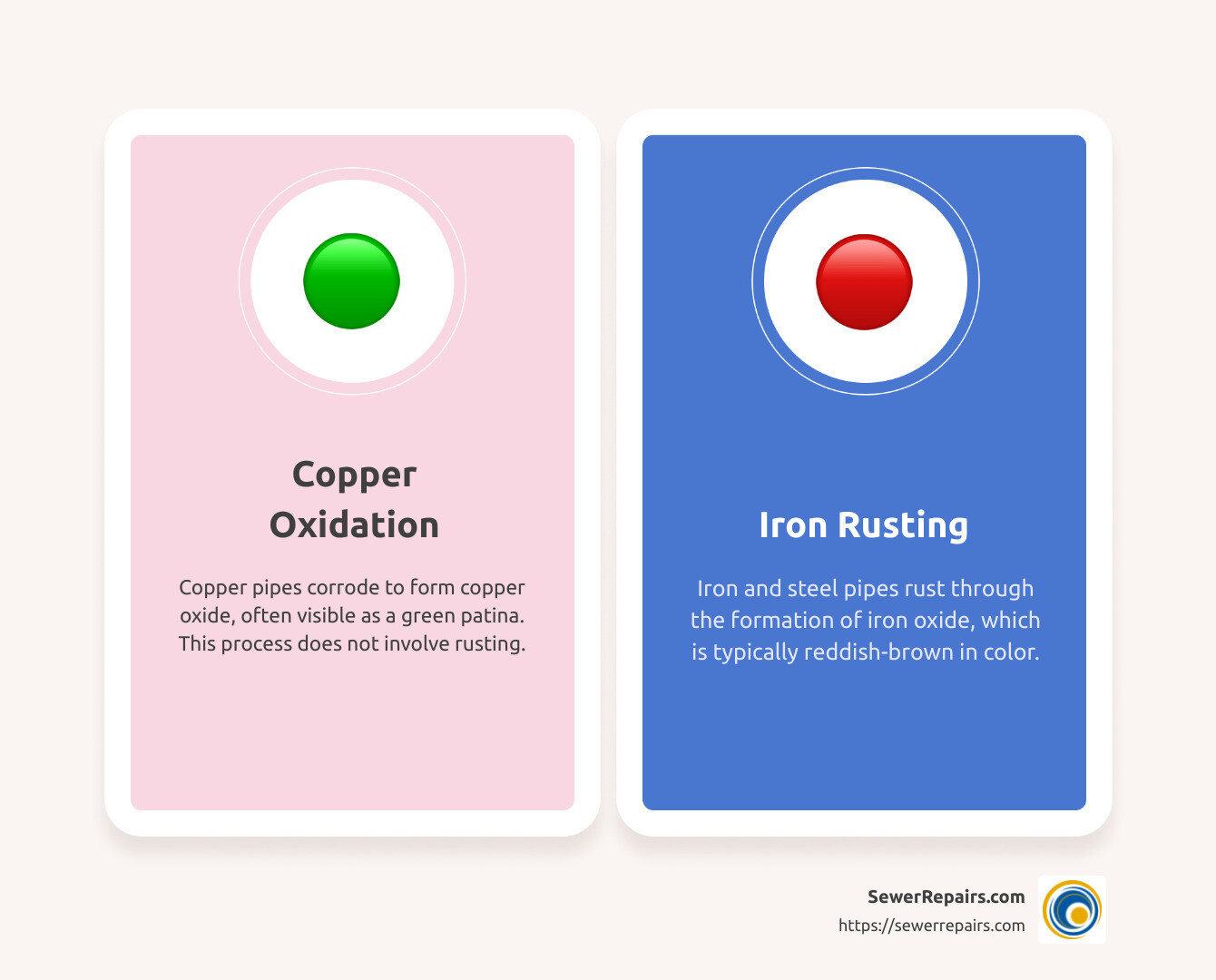
Can copper pipes rust? The short answer is no. Copper pipes do not rust because rust is a type of corrosion that affects iron and steel. Instead, copper corrodes through a process that forms copper oxide, often seen as a green patina. Understanding this is crucial for homeowners who face issues with aging or damaged water lines.
Copper pipes are known for their durability and resistance to many forms of corrosion, making them a staple in modern plumbing. However, over time, certain conditions can lead to the corrosion of copper pipes, resulting in damage that affects the longevity and functionality of your plumbing system. As homeowners in Southern California, understanding how corrosion works and taking proactive measures can help in maintaining your plumbing systems efficiently.
My name is Jason Best, an expert in sewer and plumbing services with over 20 years of experience. Let’s dive into the details of why copper pipes corrode, how it impacts your plumbing, and what you can do to prevent it.
Understanding Copper Pipe Corrosion
Copper pipes are widely used in plumbing due to their durability and resistance to corrosion. However, over time, they can still corrode under certain conditions. Let’s break down how this happens and what factors contribute to the corrosion process.
Water Chemistry
The chemistry of your water plays a significant role in the corrosion of copper pipes. The pH level of the water, its mineral content, and acidity are crucial factors.
- pH Levels: Water that is too acidic (low pH) or too alkaline (high pH) can accelerate the corrosion process. Ideally, water should have a pH level between 7.2 to 8.0.
- Mineral Content: High levels of minerals like calcium and magnesium can lead to scaling inside the pipes, which may eventually cause corrosion.
- Acidity: Acidic water can be particularly harmful to copper pipes, causing them to corrode faster.
Temperature and Environmental Factors
Environmental conditions such as temperature and exposure to chemicals can also impact the rate of corrosion.
- High Temperatures: Hot water can speed up the corrosion process. In hot water lines, the velocity should be kept below 4 feet per second to minimize corrosion.
- Exposure to Chemicals: Copper pipes exposed to harsh chemicals like bleach, drain cleaners, and pesticides can corrode more quickly.
- Microbial Activity: Bacteria and other microorganisms can produce acids that accelerate corrosion. This is often referred to as microbiologically influenced corrosion (MIC).
Installation and Maintenance
How your copper pipes are installed and maintained can significantly influence their longevity.
- Improper Installation: Poor installation practices, such as not reaming the cut ends of the pipes, can lead to turbulence and increased corrosion.
- Inadequate Insulation: Lack of proper insulation can cause moisture buildup and exposure to air, both of which can speed up the corrosion process.
- Regular Maintenance: Regular inspections and maintenance can identify potential issues before they become significant problems. For example, monitoring water chemistry and inspecting for signs of corrosion can help in early detection and prevention.
Can Copper Pipes Rust?
Copper Oxidation vs. Rust
First things first: can copper pipes rust? The short answer is no. Rust is a term specifically used for the oxidation of iron and steel. When iron reacts with oxygen and moisture, it forms iron oxide, commonly known as rust. Copper, on the other hand, undergoes a different process called oxidation.
When copper oxidizes, it forms copper oxide, which is not the same as rust. This oxidation process creates a greenish layer known as a patina. This green patina is actually a protective layer that shields the underlying copper from further corrosion. Think of the Statue of Liberty—that green color is due to copper oxidation!
Signs of Copper Pipe Corrosion
While copper pipes don’t rust, they can still corrode. Here are some common signs to look out for:
- Green Patina: The most visible sign of copper pipe corrosion is a green or bluish-green layer on the pipe’s surface. This patina is usually harmless and forms slowly over time. However, it can indicate underlying issues if it appears rapidly or in localized spots.
- Pinhole Leaks: Small, pin-sized holes can develop in copper pipes, leading to leaks. These leaks are often caused by pitting corrosion, a localized form of corrosion that can eat through the pipe wall.
- Structural Integrity: Over time, corrosion can weaken the structural integrity of copper pipes. This can lead to larger leaks, cracks, and even pipe bursts if not addressed promptly.
Common Types of Copper Pipe Corrosion
Pitting Corrosion
Pitting corrosion is one of the most insidious types of copper pipe corrosion, often leading to small, localized spots of damage. This type of corrosion is primarily caused by exposure to chloride ions, hypochlorite, and bromide ions. These ions can be found in various household products, such as bleach and swimming pool chemicals. When these substances come into contact with copper pipes, they can initiate tiny pits on the pipe’s surface.
These pits can grow over time, leading to pinhole leaks. Pinhole leaks are particularly problematic because they are often hard to detect until significant damage has occurred. For instance, a small leak might go unnoticed until it has caused mold growth or structural damage to your home.
Galvanic Corrosion
Galvanic corrosion occurs when copper pipes are connected to pipes made from different metals, such as steel or aluminum. This type of corrosion happens because the two different metals create a galvanic reaction. Essentially, an electrical current flows between the metals, causing the copper to corrode more rapidly.
Improper installation is a common cause of galvanic corrosion. For example, if a plumber connects a copper pipe to a steel pipe without using a proper dielectric union, it can set off this corrosive reaction. Over time, you might notice green or bluish deposits at the joints where the metals meet, indicating that galvanic corrosion is taking place.
General Corrosion
General corrosion is less focused than pitting or galvanic corrosion and occurs more uniformly across the surface of the copper pipe. This type of corrosion is often the result of poor water chemistry, such as low pH levels or high mineral content, which can slowly degrade the copper over time.
Preventing Copper Pipe Corrosion
Proper Installation and Insulation
Proper installation and insulation of copper pipes are key to preventing corrosion. Incorrect installation can lead to moisture buildup, which accelerates corrosion. Here are some tips:
- Ensure Proper Grounding: Avoid attaching grounding wires to water pipes. Instead, ground to a copper rod driven into the earth. This minimizes the risk of electrical currents causing corrosion.
- Use Correct Flux: Select fluxes that meet ASTM B813 standards. Excessive or corrosive flux can lead to early pipe failures.
- Ream Cut Ends: Always ream the cut ends of copper pipes to reduce turbulence, which can lead to corrosion. The Copper Development Association emphasizes this practice for longevity.
- Install Adequate Insulation: Insulate pipes to prevent moisture buildup and exposure to air. This is especially important in areas prone to temperature fluctuations, which can cause condensation.
- Minimize Direction and Size Changes: Frequent changes in pipe direction or size can create stagnant sections, increasing the risk of corrosion. Design your plumbing system to avoid these issues.
Regular Maintenance and Inspections
Regular maintenance and inspections are crucial to catch early signs of corrosion and address them promptly.
- Water Chemistry Monitoring: Regularly test the water’s pH levels and mineral content. Water with high acidity or mineral content can accelerate corrosion. Aim for a pH level between 7.2 and 8.0 to prevent acidic water from corroding the pipes.
- Avoid Harsh Chemicals: Refrain from using harsh chemicals like bleach or drain cleaners that can corrode copper pipes. Opt for gentler, pipe-safe alternatives.
- Routine Inspections: Conduct regular inspections to check for signs of corrosion, such as green patina or pinhole leaks. A home test kit can help you monitor copper levels in your water.
- Professional Services: Schedule professional inspections to ensure your plumbing system is in good condition. Experts can detect and address issues that might not be visible to the untrained eye.
How to Address Corroded Copper Pipes
Cleaning Green Corrosion
When it comes to dealing with green corrosion on copper pipes, act quickly. Green corrosion, also known as patina, is a sign of oxidation due to moisture and air exposure. Here are some effective ways to clean it:
- Baking Soda Paste: Mix baking soda with a small amount of water to create a paste. Apply this paste to the corroded area, scrub gently with a soft brush, and rinse thoroughly with water.
- Salt Scrub: Combine salt with white vinegar to form a gritty paste. Apply this mixture to the corroded pipe, scrub with a cloth or sponge, and rinse off.
- Acetone Solution: For tougher corrosion, you can use acetone. Dampen a cloth with acetone and wipe the corroded area. Be sure to wear gloves and ensure proper ventilation.
Regular cleaning helps maintain the appearance and longevity of your pipes. However, cleaning is only a temporary fix if there are underlying issues.
When to Replace Copper Pipes
Sometimes, cleaning isn’t enough, and you may need to consider replacing your copper pipes. Here are signs that replacement might be necessary:
- Severe Corrosion: If you notice extensive green corrosion or multiple pinhole leaks, it’s often a sign that the pipe’s structural integrity is compromised.
- Lifespan Expectations: Copper pipes typically last around 50-70 years. If your pipes are approaching this age, it might be time to think about replacement.
- Recurring Issues: Frequent leaks or corrosion problems indicate that your pipes are no longer reliable.
Cost Considerations: Replacing copper pipes can be costly, but it’s a long-term investment in your home’s plumbing system. It’s essential to weigh the cost of frequent repairs against the expense of a one-time replacement.
Professional Help: Always consult with a professional plumber if you’re unsure about the condition of your pipes. They can provide expert advice on whether cleaning, repair, or replacement is the best course of action.
By addressing corroded copper pipes promptly and effectively, you can prevent more severe plumbing issues down the line.
Frequently Asked Questions about Copper Pipe Corrosion
What causes green corrosion on copper pipes?
Copper pipes can develop a green or blue-green discoloration known as patina. This happens due to oxidation when copper is exposed to moisture and air over time. The process creates copper oxide, which gives the pipes their distinctive green hue.
Common places where this occurs include areas where pipes pass through brick or concrete walls, as these materials can retain moisture. It’s a visual sign that your pipes are undergoing chemical changes.
Is green corrosion on copper pipes dangerous?
While the green corrosion itself, copper oxide, is not harmful to humans in small amounts, it can be a warning sign of bigger issues. Heavy oxidation can weaken the structural integrity of your pipes, much like rust does to iron.
This corrosion can lead to pinhole leaks or larger breaches, causing water damage to your home. Moreover, water traveling through heavily oxidized pipes can pick up copper particles, which may affect water quality and pose health hazards if consumed over time.
How long do copper pipes typically last?
Copper pipes are known for their longevity. When properly installed and maintained, they can last for several decades, often up to 50 years or more. However, several factors can affect this lifespan, including:
- Water Chemistry: High acidity or mineral content in water can accelerate corrosion.
- Temperature: Higher temperatures can speed up the oxidation process.
- Installation Quality: Improper installation can lead to early corrosion.
- Maintenance: Regular inspections and timely repairs can extend the life of copper pipes.
By understanding these factors and taking proactive steps, you can ensure that your copper pipes serve you well for many years.
Call SewerRepairs.com Today!
Copper pipes are a durable and reliable choice for plumbing. However, they are not immune to corrosion. Understanding the types of corrosion that can affect copper pipes, such as pitting corrosion and galvanic corrosion, is crucial for maintaining a healthy plumbing system.
Regular maintenance and timely inspections can go a long way in preventing corrosion. Look out for signs like a green patina or pinhole leaks. Addressing these issues early can save you from costly repairs down the line.
If you do encounter corroded copper pipes, cleaning methods like baking soda paste, salt scrub, or acetone solution can help. However, severe corrosion may require professional intervention.
This is where we come in. SewerRepairs.com, headquartered in Riverside, California, specializes in sewer inspection, repair, and maintenance services. We offer innovative solutions like CIPP lining and trenchless repairs, making us experts in cost-effective, minimally invasive sewer repair techniques.
Don’t wait for small issues to become big problems. Regular maintenance and professional services can help keep your plumbing system in top shape. Contact us today for all your plumbing needs.